In today’s competitive digital landscape, standing out within your local market is essential. Whether you’re running a café in Tanjong Pagar or a medical practice in Jurong, your customers are actively searching for nearby businesses they can trust. Local SEO helps ensure your brand appears in those critical “near me” searches, map listings, and location-based Google results right when potential customers are ready to take action.
Follow along as MediaPlus Digital breaks down how local SEO works and the practical steps you can take to strengthen your online presence in Singapore’s local search landscape.
What is Local SEO?
Local SEO is the practice of optimizing your online presence so Google can clearly understand where your business is located, what you offer, and how well customers trust you. This helps your business appear in local search results like the ones shown in the Google Map Pack, when someone searches for “restaurant near me.”
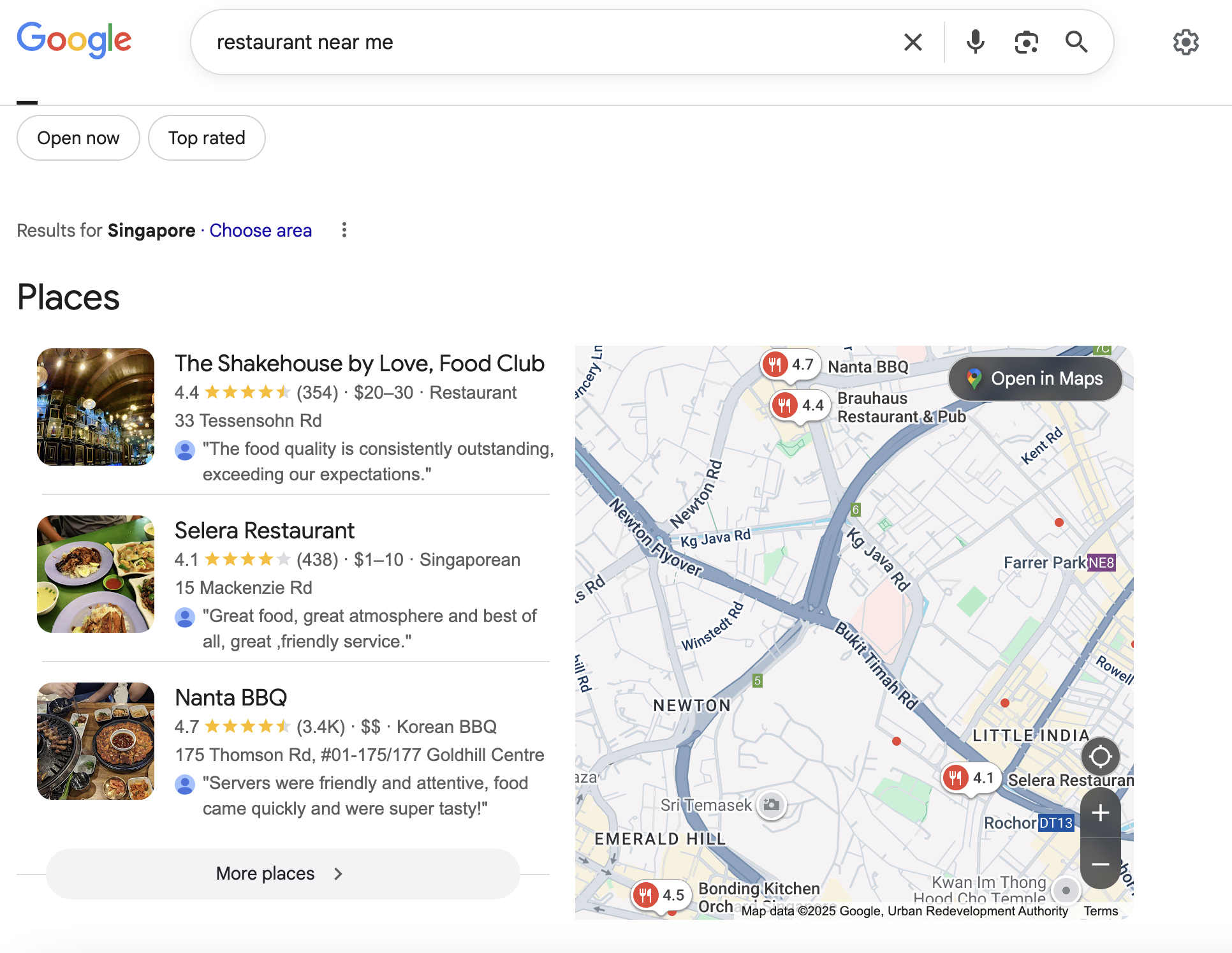
In the example above, the top results such as The Shakehouse by Love, Food Club, Selera Restaurant, and Nanta BBQ appear prominently because they are near the searcher’s location, match the search intent, and have strong customer reviews.
Local SEO helps your business achieve the same kind of visibility ensuring that when someone nearby searches for the services you offer, your name shows up exactly where it matters most.
Why Local SEO Matters for Local Businesses
Local SEO is essential because more people than ever rely on Google to find nearby products and services. When someone searches for “restaurant near me,” “clinic in Jurong,” or “best café in Tanjong Pagar,” Google prioritizes showing businesses that are close, relevant, and trusted.
According to Google:
-
30% of all mobile searches are related to a specific location.
-
78% of people who search for something nearby on their phone visit a business within a day.
-
28% of those searches lead to a purchase.
In short, your potential customers are already looking for businesses like yours often ready to take action. If your business doesn’t appear in those local search results, you’re not just missing visibility; you’re losing real customers to competitors who do.
Local SEO bridges that gap by helping your business stand out exactly when and where people are searching.
How Does Local SEO Work?
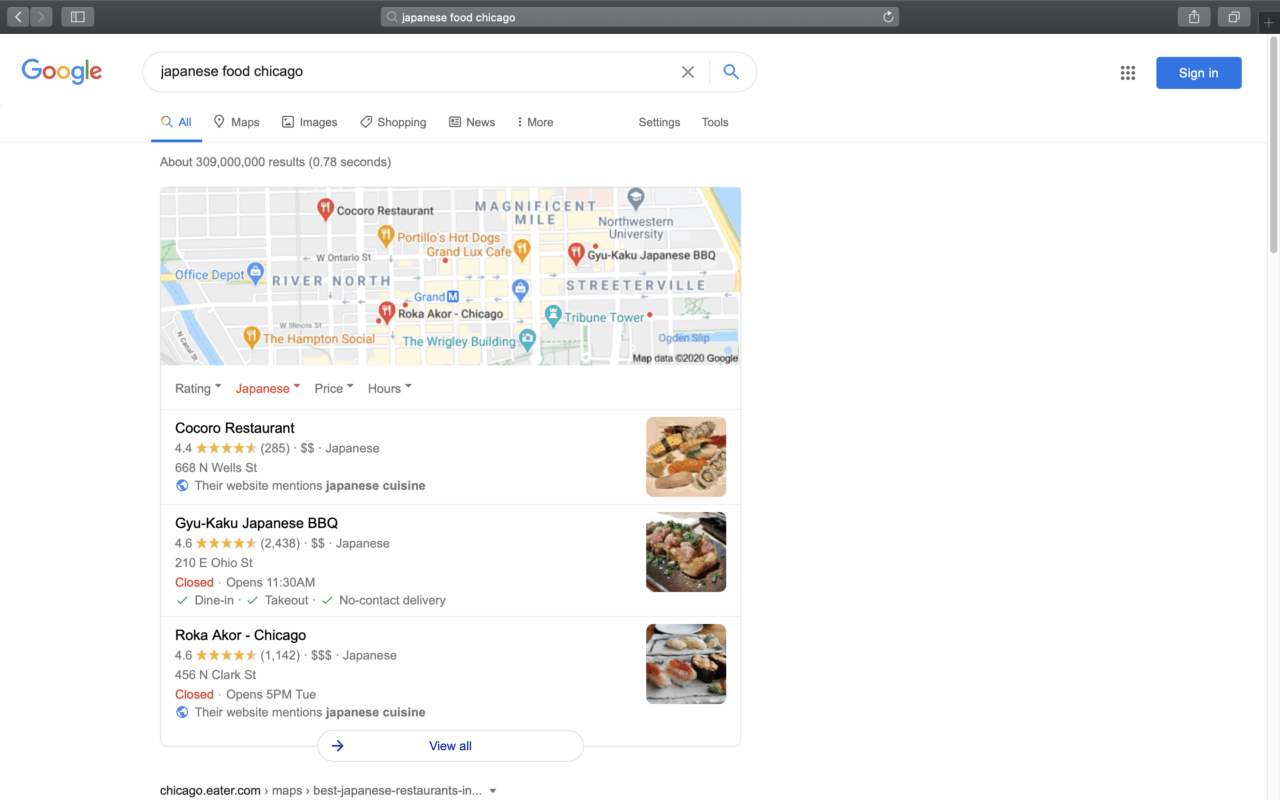
Local SEO operates on two fronts because Google displays two main types of results for local searches: the Map Pack and the organic search results. A well-optimized local SEO strategy can help your business appear in both.
1. Map Pack Results
The Map Pack (also known as the Local Pack) is the prominent box at the top of Google’s search results showing a map and the top local business listings. It highlights key information such as ratings, reviews, business hours, and location making it one of the most valuable spots for local visibility.
2. Organic Search Results
Below the map, you’ll see the familiar “ten blue links.” These organic search results point to local business websites that Google considers relevant and trustworthy. Ranking here depends on factors like on-page SEO, backlinks, and overall domain authority.
Together, these two result types form the foundation of local search visibility one focused on your Google Business Profile, and the other on your website’s SEO strength.
What Makes a Strong Local SEO Strategy
A good local SEO strategy starts with solid foundational optimizations, then continues with consistent, automated systems to maintain growth over time.
For example, customer reviews play a major role in local rankings, but collecting them doesn’t have to be difficult. Small steps like placing review reminder cards on tables if you run a restaurant can help build a steady stream of feedback.
This approach is what we call “passive local SEO”: by consistently delivering great customer experiences, your online reputation improves naturally, boosting your local rankings in the process.
Keep this mindset as you explore the rest of this guide the strongest local SEO results come from a mix of smart strategy, steady systems, and genuine customer satisfaction.
What Makes a Good Local SEO Strategy
A strong local SEO strategy starts with building a solid foundation and then putting systems in place to sustain growth over time. The goal isn’t just to get quick results, it’s to create a framework that continues to drive visibility and customers long after the initial setup.
For example, online reviews are a powerful ranking and trust factor, but collecting them doesn’t have to be tedious. Simple actions like placing review reminder cards on restaurant tables or sending follow-up messages after service can encourage customers to share feedback naturally.
This approach is what we call “passive local SEO”. When you consistently provide great service and customer experiences, your reputation and rankings grow almost automatically. Keep this mindset as we move through the next sections sustainable results come from steady, thoughtful effort.
How to do local SEO
Local SEO helps your business appear in both the Map Pack and the organic search results. To do that, you need to optimize for the key local ranking factors that influence each section.
Some ranking factors overlap between the two, while others matter more for one type of result than the other.
Let’s go through the local SEO process step by step.
1. Set Up and Optimize Your Google Business Profile
Your Google Business Profile (GBP) formerly known as Google My Business is a free local listing that lets your business appear in Google Maps and the Map Pack.
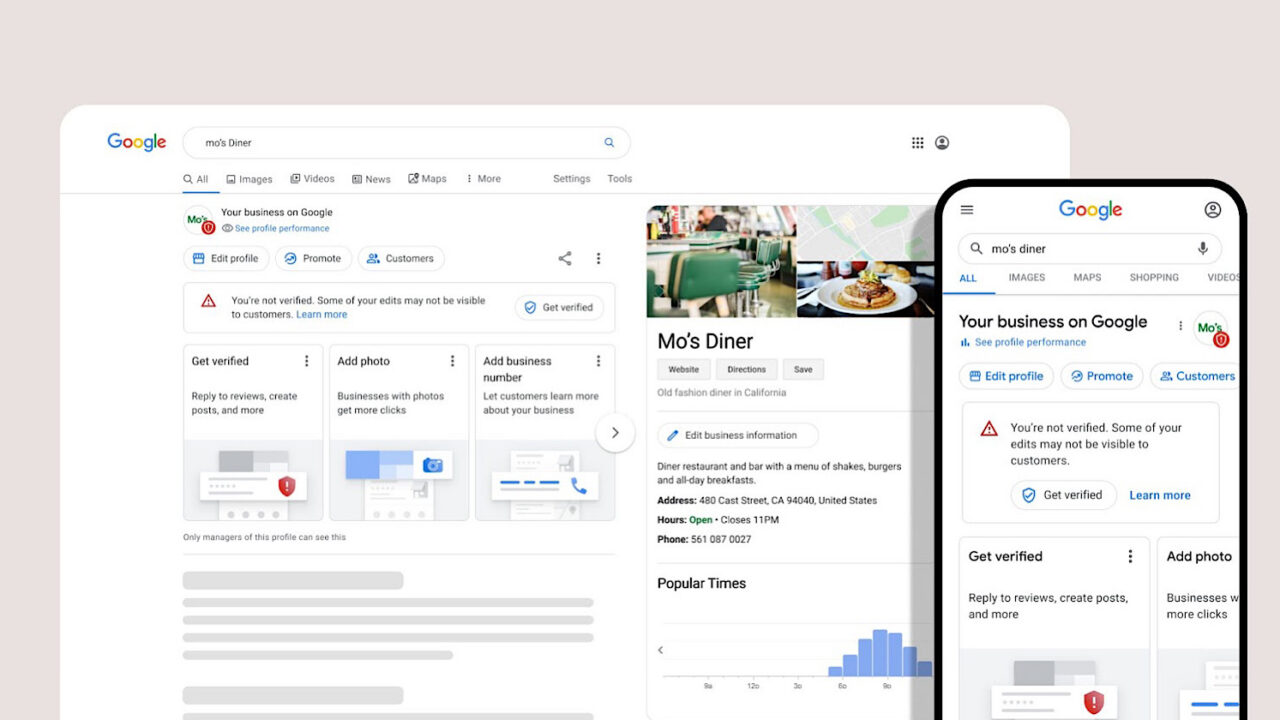
According to BrightLocal, 36% of SEOs consider your GBP the most important ranking factor for the Map Pack, while 6% believe it also influences organic rankings. This isn’t surprising without a verified profile, you have almost no chance of appearing in the Map Pack.
Beyond rankings, Google reports that customers are 70% more likely to visit a business with a complete profile and 50% more likely to make a purchase. In other words, optimizing your GBP directly impacts both visibility and conversions.
Best practices for optimizing your Google Business Profile:
-
Choose the most accurate and specific business category.
-
Add complete business hours, including holidays.
-
Include your full address (if you have a physical storefront).
-
Define your service area (if you deliver or visit customers).
-
List your products or services.
-
Upload high-quality photos.
-
Encourage and respond to customer reviews.
2. Get More Customer Reviews
Customer reviews remain one of the strongest signals for local rankings and consumer trust.
BrightLocal’s 2021 study found that 17% of SEOs consider reviews the most important ranking factor for the Map Pack, though only 5% see them as key for regular organic results. Regardless of percentages, the trend is clear reviews are becoming increasingly influential.
But it’s not just about rankings. Positive reviews on Google and other platforms help build credibility with both Google’s algorithm and your potential customers.
Best practices for generating and managing reviews:
-
Remind happy customers to leave reviews (create and share your Google review link).
-
Focus primarily on collecting reviews via your Google Business Profile.
-
Always respond to reviews positive or negative to show engagement.
-
Never offer incentives or payment for reviews (it violates Google’s terms).
-
Don’t filter or discourage negative reviews; authenticity builds trust.
3. Build Consistent NAP Citations in Directories
A NAP citation is any online mention of your business’s Name, Address, and Phone number. These appear on directories, social media profiles, and local listings and they help confirm your business’s legitimacy and location to Google.
While citations used to be a major ranking factor, their influence has gradually declined. In BrightLocal’s study, only 7% of SEOs now view them as the top ranking factor for both the Map Pack and organic results. Still, they remain important for discovery because directories themselves often rank on Google for local searches.
Best practices for building and maintaining citations:
-
Get listed with major data aggregators (e.g., Data Axle, Localeze, Foursquare).
-
Submit your business to key platforms like Apple Maps, Yelp, Yellow Pages, Bing Places, and Facebook.
-
Add your business to reputable local and industry-specific directories.
-
Ensure your NAP information is 100% consistent across all platforms.
Consistency builds trust not just with Google, but with customers searching for your business online.
4. Do Local Keyword Research
Local keyword research helps you understand how potential customers search for the products or services you offer nearby.
It’s the foundation of every successful local SEO strategy because to rank, you first need to know what people are searching for.
a. Find Service-Based Keywords
Start by identifying the core services your business provides.
If you’re a plumber, for example, people might search for “plumber” but many will use more specific terms like “drain unblocking” or “boiler repair.”
List all your services, then expand your list using keyword tools like Ahrefs’ Keywords Explorer. Enter your main service terms to find variations such as:
-
Gas boiler installation
-
Combi boiler repair
-
Electric boiler servicing
You can also check what your competitors rank for by entering their domains into Ahrefs’ Site Explorer and reviewing their Top Pages report. This helps uncover “missed” service opportunities.
b. Check Search Volumes
While most SEO tools show national-level data, you can use Google Keyword Planner to get location-specific volumes (e.g., by city or region).
Even if the ranges are broad, the relative popularity of keywords remains consistent so national data is often enough to prioritize which services to focus on first.
c. Check for Local Intent
Not all keywords have local intent.
To confirm, search your keyword on Google:
-
If you see a map pack or nearby listings, it’s a local-intent keyword.
-
If not, it’s more informational or national, and you’ll need a different strategy.
d. Assign Keywords to Pages
Each page should target a distinct topic.
Group closely related keywords (like “drain unblocking” and “drain unclogging”) on one page, but create separate ones for very different services (“boiler installation” vs. “pipe repair”).
This ensures your content stays focused and your pages don’t compete with each other.
5. Get More Backlinks
Backlinks are one of Google’s strongest ranking signals, they’re essentially votes of trust from other websites.
According to BrightLocal, 31% of SEOs consider backlinks the most influential factor for regular organic results, and 13% say the same for map pack rankings.
Here’s how to earn quality backlinks for your local business:
-
Get featured on local directories and business listings
-
Reach out to partners, suppliers, and local media for coverage
-
Reclaim unlinked mentions of your brand using tools like Ahrefs
-
Redirect old URLs to preserve link equity when updating your site
Even a handful of high-quality, local backlinks can significantly improve your authority and visibility.
6. Improve Your On-Page SEO
On-page SEO tells Google (and visitors) what your pages are about.
BrightLocal reports that 34% of SEOs believe on-page signals are the top ranking factor for organic results even more than links.
Here’s how to optimize your local pages effectively:
-
Match search intent: Write content that directly answers what searchers are looking for.
-
Include your NAP info: Add your business Name, Address, and Phone number across your website consistently.
-
Use optimized meta titles & descriptions: Mention your service and location (e.g., “Boiler Repair in London | 24/7 Emergency Service”).
-
Add local details: Highlight service areas, customer testimonials, and location-specific info.
-
Use internal links: Connect related service pages to strengthen topical relevance.
-
Optimize images: Use descriptive filenames and alt text.
Best Local SEO Tools to Boost Your Rankings
Managing local SEO can be complex but with the right tools, you can automate tracking, manage citations, monitor rankings, and optimize faster. Here are some of the best tools to power your local SEO strategy:
- Google Business Manager (Free): Formerly Google My Business, this is where you manage your Google Business Profile. Add business details, photos, posts, and updates and respond to reviews directly. It’s essential for appearing in Google Maps and the Local Pack.
- Google Search Console (Free): Track how your website performs in search. You’ll see impressions, clicks, rankings, and which queries bring traffic to your pages perfect for identifying local keyword opportunities.
- Google Keyword Planner (Free): Use this tool to discover local keyword search volumes and get content ideas for your service pages and blog posts. Ideal for targeting city- or neighborhood-level terms.
- Ahrefs’ Rank Tracker (Paid): Monitor how your target keywords perform by city, state, or postal code. Great for comparing performance across different service areas and tracking competitors.
- Ahrefs’ Link Intersect (Paid): Identify websites that link to your competitors but not to you uncovering local backlink and citation opportunities from niche directories or partner businesses.
- BrightLocal (Paid): A comprehensive local SEO platform that tracks rankings, audits citations, monitors reviews, and manages listings all in one dashboard. Especially useful for agencies and multi-location businesses.
- Moz Local (Paid): Moz Local helps distribute your business information to top directories and data aggregators automatically. It also monitors your NAP consistency and reviews across multiple platforms.
- Semrush Listing Management (Paid): Part of Semrush’s suite, this tool syncs your business data across directories and lets you monitor reviews, track rankings, and manage Google Business Profile updates from one place.
- Whitespark Local Citation Finder (Paid): One of the best tools for finding new local citation opportunities and tracking existing listings. It helps you build consistent NAP citations that improve your map rankings.
- Grid My Business (Freemium): Visualize your map pack rankings across multiple locations. You’ll see a grid-based heatmap showing how visible your business is to searchers around your area.
- ReviewTrackers (Paid): Monitor and manage customer reviews across platforms like Google, Yelp, and Facebook. Get alerts when new reviews appear, so you can respond quickly and maintain a strong reputation.
- Reputation.com (Paid): An advanced review management and online reputation tool. It tracks sentiment, helps you request new reviews, and provides analytics on how reviews impact conversions.
- Local Falcon (Paid): Similar to Grid My Business but more advanced, Local Falcon provides real-time, geogrid-based visibility tracking for Google Maps rankings. It’s excellent for competitive analysis.
- Yext (Paid): Keep your business details consistent across hundreds of listings, including Apple Maps, Bing, and Yelp. It also integrates with AI assistants like Siri and Alexa.
- Screaming Frog SEO Spider (Free/Paid): A powerful website crawler that helps identify on-page SEO issues like broken links, duplicate content, or missing metadata all important for local site health.
- Surfer Local (Paid): An AI-powered local SEO tool that analyzes your competitors’ Google Business Profiles and suggests data-backed improvements to help you outrank them in Maps results.
- CallRail (Paid): Tracks calls generated from local search results and landing pages, showing you exactly which campaigns drive conversions crucial for local lead generation tracking.
- AnswerThePublic (Freemium): Finds the questions and long-tail keywords people search for about your services in specific areas perfect for local content creation and FAQs.
Local SEO Services by MediaPlus Digital
At MediaPlus Digital, we specialize in helping Singapore businesses dominate local search results from Google Maps to organic listings. Whether you’re a homegrown SME or an established brand with multiple locations, our Local SEO services are designed to put your business in front of nearby customers who are ready to take action.
We combine proven local search strategies with data-driven insights to help your business gain more visibility, traffic, and conversions. Our team focuses on every detail that matters to Google’s local ranking algorithm from optimizing your Google Business Profile and local citations, to building location-specific content and earning authentic customer reviews.
What You’ll Get with Our Local SEO Service
-
Google Business Profile Optimization – Ensure your listing is complete, accurate, and attractive with verified categories, photos, and posts.
-
Local Keyword & Content Strategy – Target high-intent, geo-specific searches to drive qualified leads in your area.
-
Citation Building & NAP Consistency – Get your business listed on the most relevant and trusted directories in Singapore.
-
Reputation & Review Management – Encourage positive feedback and respond professionally to customer reviews.
-
On-Page & Technical SEO – Optimize your website’s content, structure, and speed for both search engines and users.
-
Performance Reporting – Transparent monthly reports showing keyword rankings, traffic sources, and growth trends.
Explore our full suite of SEO services in Singapore to strengthen your brand’s online visibility and outperform competitors.
Check more: SEO Price in Singapore: How Much Does SEO Cost in 2025?