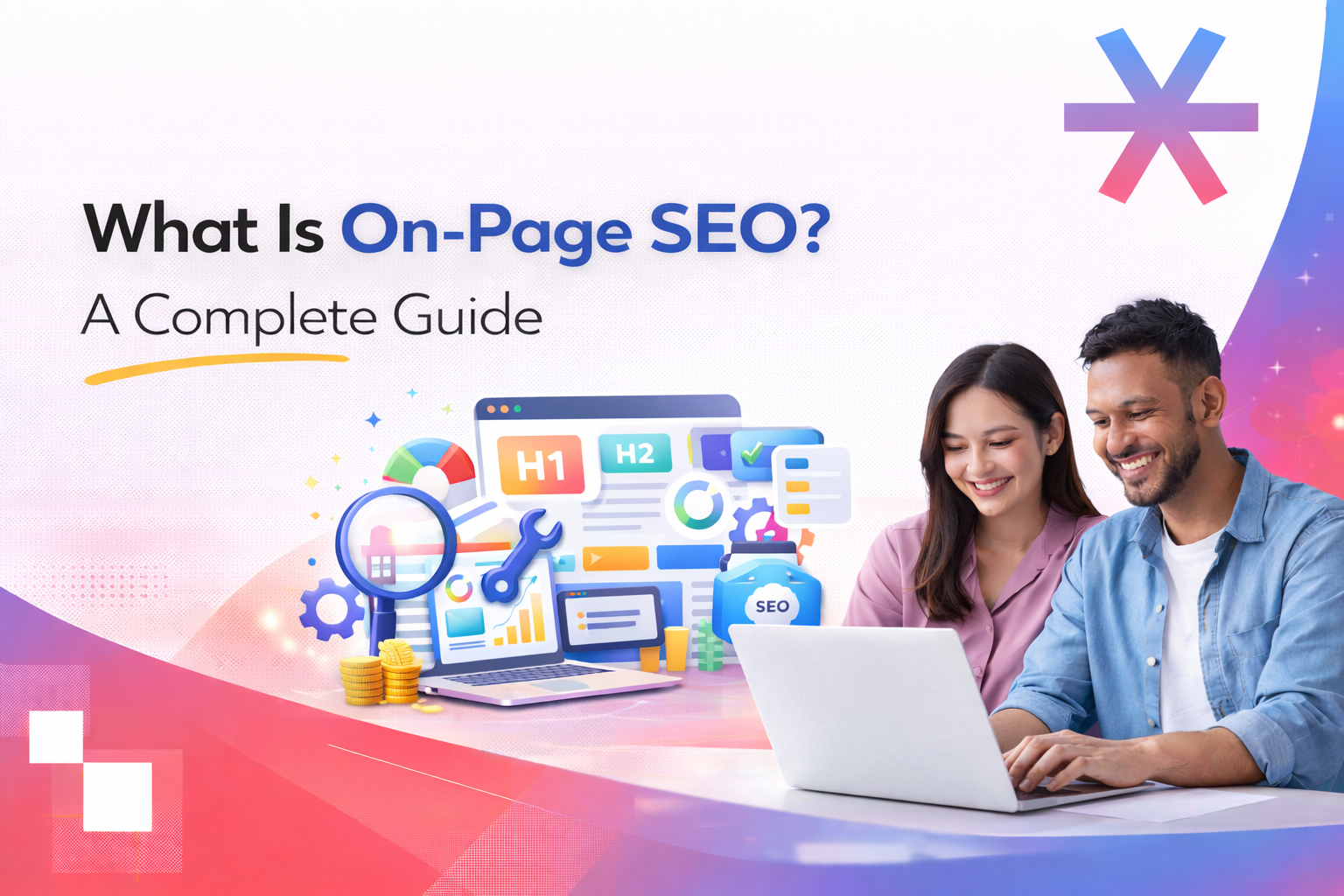
What Is On-Page SEO?
On-page SEO also known as on-site SEO, is the process of optimizing your web pages and content so they perform better on search engines like Google. This includes improving elements such as your titles, headings, content quality, internal links, and page URLs.
The goal of on-page SEO is simple: to make your content more relevant and valuable for both search engines and users.
When done right, it helps your website appear higher on Google, attract more organic visitors, and convert them into leads or customers.
On-Page SEO vs Off-Page SEO
Many people mix up on-page and off-page SEO but understanding the difference between the two is key to building a balanced SEO strategy.
- On-page SEO focuses on the elements within your website that you can directly optimise. These include your content quality, meta tags, keyword usage, page structure, URLs, and internal links. The goal is to make your website clear, valuable, and relevant for both search engines and users.
- Off-page SEO, on the other hand, involves all the activities that happen outside your website. This includes building backlinks, gaining social signals, and strengthening your brand authority through digital PR and content mentions.
Both are vital for long-term success but on-page SEO is the foundation. Without well-optimised content and a technically sound website, even the best backlink strategy won’t perform to its full potential.
Here’s a quick comparison to illustrate how they work together:
| Aspect | On-Page SEO | Off-Page SEO |
|---|---|---|
| Focus Area | Optimising elements within your website | Building authority outside your website |
| Main Goal | Improve content relevance and user experience | Strengthen domain authority and trust signals |
| Key Activities | Keyword optimisation, meta tags, headings, internal linking, image optimisation | Link building, social media marketing, influencer outreach, digital PR |
| Control | Fully within your control | Depends on third-party platforms and external relationships |
| Impact | Directly affects how Google understands and ranks your pages | Affects how much trust and authority your website gains |
| Time to See Results | Usually faster (weeks) | Usually slower (months) |
| Best Practice | Create people-first, keyword-optimised content | Earn quality backlinks and brand mentions naturally |
Why Is On-Page SEO Important?
Search engines like Google rely heavily on on-page signals to determine whether a page is relevant, helpful, and worth showing to users. Every element on your page from the title tag to the way your content is structured sends a message to Google about what your website offers.
Good on-page SEO helps Google understand:
- What your page is about
- How it answers user intent
- Whether it provides a high-quality user experience
But today, on-page SEO has evolved beyond keyword placement and meta tags.
We’re now entering the GEO (Generative Engine Optimisation) era where AI-powered search tools and generative engines like Google’s Search Generative Experience (SGE) evaluate context, authority, and clarity to decide which content deserves visibility.
That means your content must do more than just rank, it must be understandable, trustworthy, and genuinely useful enough to be referenced or summarised by generative AI systems.
In this new landscape, on-page SEO is more crucial than ever because it:
-
Builds structured, AI-readable content: Clear headings, schema markup, and internal linking make it easier for AI to interpret your site.
-
Supports GEO visibility: Well-optimised pages are more likely to be pulled into AI-generated answers or “snapshot” search results.
-
Enhances user engagement: Visitors stay longer and convert better when pages are well-organised, fast, and relevant.
In short, on-page SEO is the foundation for success in both traditional search rankings and AI-driven discovery.
By focusing on quality, intent, and structure, you future-proof your website for the evolving digital ecosystem where content clarity and user value are the new ranking currencies.
9 Key On-Page SEO Techniques for Your Website
On-page SEO is all about optimising your website’s content and structure to improve visibility, relevance, and user experience. Here are nine essential techniques to help your pages rank higher and attract quality traffic.
1. Create Unique, High-Quality Content
Content is the foundation of on-page SEO and quality matters more than ever.
To create content that ranks:
-
Research user intent: Understand what your audience is searching for and why. Tools like Google Keyword Planner or SEMrush can help.
-
Offer in-depth answers: Fully answer questions users may have, provide step-by-step guides, examples, or case studies.
-
Be original: Avoid copying competitors. Unique perspectives and insights make your content stand out.
-
Enhance readability: Use short paragraphs, bullet points, and clear formatting.
-
Incorporate visuals: Infographics, images, and videos make your content easier to understand and share.
Tip: Create content that both humans and search engines value, the combination of usefulness, clarity, and relevance is key.
2. Use Keywords Strategically
Keywords are signals to Google about your page’s topic. Placing them in the right areas helps search engines understand your content.
Where to include keywords:
-
Page title (H1): Clearly communicates the topic.
-
First paragraph: Introduces the main subject naturally.
-
Subheadings (H2, H3): Organises content and reinforces relevance.
-
Meta description: Highlights keywords for users on search results.
-
Image alt text: Helps search engines understand images and improves accessibility.
Pro tip: Use long-tail keywords to target specific queries. They are less competitive and often convert better than generic terms.
3. Optimise Title Tags
Title tags are your first impression on Google. A well-crafted title not only helps ranking but also encourages clicks.
Best practices:
-
Keep titles 50–60 characters to avoid truncation in search results.
-
Include your primary keyword at the beginning if possible.
-
Avoid duplicate titles across multiple pages.
-
Add action words or emotional triggers: “Guide,” “Tips,” “How To,” or “Ultimate.”
Example:
“What Is On-Page SEO: The Complete Beginner’s Guide (2025 Edition)”
A strong title aligns with user intent and encourages clicks which can improve your click-through rate (CTR).
4. Write Click-Worthy Meta Descriptions
Meta descriptions summarise your page content and appear under the title in search results. While they don’t directly affect rankings, they influence click-through rates.
Tips for effective meta descriptions:
-
Keep it under 155 characters for mobile and desktop.
-
Include your primary keyword naturally.
-
Write in active voice and make it persuasive.
-
Add a call-to-action (CTA), e.g., “Learn more” or “Find out how.”
Example:
“Discover the ultimate guide to on-page SEO and learn how to optimise your website for higher rankings and more traffic.”
5. Use Headings to Structure Your Page
Headings make your content scannable and help search engines understand your page’s hierarchy.
How to use headings effectively:
-
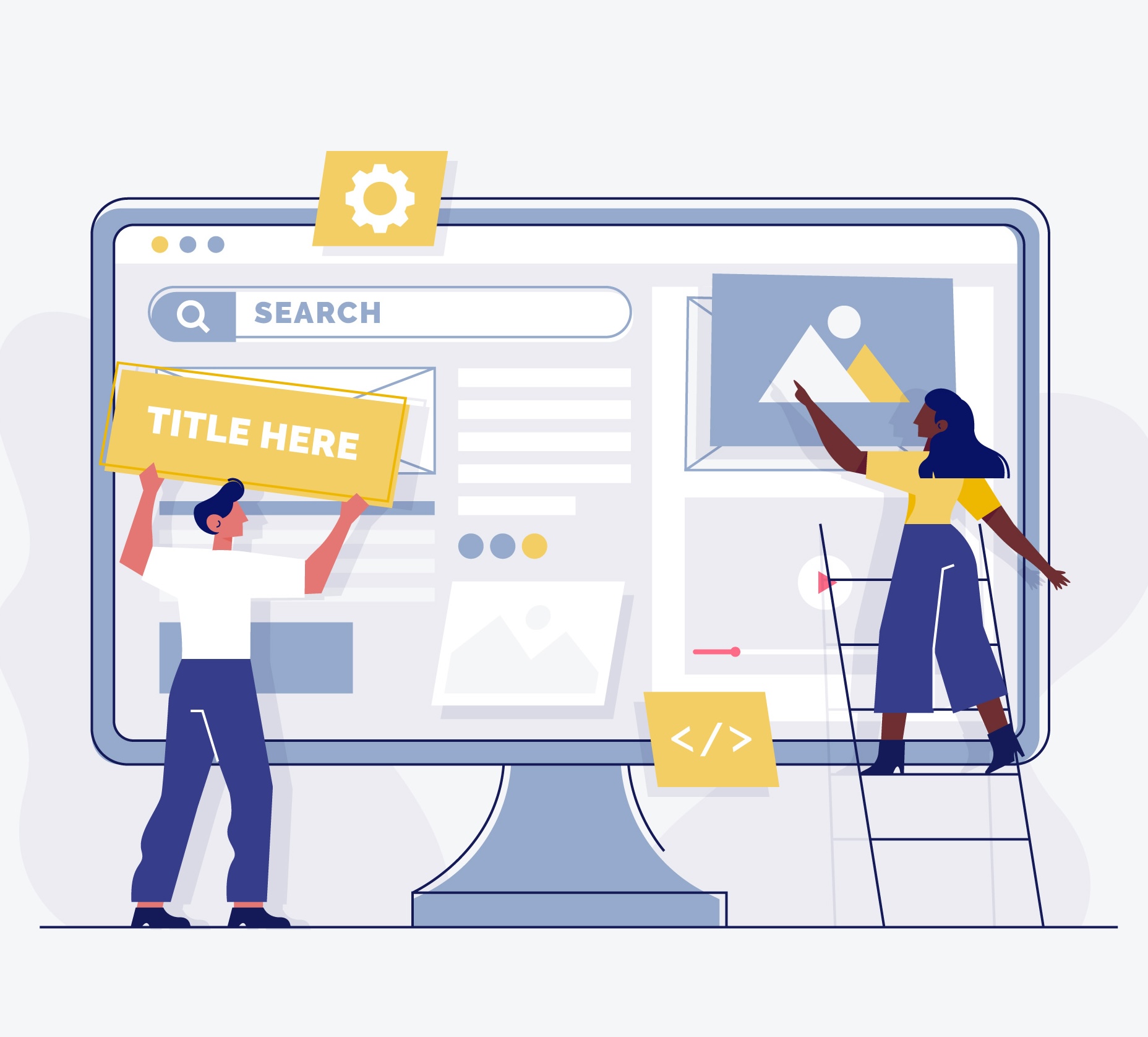
H1: Page title or main topic (only one per page).
-
H2: Main sections or subtopics.
-
H3: Detailed points under H2 sections.
-
Keyword placement: Include primary or secondary keywords naturally in headings.
Example:
-
H1: What Is On-Page SEO
-
H2: Why On-Page SEO Matters
-
H3: Key Techniques to Optimise Your Website
Proper structure improves readability, accessibility, and SEO relevance.
6. Optimise URLs
A clean, descriptive URL improves both user experience and search engine understanding.
URL best practices:
-
Keep it short and meaningful.
-
Use hyphens, not underscores, to separate words.
-
Include your primary keyword.
-
Avoid random numbers, dates, or irrelevant characters.
Examples:
✅ Good: https://mediaplus.com.sg/what-is-on-page-seo
❌ Bad: https://mediaplus.com.sg/page?id=12345
Optimised URLs are easier to read, share, and rank.
7. Add Internal Links
Internal linking helps Google crawl your site, distributes ranking power, and keeps visitors engaged.
Tips for internal linking:
-
Link to relevant pages (services, blog posts, case studies).
-
Use descriptive anchor text rather than generic “click here.”
-
Don’t overdo it aim for natural placement.
Example:
If writing about SEO, link to your SEO services page or related blog posts.
This improves site authority, user navigation, and ranking potential.
8. Link to Trusted External Sources
External links build credibility and provide additional value to readers.
Best practices:
-
Link to high-authority websites, e.g., Google Search Central, industry reports, or academic sources.
-
Ensure links are relevant to your content.
-
Use descriptive anchor text to clarify what users can expect.
Tip: Linking to authoritative sources signals to Google that your content is trustworthy and well-researched.
9. Optimise Your Images
Images make content more engaging and can drive traffic from Google Images. Optimisation ensures fast load times and better SEO signals.
Image optimisation tips:
-
Use descriptive file names:
on-page-seo-guide.png. -
Add alt text that explains the image and includes keywords naturally.
-
Compress images to improve page speed.
-
Enable lazy loading so images load only when visible on the screen.
Optimised images enhance user experience, accessibility, and search visibility.
Bonus Tip: Combine These Techniques with Technical SEO
On-page SEO works best alongside technical SEO: fast page speed, mobile-friendly design, secure HTTPS, and structured data (schema markup). Together, these strategies create a solid foundation for rankings, user engagement, and conversions.
Advanced On-Page SEO Tactics
Once you’ve mastered the basics of on-page SEO, it’s time to take your website optimisation to the next level. Advanced techniques help improve user experience, search visibility, and click-through rates and can give you an edge over competitors.
1. Optimise for Page Speed
Page speed is a confirmed ranking factor for Google. Slow-loading pages frustrate users and increase bounce rates, while fast pages improve both engagement and search rankings.
How to measure and improve page speed:
-
Use Google PageSpeed Insights to analyse your website’s performance for mobile and desktop.
-
Pay attention to Core Web Vitals, the key metrics that affect user experience:
-
Largest Contentful Paint (LCP): How long it takes for the main content to load.
-
First Input Delay (FID): How quickly your site responds to the first user interaction.
-
Cumulative Layout Shift (CLS): Measures how much the page layout shifts while loading.
-
The tool provides an overall score and lists errors and opportunities for improvement, such as image compression, browser caching, or JavaScript optimisation.
Pro tip: Run these reports regularly monthly audits or automated reports can help you stay on top of performance issues.
2. Target Featured Snippets
Featured snippets (also called “position zero”) appear above regular search results and can dramatically increase your CTR.
Common types of featured snippets:
-
Paragraphs: Short, concise answers to questions.
-
Lists: Step-by-step instructions or top recommendations.
-
Tables: Comparison charts or data summaries.
-
Videos: Embedded content for how-to queries.
How to optimise for snippets:
-
Identify keywords with existing snippets using tools like SEMrush or Google’s SERP Analysis.
-
Provide clear, concise answers that match user intent.
-
Format content effectively use bullet points, numbered lists, tables, or brief paragraphs.
Optimising for featured snippets can put your content front and centre, increasing visibility and clicks.
3. Add Schema Markup
Schema markup (or structured data) helps search engines understand your content more clearly. Properly implemented schema can generate rich snippets, which include extra details like star ratings, event dates, product info, and more.
Common schema types:
-
Reviews
-
Products
-
Events
-
Local businesses
Benefits of schema markup:
-
Makes your listings more attractive in search results
-
Improves CTR by highlighting key information
-
Helps search engines categorise and index content correctly
Implementation tips:
-
Use Google’s Structured Data Testing Tool or Schema.org to validate your markup.
-
Conduct regular audits using tools like SEMrush Site Audit to identify missing or incorrect structured data.
Example: Adding Event schema can help your listing appear in the Google “Events” box, making it easier for users to find your event details instantly.
4. Implement Proven On-Page SEO Techniques Consistently
Advanced on-page SEO is most effective when combined with the fundamentals: high-quality content, optimised keywords, proper headings, URLs, and internal linking.
Tools to help you:
-
On Page SEO Checker (SEMrush): Generates actionable optimisation ideas.
-
Keyword research tools: Find trending topics and related terms.
-
Site Audit tools: Track errors, Core Web Vitals, and structured data issues.
By implementing these techniques, your website will:
-
Load faster and provide a smoother user experience
-
Rank higher in search results
-
Capture more clicks through enhanced SERP features
-
Be better understood by both users and AI-powered search engines (GEO)
Final Thoughts
On-page SEO is the cornerstone of any successful digital marketing strategy. By carefully optimising your content, page structure, and overall user experience, you not only help Google understand your website better but also create a more engaging and valuable experience for your visitors.
A website that is fully optimised for on-page SEO not only ranks higher in search results but also builds trust, credibility, and conversions turning casual visitors into loyal customers.
At MediaPlus Digital, we go beyond standard SEO. Our comprehensive SEO services in Singapore cover on-page, off-page, and technical SEO, tailored to help your business thrive in competitive search landscapes.
In addition, our GEO (Generative Engine Optimisation) services ensure your content is optimised for the new era of AI-powered search. By structuring content for both human readers and generative search engines, we help your business capture higher visibility, featured snippets, and AI-driven discovery opportunities.
Whether you need a full SEO audit, strategic optimisations, or a complete digital growth plan, our team can help your website perform at its best.
Check more: GEO vs SEO: Understanding the Key Differences in Digital Marketing