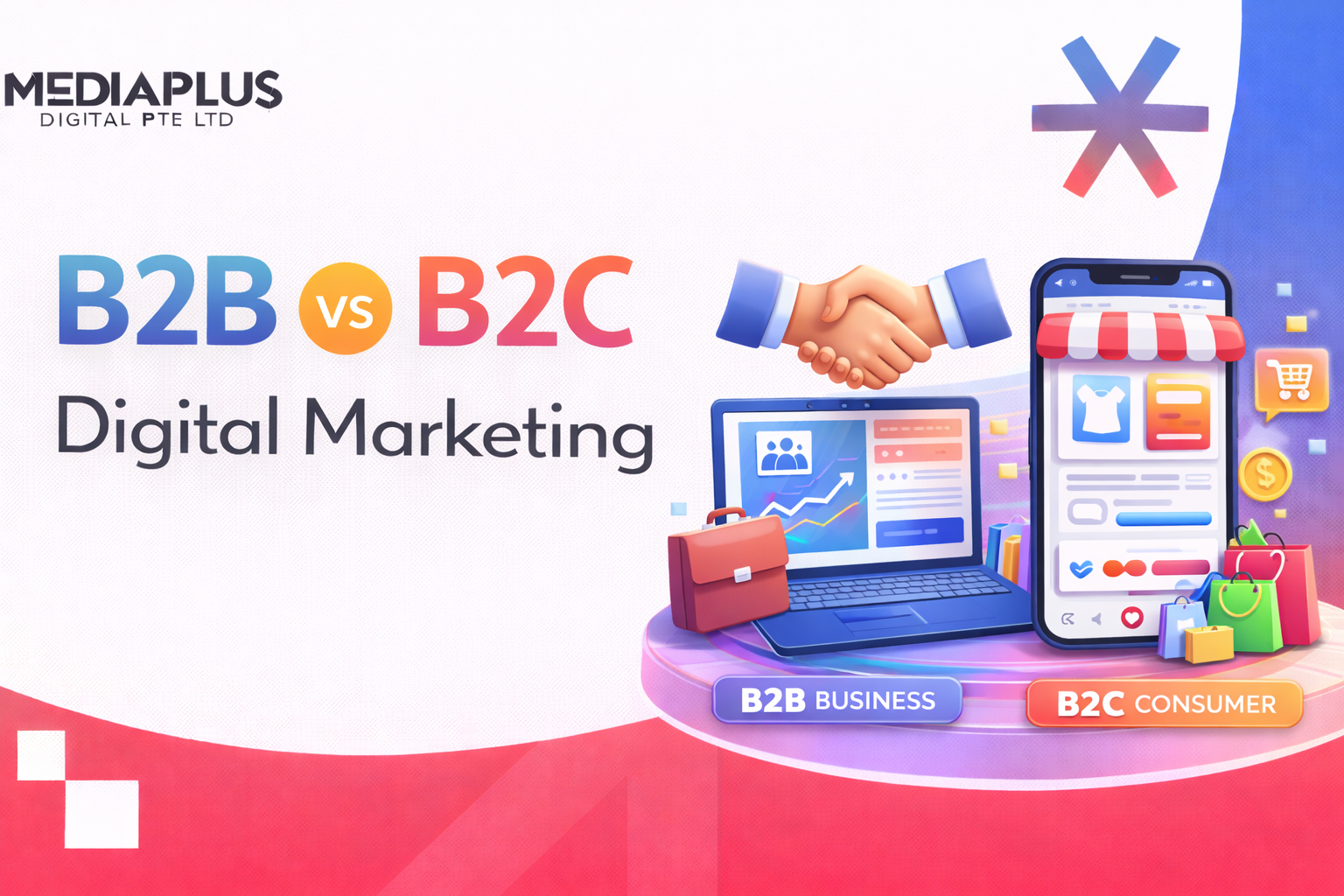
Understanding the difference between B2B vs B2C digital marketing is essential if you want to build campaigns that actually convert. While both aim to drive sales and growth, the way they approach audiences, messaging, and channels is fundamentally different.
If you apply the same strategy to both, you will likely waste budget and miss opportunities.
This guide breaks down how B2B and B2C marketing differ and how to approach each effectively.
What Is B2B Digital Marketing?
B2B (business-to-business) digital marketing focuses on selling products or services from one business to another.
This means your target audience is not an individual consumer, but decision-makers within companies such as managers, directors, or executives.
Common examples include:
- SaaS platforms selling CRM tools to companies
- Agencies offering marketing services to businesses
- Software providers targeting enterprises
B2B marketing usually involves longer sales cycles and multiple stakeholders in the decision-making process.
What Is B2C Digital Marketing?
B2C (business-to-consumer) digital marketing focuses on selling directly to individual customers.
The goal is typically simpler: attract attention, create interest, and drive a quick purchase decision.
Examples include:
- E-commerce brands selling products online
- Beauty or fashion brands targeting consumers
- Streaming services or apps
Compared to B2B, B2C campaigns are usually faster-paced and more emotionally driven.
B2B vs B2C Digital Marketing: Key Differences
1. Target Audience
B2B:
- Multiple decision-makers
- Professional roles (CEO, manager, procurement)
- Focus on logic, ROI, and efficiency
B2C:
- Individual consumers
- Personal needs and preferences
- More influenced by emotions and convenience
2. Sales Cycle
B2B:
- Longer (weeks to months or even a year)
- Requires nurturing and relationship building
B2C:
- Shorter (sometimes minutes or days)
- Faster decision-making process
3. Decision-Making Process
B2B:
- Complex and structured
- Often involves approvals, research, and comparisons
B2C:
- Simpler and more impulsive
- Can be influenced by ads, reviews, or promotions
4. Content Strategy
B2B content focuses on:
- Education and value
- Case studies and whitepapers
- Industry insights
B2C content focuses on:
- Entertainment and engagement
- Product benefits
- Lifestyle storytelling
5. Messaging Style
B2B messaging:
- Logical and data-driven
- Focus on ROI, efficiency, and problem-solving
B2C messaging:
- Emotional and relatable
- Focus on benefits, lifestyle, and experience
6. Marketing Channels
B2B common channels:
- Email marketing
- SEO and content marketing
- Webinars and events
B2C common channels:
- Instagram, TikTok, Facebook
- Influencer marketing
- Paid ads (Meta, Google)
- E-commerce platforms
Funnel Strategy: How B2B and B2C Differ
B2B Funnel
B2B marketing requires a full-funnel approach:
- Awareness: Blog content, SEO, thought leadership
- Consideration: Case studies, webinars, demos
- Conversion: Sales calls, proposals, contracts
There are often soft conversions (downloads, sign-ups) before a final purchase.
B2C Funnel
B2C funnels are more direct:
- Awareness: Social media, ads
- Consideration: Reviews, product pages
- Conversion: Quick checkout
Retargeting plays a huge role in bringing users back to complete purchases.
Creative Strategy: What Works for Each
B2B Creative
- Focus on value and expertise
- Use clear, professional messaging
- Highlight results, data, and outcomes
- CTA examples:
- Learn more
- Request a demo
- Get started
B2C Creative
- Visually engaging and fast-paced
- Focus on benefits and emotions
- Use urgency and offers
- CTA examples:
- Shop now
- Buy today
- Limited offer
Budget and ROI Considerations
B2B
- Higher cost per lead (CPL)
- Lower volume but higher value deals
- ROI depends on long-term contracts
B2C
- Lower cost per purchase
- Higher volume transactions
- Focus on immediate ROI and repeat purchases
Can a Business Do Both B2B and B2C?
Yes, and many companies do.
This is called a hybrid marketing model, where a business targets both:
- Businesses (B2B)
- Individual consumers (B2C)
For example:
- A software company selling to enterprises and individuals
- A healthcare brand selling to hospitals and consumers
In these cases, each audience requires separate strategies, messaging, and funnels.
How to Choose the Right Strategy
To decide between B2B vs B2C digital marketing, ask:
- Who is your target audience?
- How complex is the buying process?
- What is the average deal size?
- How long is your sales cycle?
Your answers will determine your:
- Content strategy
- Channel selection
- Budget allocation
How Mediaplus Singapore Supports Both B2B and B2C Marketing
In reality, many businesses today don’t operate strictly as B2B or B2C. They often need a hybrid strategy that combines both approaches across different channels and customer journeys.
This is where working with an experienced partner like Mediaplus Singapore makes a difference.
For B2B-focused campaigns, strategies typically lean on:
- SEO services Singapore to capture high-intent search traffic
- LinkedIn and Google Ads campaigns through a Google Ads agency Singapore
- Content-driven funnels supported by a digital marketing agency Singapore
For B2C brands, especially in ecommerce and lifestyle industries, the focus shifts towards:
- Social media marketing agency in Singapore for engagement and reach
- Facebook advertising agency and Instagram marketing agency for conversion-driven campaigns
- Ecommerce SEO services to drive consistent organic sales
In many cases, performance improves when both sides are connected. For example:
- SEO builds long-term traffic and authority
- Paid ads drive immediate results and testing
- Conversion rate optimization services improve ROI across both channels
Instead of treating B2B vs B2C digital marketing as separate silos, the more effective approach is to align them under a unified strategy, where each channel supports different stages of the funnel.
Final Thoughts
B2B vs B2C digital marketing is not about which one is better. It’s about understanding how different audiences think and buy.
B2B requires patience, trust, and value-driven content.
B2C requires speed, emotion, and strong creative execution.
The brands that win today are the ones that combine both performance and strategy. They don’t just follow trends, they build systems that convert.
With the right mix of SEO, paid media, and social strategy, supported by an experienced team like Mediaplus Singapore, businesses can create scalable growth across both B2B and B2C channels.