Running Google Ads without regular optimisation is one of the fastest ways to waste budget. Even well-built campaigns degrade over time due to competition, auction changes, and shifting user behaviour.
According to Google’s own advertiser benchmarks, more than 40 percent of Google Ads spend is inefficient when campaigns are not actively optimised. This is why Google Ads optimisation is not a one-time setup task. It is a continuous process.
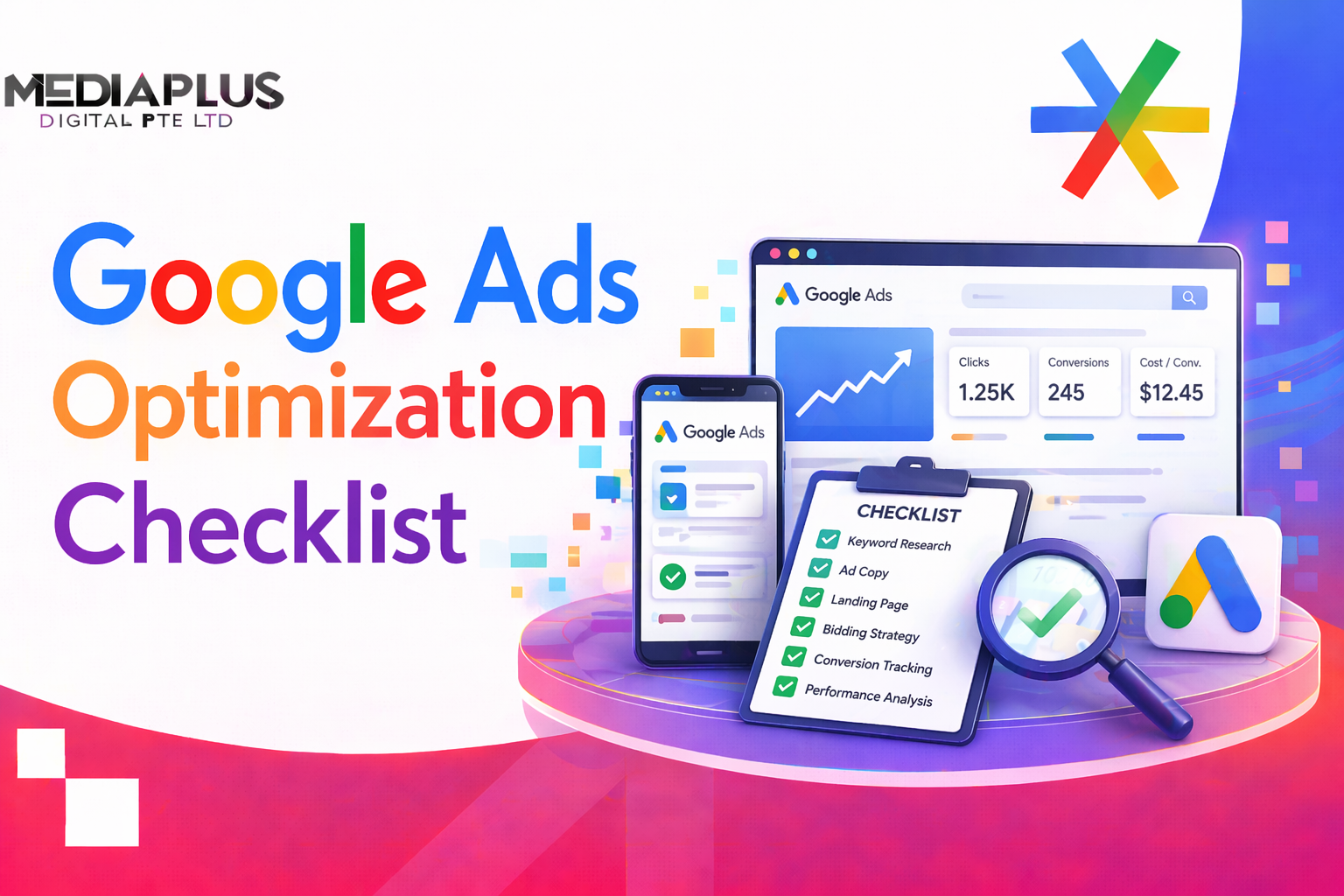
This guide walks through a practical Google Ads optimization checklist, explaining what to review, how often to review it, and why each step directly affects cost, conversions, and return on ad spend.
What Google Ads Optimization Really Means
Google Ads optimization is the process of improving campaign efficiency by aligning keywords, ads, bidding, targeting, and landing pages with real conversion data.
It focuses on:
-
Lowering cost per click and cost per conversion
-
Improving Quality Score and ad relevance
-
Redirecting budget to high-intent traffic
-
Increasing conversion rate without increasing spend
Google Ads accounts that follow a structured optimisation routine typically see 10 to 30 percent cost efficiency gains within the first 60 to 90 days, based on aggregated data from Google Premier Partners.

How Often Should You Optimize Google Ads?
Optimization frequency depends on budget and data volume, but most accounts benefit from:
-
Daily light checks for spend, conversions, and alerts
-
Weekly reviews for search terms, bids, and ads
-
Monthly deep optimization across structure, keywords, and landing pages
Google Ads algorithms also require time to learn. Making too many changes at once can reset learning phases and reduce performance temporarily. Structured, staged optimization is key.
Google Ads Optimization Checklist
1. Validate Conversion Tracking First
If conversion data is inaccurate, every optimisation decision becomes guesswork.
Confirm that:
-
All primary conversions are firing correctly
-
Conversion values reflect real business priorities
-
Google Ads is properly linked with Google Analytics 4
Google documentation confirms that automated bidding underperforms most often due to incomplete or misconfigured conversion tracking.
2. Review Campaign and Account Structure
Campaign structure controls how precisely Google can optimise.
Check whether campaigns are segmented by:
-
Product or service
-
Geography
-
Search intent such as brand, non-brand, competitor
-
Funnel stage
A common mistake is combining multiple regions with very different CPC levels into one campaign. Google’s smart bidding then favours cheaper regions, starving priority markets.
Well-structured accounts improve bidding accuracy and budget control.
3. Audit Keyword Performance and Search Terms
Keyword optimisation should always start with the search terms report, not just keyword lists.
Review:
-
High-spend queries with no conversions
-
Irrelevant or low-intent phrases to exclude
-
High-converting queries to promote into phrase or exact match
In many audits, this step alone reduces wasted spend by 15 to 25 percent within weeks.
4. Check Match Types and Keyword Overlap
Poor match type balance creates either missed demand or wasted budget.
Look for:
-
Duplicate keywords across ad groups
-
Conflicts between negative and active keywords
-
Over-restriction using exact match only
Modern Google Ads performs best with controlled broad match, supported by disciplined search term reviews.

5. Evaluate Bidding Strategy vs Conversion Volume
Bidding strategies must match data maturity.
General guideline:
-
Automated bidding needs at least 15 to 20 consistent conversions per month
-
Low-volume campaigns often perform better with manual or enhanced CPC
Switching to Target CPA or Target ROAS too early often increases CPA during extended learning phases.
6. Optimize Ads and Ad Strength
Ad relevance directly affects Quality Score, CPC, and impression share.
Ensure:
-
Each ad group has at least 2 to 3 responsive search ads
-
Ad strength is Good or Excellent
-
Messaging matches keyword intent and landing pages
Google Ads data shows that improving ad relevance can reduce CPC by up to 30 percent.
7. Use Ad Extensions Properly
Ad extensions increase visibility without increasing cost per click.
Verify that:
-
Sitelinks, callouts, and structured snippets are active
-
Extensions are specific, not generic
-
Tracking parameters are consistent
Google reports CTR lifts of 10 to 15 percent from properly implemented extensions.
8. Review Location, Device, and Schedule Performance
Segment performance by:
-
Geography
-
Device
-
Time of day and day of week
Adjust bids based on real conversion data, not assumptions. Many accounts overspend outside business hours or in low-intent locations simply because schedules were never reviewed.

9. Evaluate Landing Page Experience
Ads do not convert. Landing pages do.
Analyse:
-
Bounce rate and engagement time in GA4
-
Page speed and mobile usability
-
Alignment between ad copy and landing page message
Studies from Google UX research show that a one-second delay in load time can reduce conversions by up to 20 percent.
10. Monitor Impression Share and Budget Allocation
Lost impression share reveals missed opportunities.
Check whether loss is due to:
-
Budget limits
-
Low ad rank
-
Poor relevance
High-ROAS campaigns should never be limited by budget while low-performing campaigns continue spending.
Why Consistent Optimization Matters
Google Ads auctions change daily. Competitors adjust bids, new advertisers enter, and user intent shifts.
Accounts that follow a structured Google Ads optimization checklist consistently outperform those relying on automated recommendations alone. Optimization Score is not performance. Revenue is.
When to Work With a Professional Google Ads Agency
For many businesses, time and expertise are the main constraints. Optimization requires technical understanding, data interpretation, and disciplined execution.
At MediaPlus Digital, Google Ads is managed as a performance channel, not a traffic source.
Their Google Ads service in Singapore focuses on:
-
Conversion-first account structure
-
Search intent driven keyword strategy
-
Data-backed bidding and budget allocation
-
Continuous optimisation tied to leads and revenue
Instead of chasing clicks, MediaPlus helps businesses reduce wasted spend and scale campaigns profitably through disciplined optimisation.
If your Google Ads account is spending but not growing, a structured optimisation framework and expert management often unlocks faster gains than increasing budget.