Choosing between Search Ads and Display Ads is one of the most important decisions in paid digital advertising. Using the wrong ad type for the wrong objective can quickly drain budget without delivering meaningful results.
Both formats are powerful, but they work in very different ways. Understanding how Search Ads and Display Ads differ in intent, cost, performance, and use cases is essential for building profitable campaigns.
This guide breaks down Search Ads vs Display Ads, compares real performance benchmarks, and explains exactly when to use each type.
What Are Search Ads and Display Ads?
What Are Search Ads?
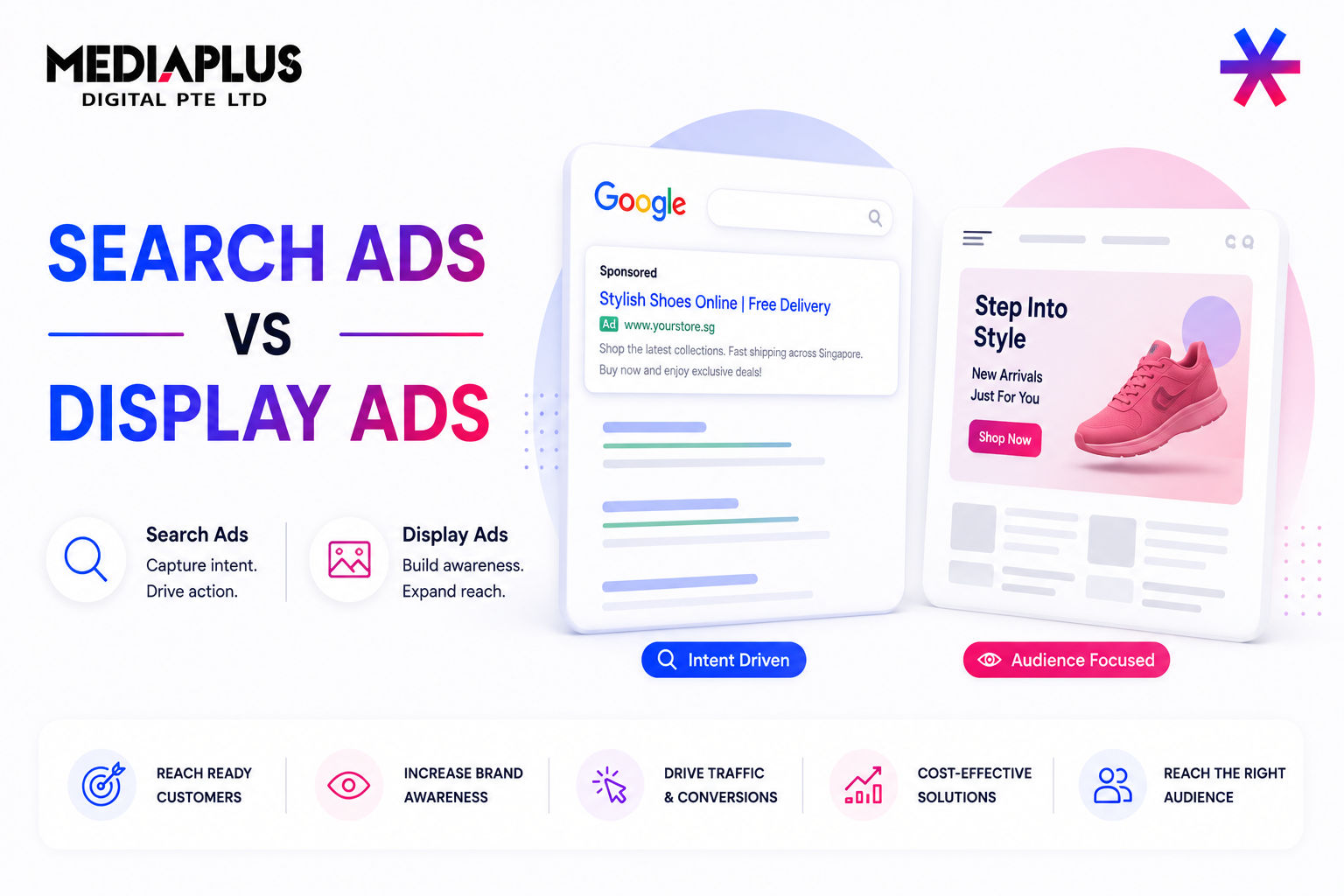
Search ads are paid text ads that appear on search engine results pages when users actively search for specific keywords. Advertisers bid on keywords using an auction-based model, and ads appear above or below organic results.
A typical search ad includes:
-
A headline
-
A display URL
-
Description text
-
Optional ad extensions such as call buttons, site links, or location details
Search ads are intent-driven. They only appear when someone is actively looking for a product or service. Placement, visibility, and cost per click depend on bid strategy and Quality Score.
Because search ads target users who are already searching, they are considered pull advertising.
What Are Display Ads?
Display ads are visual or text-based ads that appear across websites, apps, Gmail, and social placements within the Google Display Network. The GDN spans over two million websites and reaches more than 90 percent of internet users worldwide.
Display ads can appear:
-
As banner ads within website content
-
In sidebars or above articles
-
Inside Gmail inboxes
-
Within mobile apps and games
-
Across social and native placements
Unlike search ads, display ads are push advertising. They are shown based on targeting rules such as interests, demographics, placements, contextual topics, or past behaviour rather than active searches.
Search Ads vs Display Ads: Core Differences
The biggest difference between Search Ads and Display Ads is user intent.
- Search ads target users with high intent who are actively looking for solutions.
- Display ads target users with passive intent who are browsing content or discovering options.
This difference directly impacts performance, cost, and how each format should be used.
Average Performance Benchmarks: Search vs Display
Two metrics matter most when comparing Search Ads vs Display Ads: conversion rate and cost per click.
Average Conversion Rate
Across industries:
-
Search ads average conversion rate: 4.40%
-
Display ads average conversion rate: 0.57%
Even the highest-performing display industries struggle to match the lowest-performing search categories. This is because search traffic is driven by immediate intent, while display traffic is largely awareness-driven.
Average Cost Per Click
While display ads convert less frequently, they are significantly cheaper:
-
Average search CPC: $2.41
-
Average display CPC: $0.59
This makes display ads attractive for reach and awareness, but risky if used with conversion-focused expectations.
When to Use Search Ads
Search ads are most effective when demand already exists and speed matters.
1. Supplementing Organic Traffic
SEO takes time. Search ads allow businesses to appear immediately for high-intent keywords while organic rankings are still developing.
2. Capturing High-Quality Leads
Keyword targeting, match types, and negative keywords allow advertisers to align ads precisely with user intent, resulting in higher-quality leads.
3. Reaching Local Audiences
Search ads work extremely well for local services such as clinics, contractors, consultants, or retail stores. Display ads with global reach are often inefficient for these use cases.
4. Short Sales Cycles
If your product or service is purchased quickly without long consideration, search ads align perfectly with this behaviour.
5. Emergency or Urgent Services
Services such as locksmiths, plumbers, electricians, and emergency vets rely on immediate need. Users search when the problem happens, making search ads the most effective channel.
Mobile search is especially critical here, and call extensions often outperform landing page clicks.
6. Smaller Budgets
Search ads offer more control. You pay per click, target high-intent users, and can measure ROI clearly. This makes search ads ideal for businesses with limited budgets or those new to paid advertising.
When to Use Display Ads
Display ads excel when awareness, recall, and long-term consideration matter more than immediate conversions.
1. Visual Products and Services
Display ads support images, banners, and video. This makes them ideal for ecommerce, travel, lifestyle products, education, entertainment, and visually driven offers.
2. Creating Demand and Awareness
Display ads reach users who are not actively searching yet. This allows brands to introduce problems, ideas, and solutions before demand exists.
3. Long Sales Cycles
High-ticket purchases such as cars, enterprise software, education, and financial services require multiple touchpoints. Display ads help keep brands visible throughout the decision process.
This is often supported by:
-
Cross-channel marketing
-
Omnichannel messaging
-
Retargeting strategies
4. Reaching Niche Audiences
The Google Display Network allows advertisers to place ads on specific websites, topics, or content categories. This makes it easier to reach niche audiences where they already spend time.
Contextual targeting ensures ads appear alongside relevant content, increasing relevance without relying on search intent.
How Search Ads and Display Ads Work Together
Search and display ads are not competitors. They are complementary.
Display ads create awareness, familiarity, and consideration.
Search ads capture demand when users are ready to act.
Brands that combine both formats strategically often see:
-
Higher branded search volume
-
Lower search CPC over time
-
Improved conversion rates due to familiarity
-
Stronger remarketing performance
The key is alignment. Display ads should support awareness and recall, while search ads focus on capturing intent and driving conversions.
Final Thoughts: Search Ads vs Display Ads
There is no universal winner between Search Ads and Display Ads.
Search ads are best for immediate intent, leads, and revenue.
Display ads are best for awareness, reach, and long-term influence.
The mistake many advertisers make is expecting display ads to perform like search ads, or using search ads when awareness is the real problem.
When each format is used for the right purpose and connected to relevant landing pages, both can deliver strong returns.
For businesses that want to use paid media strategically, MediaPlus Digital Singapore provides both Search Ads service and Display Ads service as part of a performance-focused digital marketing approach. Campaigns are structured around intent, funnel stage, and measurable outcomes, not just impressions or clicks.
Used correctly, Search Ads and Display Ads are not budget drains. They are growth levers.