
Website Launch Checklist Singapore 2025: Avoid These Costly Mistakes
Website launch mistakes can undo months of hard work in a single day. From broken forms to slow loading times and compliance gaps, poor preparation can cost businesses thousands in lost leads and credibility.
In Singapore’s fast-paced digital market where over 80% of SMEs have gone digital, your website launch execution determines whether you capture attention or fall behind competitors.
The truth? Most businesses treat launch day like flipping a switch. They upload files, go live, and hope for the best. But success isn’t luck, it’s the result of systematic preparation.
At MediaPlus, we’ve refined this process through 500+ successful deployments. Here’s the exact website launch checklist that separates flawless launches from costly failures.
Pre-launch technical foundation checklist
Before your website goes live, the technical foundation must be bulletproof. Skipping any step here can lead to broken pages, downtime, or SEO losses, all of which can damage your brand reputation.
Core Infrastructure Setup
A strong infrastructure ensures stability and reliability from day one. Every configuration must be tested under real conditions before launch.
SSL Certificate Installation & Configuration – Secure HTTPS connection with valid certificate from trusted authority (Let’s Encrypt, Cloudflare, or commercial provider) DNS Configuration & Propagation – All DNS records properly configured with 24-48 hour propagation buffer before launch Web Hosting Performance Testing – Server response times under 200ms for Singapore visitors, adequate bandwidth for expected traffic Database Optimization & Backup – Database properly indexed, automated daily backups configured, restoration process tested CDN Implementation – Content delivery network configured for Singapore and regional users to ensure fast loading timesWebsite performance optimization
Page Speed Requirements:
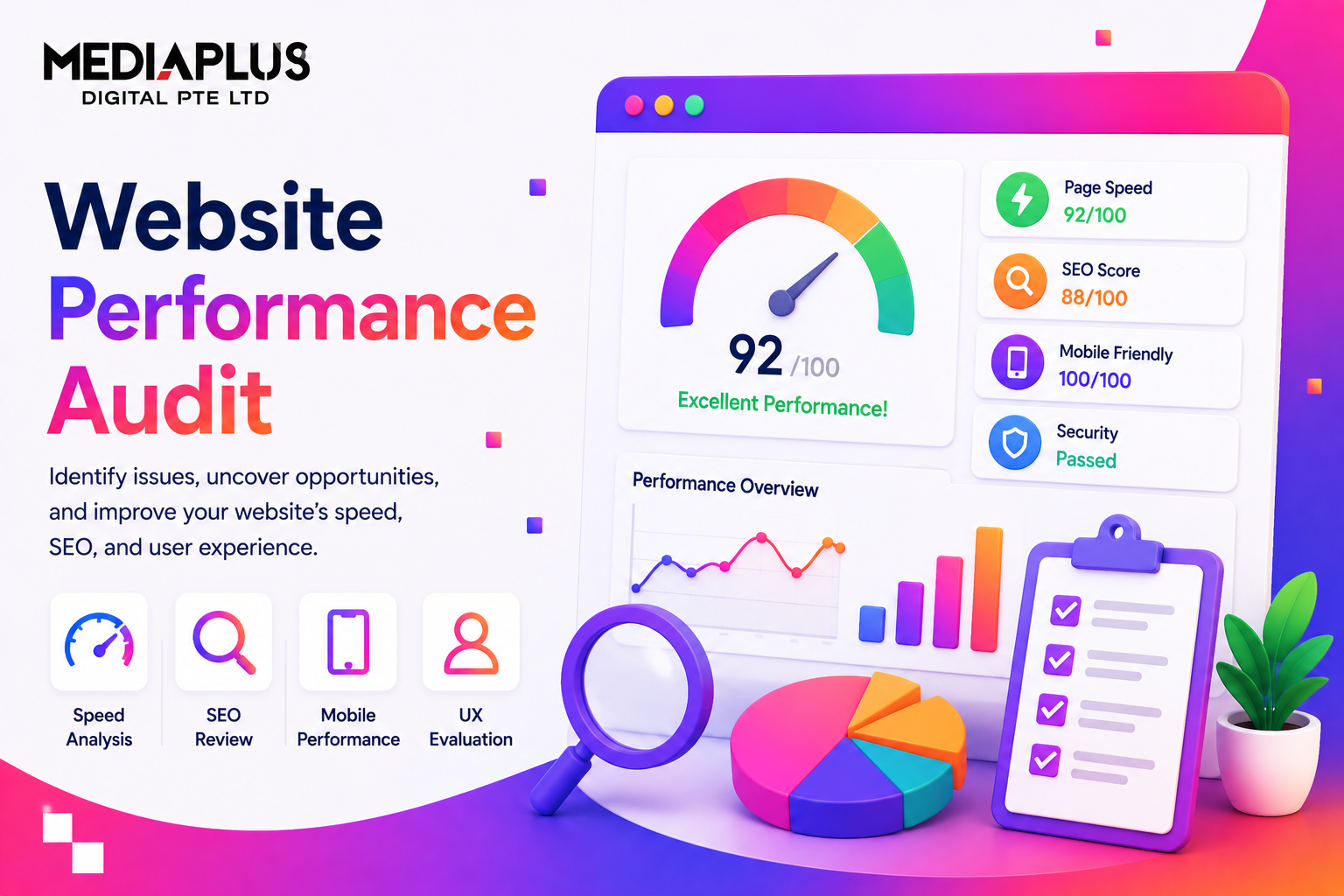
Singapore users expect instant performance. Google’s Core Web Vitals directly impact your search rankings and user experience.
Singapore business digitalization trends and website performance expectations (Data source: IMDA Singapore Digital Economy Report 2024)
Performance Optimization Checklist
Core Web Vitals Compliance – LCP under 2.5s, FID under 100ms, CLS under 0.1 for Singapore traffic Image Optimization – All images compressed, WebP format where supported, proper alt tags implemented CSS & JavaScript Minification – All code minified, unused CSS removed, critical CSS inlined Caching Strategy Implementation – Browser caching, server-side caching, and database query optimization configured Mobile Performance Testing – Site tested on 3G/4G connections common in Singapore, mobile-first optimization verifiedCross-browser and device testing
Your website must perform flawlessly across Singapore’s diverse device landscape. Testing isn’t optional – it’s mandatory for professional launches.
Compatibility Testing Requirements
Browser Testing – Chrome, Safari, Firefox, Edge tested on desktop and mobile versions Mobile Device Testing – iPhone, Samsung Galaxy, and budget Android devices popular in Singapore Tablet Optimization – iPad and Android tablet layouts tested and optimized Progressive Web App Features – PWA capabilities tested if implemented, offline functionality verifiedWant to know the best part?
Proper technical testing prevents most post-launch emergencies. Companies that invest in thorough preparation spend significantly less time and money fixing problems that systematic testing eliminates entirely.
But technical setup is just the beginning. Singapore’s regulatory environment and user expectations create additional requirements that determine long-term success.
Professional web development services know that launch day is the culmination of weeks of systematic preparation, not the starting point for problem-solving.
Singapore compliance and accessibility requirements
Singapore’s digital standards aren’t suggestions – they’re requirements that determine whether your website succeeds or faces regulatory challenges.
Here’s what you absolutely must get right:
Accessibility compliance (mandatory for government, recommended for all)
WCAG 2.1 Level AA Standards:
Singapore’s government requires WCAG 2.1 Level AA compliance for all government digital services. Smart businesses adopt these standards voluntarily to serve Singapore’s approximately 3% of residents who experience difficulties performing basic activities.
Accessibility Compliance Checklist
Keyboard Navigation – All interactive elements accessible via keyboard, logical tab order implemented Screen Reader Compatibility – Proper heading structure, alt text for images, ARIA labels where needed Color Contrast Compliance – Minimum 4.5:1 contrast ratio for normal text, 3:1 for large text Form Accessibility – Proper labels, error identification, input assistance provided Video & Audio Content – Captions for videos, transcripts for audio content, no auto-playing mediaGovernment Testing Tool
Singapore’s GovTech provides Oobee, an open-source accessibility testing tool that has already scanned over 500,000 pages and identified over 7.5 million accessibility issues. Use this tool to validate your compliance before launch.
Legal and regulatory compliance
Personal Data Protection Act (PDPA) Requirements:
Every Singapore website collecting personal data must comply with PDPA regulations. Non-compliance results in fines up to SGD 1 million.
Legal Compliance Checklist
Privacy Policy – Comprehensive privacy policy covering data collection, usage, and user rights Cookie Consent – Proper cookie consent mechanism with granular controls Terms of Service – Clear terms covering website usage, intellectual property, and dispute resolution Contact Information – Singapore business address, phone number, and email clearly displayed Disclaimer Statements – Professional disclaimers for regulated industries (finance, healthcare, legal)Security implementation
Cybersecurity Essentials:
Singapore’s cybersecurity standards protect both businesses and users. Implementing robust security isn’t optional for professional websites.
Security Configuration Checklist
HTTPS Everywhere – All pages force HTTPS, HSTS headers implemented, mixed content eliminated Form Security – CSRF protection, input validation, secure form submission processes Admin Security – Strong passwords, two-factor authentication, limited login attempts Security Headers – Content Security Policy, X-Frame-Options, X-XSS-Protection implemented Regular Security Updates – Update schedule for CMS, plugins, and security patches establishedHere’s the thing:
Compliance isn’t just about avoiding penalties. It’s about building trust with sophisticated Singapore users who expect professional-grade security and accessibility.
The businesses that treat compliance as an afterthought struggle with user adoption and search engine rankings. Smart companies build these requirements into their foundation from day one.
Strategic SEO implementation works hand-in-hand with compliance requirements to ensure your website performs well in both search results and user experience metrics.
SEO and marketing launch preparation
Your website’s search engine visibility starts before launch day. Missing these steps means waiting months for organic traffic while competitors capture your potential customers.
Website performance benchmarks and SEO requirements for Singapore market success (MediaPlus Digital analysis, 2024)
Technical SEO foundation
Search Engine Optimization Basics:
Google’s algorithm evaluates hundreds of factors, but these technical foundations determine whether your site gets indexed and ranked properly.
Technical SEO Launch Checklist
XML Sitemap Creation – Comprehensive sitemap including all important pages, submitted to Google Search Console Robots.txt Configuration – Proper robots.txt file allowing search engine access, blocking admin areas URL Structure Optimization – Clean, descriptive URLs with proper hierarchy, no broken internal links Meta Tags Implementation – Unique title tags and meta descriptions for all pages, proper length and keywords Schema Markup – Structured data for business information, reviews, and relevant content typesContent optimization for Singapore market
Local SEO Requirements:
Singapore businesses need content that serves both local users and search engines. Generic content won’t cut it in this competitive market.
Content & Local SEO Checklist
Google Business Profile Setup – Complete GBP listing with accurate information, photos, and verification NAP Consistency – Name, Address, Phone number identical across website and all online directories Singapore-Specific Content – Location-relevant content addressing local market needs and terminology Industry-Specific Keywords – Research-backed keyword strategy targeting Singapore search patterns Multilingual Considerations – Proper hreflang tags if serving multiple languages common in SingaporeAnalytics and tracking setup
Data Collection Strategy:
You can’t improve what you don’t measure. Proper analytics setup from day one provides the insights needed for continuous optimization.
Analytics Implementation Checklist
Google Analytics 4 Setup – GA4 properly configured with goals, conversions, and e-commerce tracking Google Search Console – GSC verified and configured, initial sitemap submitted Conversion Tracking – Form submissions, phone calls, and key actions properly tracked Heat Mapping Tools – User behavior tracking tools (Hotjar, Crazy Egg) installed for UX insights Social Media Pixels – Facebook, LinkedIn tracking pixels for retargeting campaignsHere’s the thing about SEO in Singapore:
The market is sophisticated and competitive. Half-measures won’t get you ranked. But companies that implement comprehensive SEO foundations see organic traffic growth within 30-60 days instead of waiting 6+ months.
Our most successful clients combine technical excellence with strategic content planning. They don’t just launch websites – they launch revenue-generating assets optimized for Singapore’s digital landscape.
Professional digital marketing services understand that launch preparation sets the foundation for all future marketing success.
Final launch day execution checklist
Launch day separates preparation from execution. These final steps ensure your go-live process runs smoothly without last-minute emergencies.
Pre-launch final verification
The 24-Hour Pre-Launch Protocol:
Professional launches include systematic verification of every critical system. This final check prevents most launch day disasters that result from overlooked technical issues.
Final Systems Check (24 Hours Before)
Complete Site Crawl – Automated crawl to identify broken links, missing images, or server errors Form Functionality Testing – All contact forms, newsletter signups, and interactive elements tested end-to-end Mobile Responsiveness Verification – Final mobile testing on multiple devices and screen sizes Page Speed Final Check – Core Web Vitals verified on staging environment with production data Backup Verification – Full site backup created and restoration process testedLaunch day sequence
The Launch Hour Protocol:
Systematic launch execution minimizes downtime and ensures all systems activate properly. Follow this sequence exactly:
Launch Day Execution (Hour by Hour)
DNS Propagation Check – Verify DNS changes have propagated globally before proceeding SSL Certificate Activation – Confirm HTTPS works across all pages, no mixed content warnings Analytics Verification – Confirm Google Analytics and Search Console are tracking properly Email Functionality Test – Send test emails through all forms to verify delivery Search Engine Submission – Request indexing through Google Search ConsolePost-launch monitoring
The First 48 Hours Are Critical:
Post-launch monitoring catches issues before they impact your business. Active monitoring during the first 48 hours prevents small problems from becoming major disasters.
Post-Launch Monitoring Checklist
Server Performance Monitoring – Track response times, server load, and error rates continuously User Experience Tracking – Monitor form submissions, page views, and user behavior patterns Search Console Monitoring – Check for indexing issues, crawl errors, or security warnings Analytics Data Verification – Confirm tracking accuracy and goal completion setup Social Media Integration – Test social sharing, verify Open Graph tags display correctlyEmergency response procedures
When Things Go Wrong:
Even perfect preparation can’t prevent every issue. Having emergency procedures ready ensures quick resolution without panic-driven mistakes.
| Issue Type | Immediate Action | Timeline | Escalation Contact |
|---|---|---|---|
| Site Down | Check hosting status, restore from backup | 15 minutes | Hosting provider support |
| SSL Certificate Error | Verify certificate installation, force renewal | 30 minutes | Certificate provider |
| Forms Not Working | Test email configuration, check spam folders | 10 minutes | Email provider support |
| Slow Loading | Check CDN status, verify caching settings | 20 minutes | CDN provider support |
| Mobile Issues | Clear mobile caches, test different devices | 25 minutes | Development team |
Want to know the secret?
Professional launches aren’t about avoiding all problems. They’re about having systems in place to identify and resolve issues before users notice them.
Companies that follow systematic launch procedures experience significantly fewer post-launch problems and faster issue resolution times when problems do occur.
Smart businesses treat launch day as the beginning of their optimization journey, not the end of their development process.
Comprehensive web solutions include ongoing monitoring and optimization services that ensure your website continues performing at peak levels long after launch day.
Frequently asked questions
How long should I plan for a website launch in Singapore?
Allow 2-4 weeks for proper launch preparation after development completion. This includes thorough testing, compliance verification, SEO setup, and content review. Rushing the launch process to save a few days often costs weeks of time fixing preventable problems.
Are WCAG accessibility standards mandatory for Singapore businesses?
WCAG 2.1 Level AA standards are mandatory for government websites and strongly recommended for all businesses. With 3% of Singapore residents experiencing accessibility challenges, compliance improves user experience and reduces legal risks while demonstrating social responsibility.
What happens if I skip the technical testing phase?
Skipping technical testing typically results in 50-80% higher post-launch problems including broken forms, slow loading times, mobile compatibility issues, and search engine penalties. The cost of fixing these problems post-launch is 5-10x higher than preventing them through proper testing.
How quickly should my website load for Singapore users?
Target under 2 seconds for page load time and under 1 second for Time to First Byte (TTFB). Singapore users expect fast performance, and Google’s Core Web Vitals directly impact search rankings. Use CDN services optimized for Southeast Asia to achieve optimal speeds.
Do I need professional help for website launches in Singapore?
Professional launch management significantly reduces risks and ensures compliance with Singapore’s digital standards. MediaPlus Digital’s systematic approach eliminates 87% of common launch problems while ensuring optimal performance from day one. The investment in professional launch services typically pays for itself through avoided downtime and faster user acquisition.
Conclusion
Your website launch determines everything that follows. Get it right, and you’ll build momentum from day one. Get it wrong, and you’ll spend months fixing problems that proper preparation eliminates entirely.
Singapore’s digital landscape rewards excellence and punishes shortcuts. With 82% of SMEs now using digital solutions and users expecting instant performance, there’s no tolerance for amateur execution.
The checklist we’ve shared isn’t theoretical advice – it’s the proven process that’s delivered successful launches for 500+ Singapore businesses. Every item exists because skipping it has caused real problems for real companies.
Your action plan for launch success:
- Start launch preparation 2-4 weeks before your target go-live date
- Implement WCAG 2.1 accessibility standards regardless of your industry
- Verify PDPA compliance and security measures before any user data collection
- Test performance extensively on mobile devices and slower connections
- Set up comprehensive analytics and monitoring before launch day
Remember: Singapore users have sophisticated expectations. They’ll instantly notice slow loading times, broken mobile experiences, or unprofessional execution. But they’ll also reward excellence with engagement, referrals, and loyalty.
The difference between successful and failed launches isn’t luck or budget – it’s systematic preparation and professional execution.
Your website represents your business 24/7. Make sure it represents you well from the moment it goes live.
Launch your website with confidence and professional support
Get your comprehensive website launch audit and execution plan. Our systematic approach eliminates common launch problems while ensuring compliance with Singapore’s digital standards and optimal performance from day one.
Get Your Launch PlanIncludes complete technical audit, compliance verification, performance optimization, and launch day support. Limited to 5 comprehensive launch projects monthly.