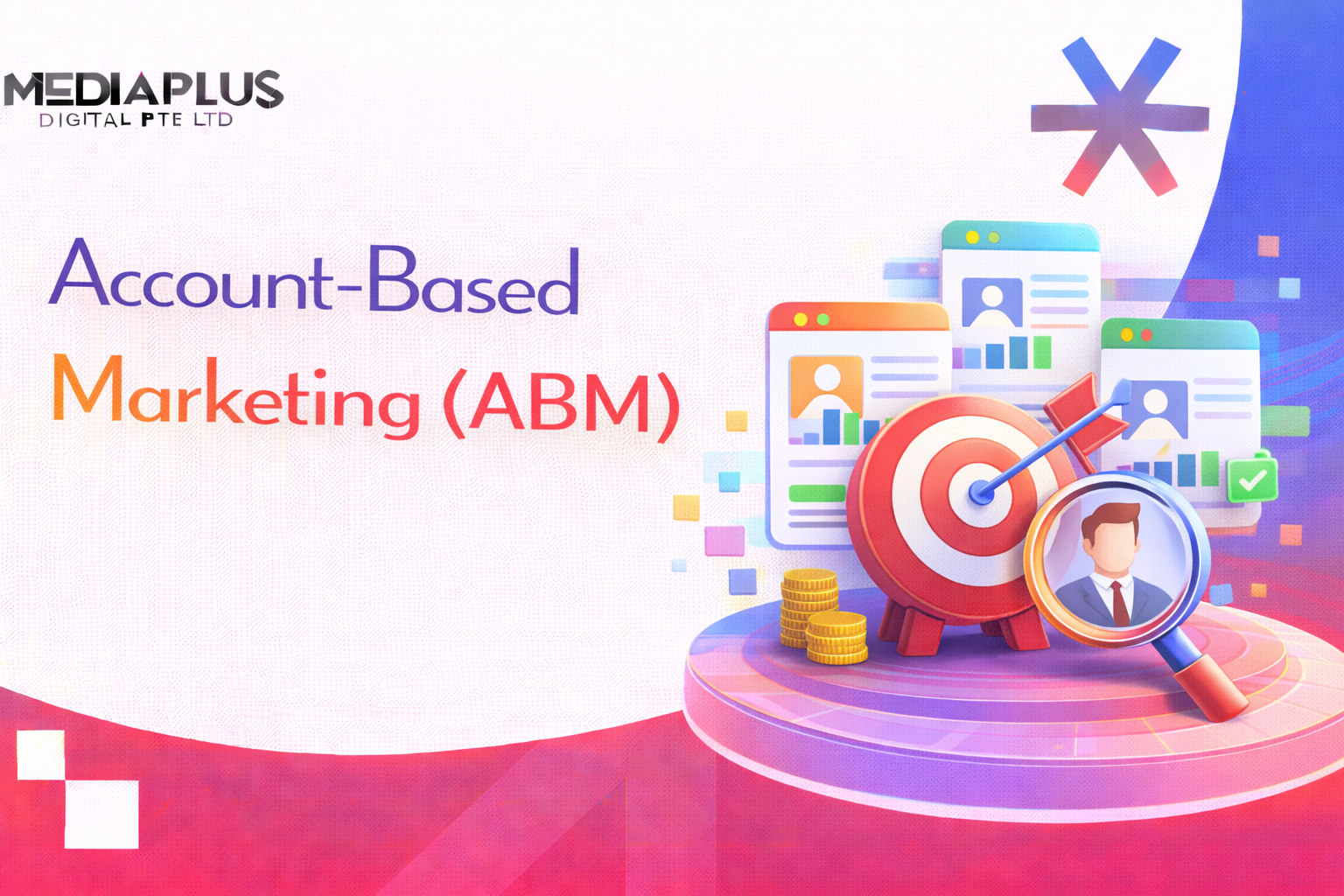
Account-Based Marketing (ABM) has become one of the most effective strategies for B2B companies looking to target high-value clients.
Instead of casting a wide net and generating large volumes of leads, ABM focuses on a smaller number of high-potential accounts and engages them with highly personalised campaigns.
This approach shifts marketing from quantity to quality, and when executed correctly, it can significantly improve ROI.
What Is Account-Based Marketing?
Account-Based Marketing (ABM) is a strategy where marketing and sales teams work together to target specific high-value accounts with personalised campaigns.
Rather than targeting a broad audience, ABM focuses on:
- Key companies (accounts)
- Specific decision-makers within those companies
- Tailored messaging based on their needs
The goal is to engage, nurture, and convert these accounts into customers.
ABM also extends beyond acquisition. It can be used for:
- Upselling
- Cross-selling
- Strengthening long-term relationships
Why Account-Based Marketing Matters in B2B
In traditional marketing, businesses generate leads and then qualify them.
In ABM, the process is reversed.
You first identify high-value accounts, then build campaigns specifically for them.
This is especially useful when:
- Deal sizes are large
- Sales cycles are long
- Multiple stakeholders are involved
For many B2B companies, this results in more efficient use of resources and better conversion rates.
Key Benefits of Account-Based Marketing
1. Highly Personalised Marketing
ABM allows you to tailor messaging to each account.
Instead of generic campaigns, you create content based on:
- Industry
- Company size
- Pain points
- Decision-maker roles
This leads to stronger engagement and better customer experience.
2. Better Alignment Between Sales and Marketing
ABM requires close collaboration between teams.
- Marketing generates insights and content
- Sales engages directly with accounts
This alignment reduces friction and improves efficiency throughout the funnel.
3. Shorter Sales Cycles
Although B2B sales are typically long, ABM helps accelerate the process.
By targeting multiple stakeholders at the same time and delivering relevant messaging, decision-making becomes faster.
4. Higher ROI
Because ABM focuses on high-value accounts, it often delivers stronger returns compared to traditional lead generation strategies.
You are investing resources where the potential revenue is highest.
5. Less Wasted Budget
Instead of spending on broad campaigns, ABM concentrates budget on accounts that are most likely to convert.
This makes it more cost-efficient, especially for companies with limited marketing budgets.
Core Components of an ABM Strategy
1. Identify High-Value Target Accounts
Start by defining your Ideal Customer Profile (ICP):
- Industry
- Company size
- Revenue
- Geographic location
These are the accounts most likely to generate high-value deals.
2. Research Each Account
Understanding your target accounts is critical.
You need to identify:
- Business challenges
- Current solutions
- Pain points
- Buying stage
This allows you to craft relevant messaging.
3. Segment and Prioritise Accounts
Not all accounts should be treated equally.
Segment based on:
- Industry
- Deal size potential
- Urgency or intent signals
This helps allocate resources effectively.
4. Create Personalised Campaigns
This is the core of ABM.
Campaigns should include:
- Custom landing pages
- Personalised email outreach
- Tailored ad creatives
- Industry-specific content
The goal is to make every interaction feel relevant and valuable.
5. Use Multi-Channel Engagement
ABM works best when multiple channels are combined:
- Email marketing
- LinkedIn outreach
- PPC campaigns
- Events and webinars
- Website personalisation
Each channel supports different stages of the buyer journey.
6. Measure Performance
ABM success is measured differently from traditional marketing.
Key metrics include:
- Account engagement
- Pipeline value
- Deal size
- Sales cycle length
- Customer lifetime value
These metrics provide a clearer view of ROI.
Common ABM Tactics That Work
Some of the most effective ABM tactics include:
- Personalised email campaigns
- Targeted LinkedIn and PPC ads
- Webinars tailored to specific industries
- Direct outreach by sales teams
- Website personalisation based on visitor data
These tactics work best when combined into a cohesive strategy.
How Mediaplus Singapore Supports ABM Strategy
Executing Account-Based Marketing requires both strategy and technical capability.
Mediaplus Singapore helps businesses implement ABM through a combination of:
- SEO services Singapore to capture high-intent B2B search demand
- Google Ads agency Singapore and PPC agency Singapore for targeted account-based campaigns
- LinkedIn and programmatic advertising services to reach decision-makers directly
- Landing page design services to create personalised experiences for each account
- Conversion rate optimization services to improve lead-to-customer conversion
In ABM, success depends on how well each touchpoint is aligned.
This means:
- Ads must match messaging
- Landing pages must be relevant
- Content must address real business problems
By integrating these elements, businesses can create a seamless experience that moves target accounts through the funnel more efficiently.
When Should You Use Account-Based Marketing?
ABM is most effective when:
- You target enterprise or high-value clients
- Your sales cycle is complex
- You need to engage multiple stakeholders
- Your product or service has a high contract value
For smaller, transactional businesses, traditional marketing may still be more suitable.
Final Thoughts
Account-Based Marketing is not just a tactic. It is a shift in how B2B marketing works.
Instead of chasing leads, you focus on the accounts that matter most.
Instead of generic messaging, you deliver personalised experiences.
And instead of measuring volume, you measure value.
When combined with the right mix of SEO, paid media, and conversion optimisation, ABM can become one of the most powerful growth strategies for B2B companies.