Search engine optimisation remains one of the most cost-effective growth channels in digital marketing, but not all SEO strategies are built the same. The approach that works for a blog, corporate website, or service business often falls short for an online store.
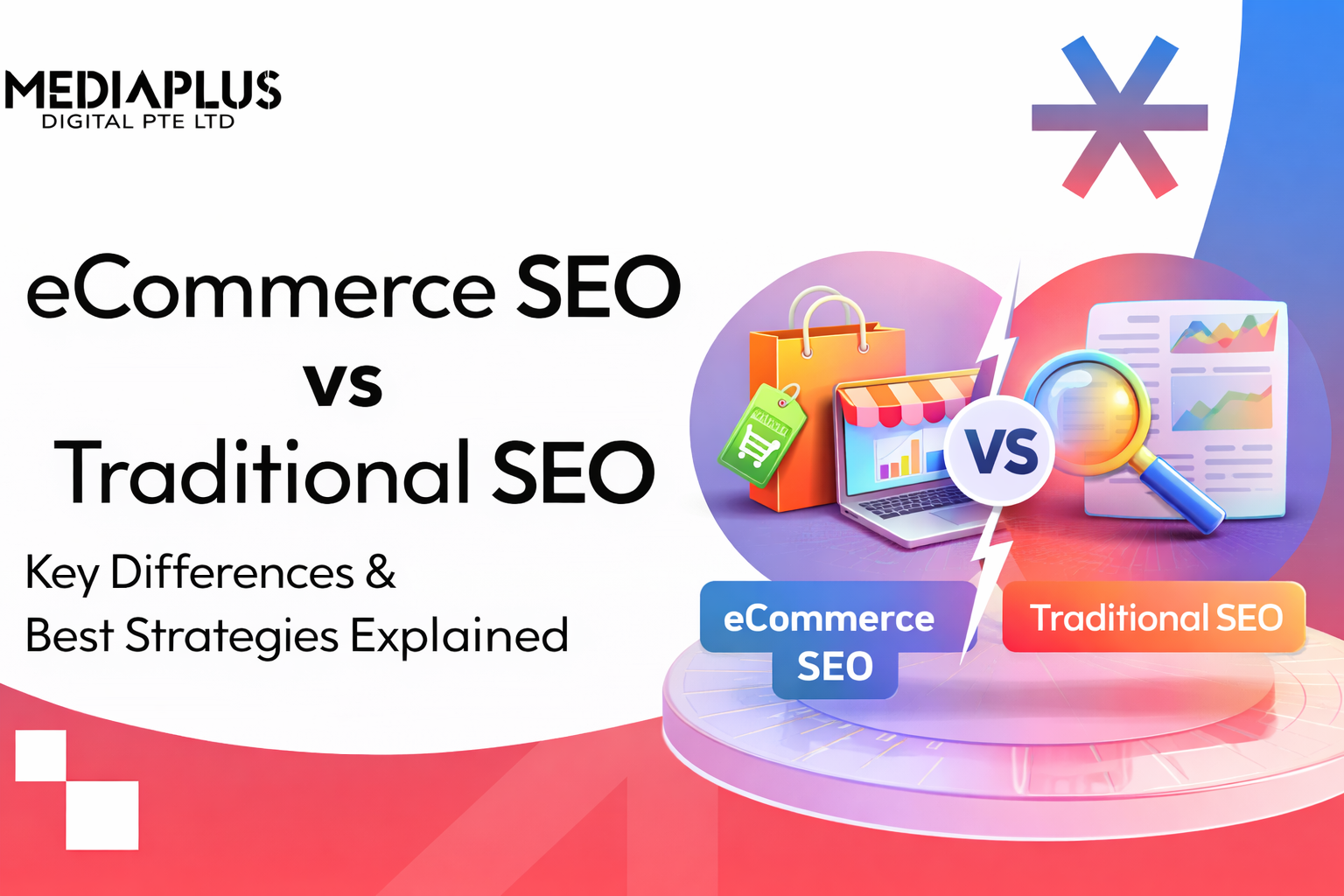
If your revenue depends on product sales, ecommerce SEO vs traditional SEO is not just a technical distinction. It directly affects traffic quality, conversion rates, and long-term profitability.
This in-depth guide explains how the two differ, why ecommerce SEO requires a more advanced framework, and how choosing the right strategy can significantly impact revenue growth.
What Is Traditional SEO?
Traditional SEO focuses on improving visibility for websites that are primarily informational or service-based. These include blogs, corporate sites, consultants, agencies, and professional services.
The main objective is to attract visitors, build trust through content, and convert users into enquiries or leads rather than immediate purchases.
Traditional SEO typically prioritises:
-
Long-form blog content and educational articles
-
Service pages and location-based landing pages
-
Informational and research-driven keywords
-
Backlinks and topical authority
-
General technical health and user experience
For example, a consulting firm may publish in-depth thought leadership articles and optimise service pages to build credibility. Conversions often happen after multiple visits and touchpoints.
Success metrics usually include organic traffic growth, time on site, enquiries, and assisted conversions.
What Is Ecommerce SEO?
Ecommerce SEO is purpose-built for online stores. Its primary goal is to attract users who are ready to buy and guide them efficiently from search results to checkout.
Instead of relying mainly on blog content, ecommerce SEO places heavy emphasis on product pages, category pages, internal linking, and technical scalability.
Ecommerce SEO typically focuses on:
-
Product and category page optimisation
-
Transactional and commercial keywords
-
Clear site architecture and navigation
-
Image optimisation and structured data
-
Inventory handling, filters, and crawl efficiency
Unlike traditional websites, ecommerce sites can have hundreds or thousands of URLs. SEO is never static. It must adjust continuously to seasonality, stock levels, pricing changes, promotions, and evolving search behaviour.
According to industry benchmarks, ecommerce websites that rank on page one for high-intent keywords can see conversion rates between 2 to 5%, compared to sub-1 % for low-intent informational traffic.
Key Differences Between Ecommerce SEO and Traditional SEO
Search Intent and Keyword Strategy
Traditional SEO mainly targets informational intent. Users are researching, comparing, or learning, not necessarily buying.
Ecommerce SEO targets high-intent searches where users are close to making a purchase. These include brand-specific terms, product names, and feature-driven queries.
Keyword research for ecommerce is more granular and commercially focused. A broad keyword like “shoes” has little value on its own. Intent only becomes clear when refined into queries such as “women’s running shoes Singapore” or “leather office shoes size 42.”
Data from ecommerce platforms consistently shows that long-tail transactional keywords convert 2 to 3 times higher than generic terms.
Content Strategy and Page Purpose
Traditional SEO relies heavily on blogs, guides, and evergreen educational content.
Ecommerce SEO relies on pages that sell. Product descriptions, category introductions, FAQs, and user reviews function as digital sales assistants. These pages must answer buying objections while remaining optimised for search engines.
Duplicated or manufacturer-supplied product descriptions are a common ecommerce SEO mistake. Studies show that unique, optimised product content can improve organic visibility by 20 to 40% compared to generic descriptions.
Every ecommerce page must balance persuasion, clarity, trust signals, and SEO best practices.
Site Structure and Navigation Complexity
Site structure plays a much larger role in ecommerce SEO.
Online stores often include:
-
Multiple category and subcategory layers
-
Filters for size, colour, price, brand, or availability
-
Seasonal collections and promotional pages
If this structure is poorly planned, users get lost and search engines struggle to understand page relationships. This increases bounce rates and wastes crawl budget.
Google data shows that sites with clear hierarchical structures and strong internal linking tend to rank faster and more consistently than sites with fragmented navigation.
Traditional SEO websites usually have fewer pages and simpler URL structures, making optimisation more straightforward.
Technical SEO Requirements
Technical SEO is important for all websites, but ecommerce platforms introduce additional challenges.
Ecommerce SEO must actively manage:
-
Duplicate URLs created by filters and sorting parameters
-
Pagination and faceted navigation
-
Out-of-stock and discontinued products
-
Page speed across large numbers of pages
-
Structured data for products, pricing, availability, and reviews
Slow ecommerce sites are particularly vulnerable. Research indicates that a 1-second delay in page load time can reduce ecommerce conversions by up to 7%.
Traditional SEO sites typically deal with fewer URLs, fewer parameters, and less technical overhead.
Conversion and Revenue Measurement
Traditional SEO success is often measured by visibility, engagement, and lead generation.
Ecommerce SEO success is measured by revenue, conversion rate, average order value, and return on investment. Rankings only matter if they drive profitable sales.
This is why ecommerce SEO is tightly linked with UX, product page layout, trust signals, reviews, and checkout optimisation. SEO cannot be separated from conversion performance.
Why Ecommerce SEO Requires a Different Strategy
Global ecommerce continues to grow at double-digit rates, and competition in search results is intense. In many verticals, paid advertising costs are rising year after year, making organic visibility increasingly valuable.
Ecommerce SEO helps businesses:
-
Capture buyers at the exact moment of purchase intent
-
Reduce long-term dependency on paid ads
-
Build sustainable visibility and brand trust
-
Generate compounding traffic and revenue over time
Unlike paid media, SEO does not stop the moment budgets pause. Well-optimised ecommerce pages can deliver sales for years with ongoing refinement.
When Traditional SEO Still Matters for Ecommerce Brands
Ecommerce brands still benefit from traditional SEO elements such as blogs, buying guides, and educational content. These support early-stage research and help build authority.
The key difference is integration. Ecommerce SEO connects informational content directly to product discovery, category pages, and conversion paths rather than treating content as a separate effort.
This full-funnel approach improves assisted conversions and increases lifetime customer value.
Choosing the Right SEO Approach for Your Business
If your website’s primary goal is selling products online, ecommerce SEO is not optional.
It requires:
-
Strategic keyword mapping across categories and products
-
SEO-friendly site architecture from day one
-
Conversion-focused content creation
-
Continuous optimisation as inventory and trends change
Many businesses struggle because they apply traditional SEO tactics to ecommerce sites without adapting them to commercial intent and technical complexity.
How MediaPlus Digital Supports Ecommerce SEO in Singapore
At MediaPlus Digital, ecommerce SEO is treated as part of a complete growth system rather than a standalone tactic.
Our ecommerce SEO service focuses on increasing visibility for product and category pages, improving site structure, and driving traffic that converts into revenue. We also provide a comprehensive SEO service for brands that want to combine technical optimisation, content strategy, and performance tracking into one cohesive approach.
By aligning ecommerce SEO with website design, UX, and analytics, businesses achieve sustainable organic growth that supports long-term revenue, not just short-term ranking wins.
If you are deciding between ecommerce SEO vs traditional SEO, the choice becomes clear once you understand how your business makes money. The right strategy is the one that aligns SEO effort directly with sales outcomes.