
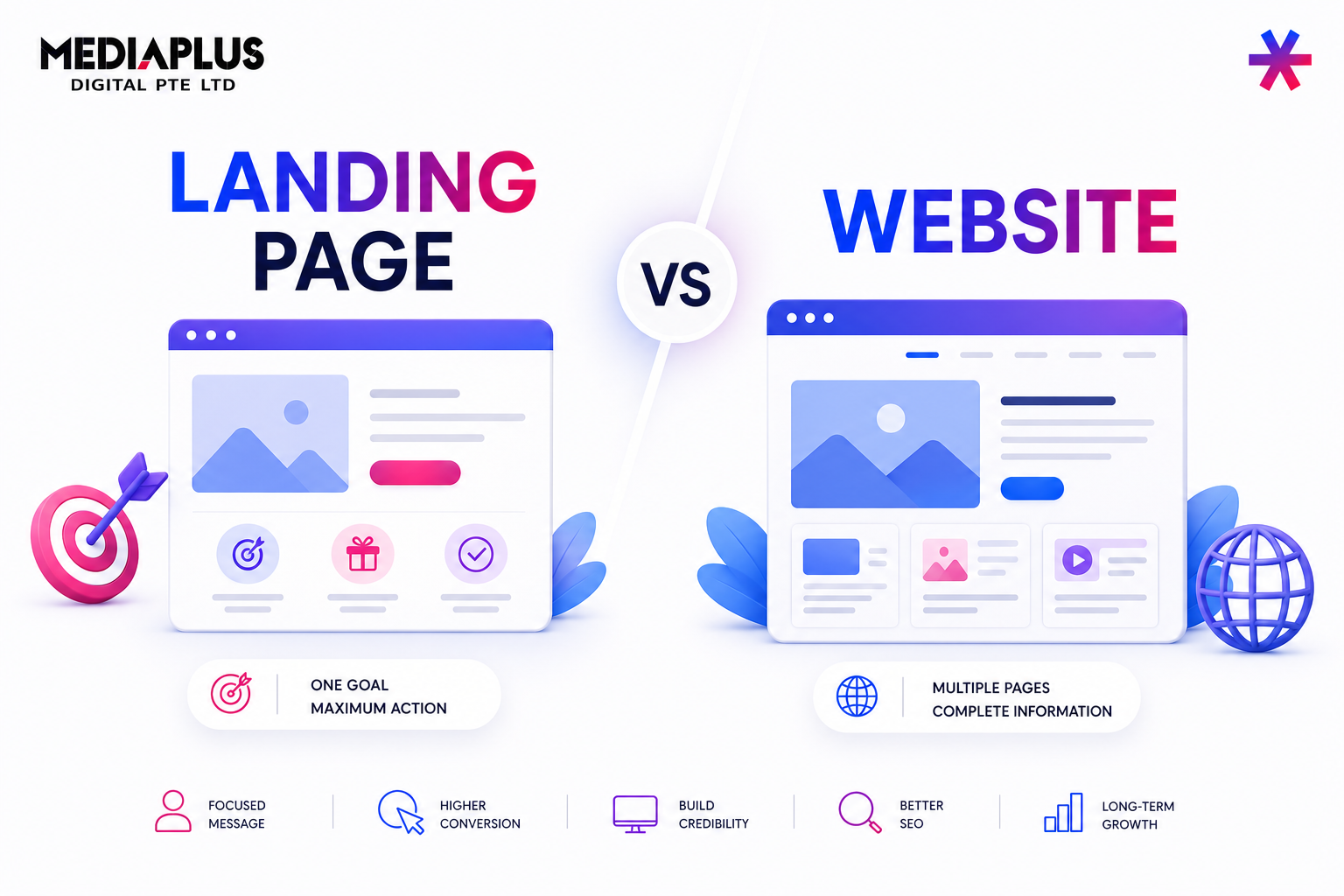
When building an online presence, businesses often ask the same question: landing page vs website, which one should you use?
Although they may look similar, landing pages and websites serve very different purposes in digital marketing. Understanding the difference helps businesses design better marketing funnels, increase conversions, and improve overall online performance.
In this guide, we’ll break down the key differences between landing pages and websites, when to use each one, and how they work together to support business growth.
What Is a Landing Page?
A landing page is a standalone web page designed for a single marketing objective.
Visitors typically arrive on a landing page after clicking a link from:
-
Google Ads
-
Social media campaigns
-
Email marketing
-
Influencer promotions
-
Display advertising
Unlike regular web pages, landing pages focus on one specific action such as:
-
Signing up for a free trial
-
Downloading an ebook
-
Booking a consultation
-
Purchasing a product
Because they remove distractions and guide visitors toward one goal, landing pages are highly effective at converting traffic into leads or customers.
What Is a Website?
A website is a collection of interconnected pages that represent a business or organization online.
A typical business website may include pages such as:
-
Homepage
-
About page
-
Services or products page
-
Blog
-
Contact page
-
FAQs
-
Career opportunities
The primary purpose of a website is to provide information, build credibility, and allow visitors to explore a brand in depth.
Unlike landing pages, websites are designed for broader discovery rather than a single conversion action.
Landing Page vs Website: Key Differences
Understanding the differences between landing pages and websites helps marketers choose the right tool for each situation.
1. Purpose and Focus
The biggest difference between a landing page and a website is their purpose.
A website focuses on brand presence and information. Visitors can explore multiple pages and learn about different aspects of the business.
A landing page focuses on one specific conversion goal. Every element on the page is designed to encourage a single action.
For example:
Website goal
→ Introduce a company and showcase services
Landing page goal
→ Get users to sign up for a webinar
2. Navigation Structure
Websites usually include multiple navigation menus that allow visitors to browse freely.
Common navigation elements include:
-
Header menus
-
Dropdown navigation
-
Internal links
-
Footer menus
Landing pages typically remove navigation menus to keep users focused on one action. Reducing options helps prevent visitors from leaving the page before converting.
3. Audience Targeting
Websites target a broad audience.
They serve potential customers at different stages of the buyer journey, from discovery to decision-making.
Landing pages target a specific audience segment.
For example, a company selling sports shoes might create separate landing pages for:
-
Running shoes
-
Basketball shoes
-
Women’s athletic shoes
-
Promotional campaigns
This level of targeting increases relevance and conversion rates.
4. Conversion Optimization
Landing pages are specifically built to maximize conversions.
They typically include elements such as:
-
Strong headlines
-
Persuasive copy
-
Clear benefits
-
Testimonials or social proof
-
Prominent call-to-action buttons
Websites, on the other hand, focus more on providing information and guiding users toward different parts of the site.
5. Marketing Campaign Usage
Landing pages are commonly used in digital marketing campaigns.
They help businesses capture leads from paid ads, email campaigns, or social media promotions.
Websites function as the central hub for all digital activities, supporting SEO, brand credibility, and long-term online presence.
When Should You Use a Landing Page?
Landing pages are ideal for situations where you want users to take a specific action.
Common use cases include:
-
Lead generation campaigns
-
Product launches
-
Webinar registrations
-
Free trial sign-ups
-
Promotional offers
-
Paid advertising campaigns
Because they focus on a single goal, landing pages often achieve significantly higher conversion rates than regular website pages.
When Should You Use a Website?
A website is essential for establishing a strong digital presence.
Businesses should invest in a full website if they want to:
-
Build brand credibility
-
Provide detailed product or service information
-
Rank on search engines through SEO
-
Publish blog content
-
Allow customers to explore offerings
Websites create long-term visibility and serve as the foundation for digital marketing strategies.
Why Businesses Need Both
Rather than choosing between landing pages and websites, most successful businesses use both together.
A website builds authority and attracts organic traffic through search engines.
Landing pages convert campaign traffic into leads or sales.
For example:
-
A Google Ads campaign sends users to a landing page
-
The landing page captures leads or purchases
-
The main website supports branding and SEO
Together, they create a complete digital marketing ecosystem.
Landing Page & Web Design Services by Mediaplus Digital Singapore
Building high-performing websites and landing pages requires strong design, technical expertise, and marketing strategy. Businesses looking to improve their online presence can work with experienced agencies such as Mediaplus Digital Singapore.
Their services help businesses create digital platforms that attract traffic and convert visitors into customers.
Landing Page Development Service
Landing pages designed for marketing campaigns and lead generation.
Key features include:
-
Conversion-focused design
-
Mobile-friendly layouts
-
Fast loading speeds
-
Optimized call-to-action placement
-
Integration with advertising campaigns
These landing pages are tailored to maximize campaign performance and lead capture.
Web Design Service
Businesses looking for a professional web design Singapore solution can benefit from custom websites designed to strengthen brand presence and improve online performance.
Key features include:
-
Modern responsive design
-
SEO-friendly website structure
-
Optimized user experience
-
Scalable CMS platforms
-
Integration with digital marketing tools
A professionally designed website builds credibility while supporting long-term marketing growth.
Final Thoughts
Understanding the difference between landing page vs website helps businesses design better digital marketing strategies.
Websites provide a comprehensive online presence that informs and engages visitors.
Landing pages focus on conversions and campaign performance.
When used together strategically, they create a powerful system that attracts traffic, builds trust, and turns visitors into customers.
Businesses that combine strong website design with high-converting landing pages are far better positioned to succeed in today’s competitive digital landscape.