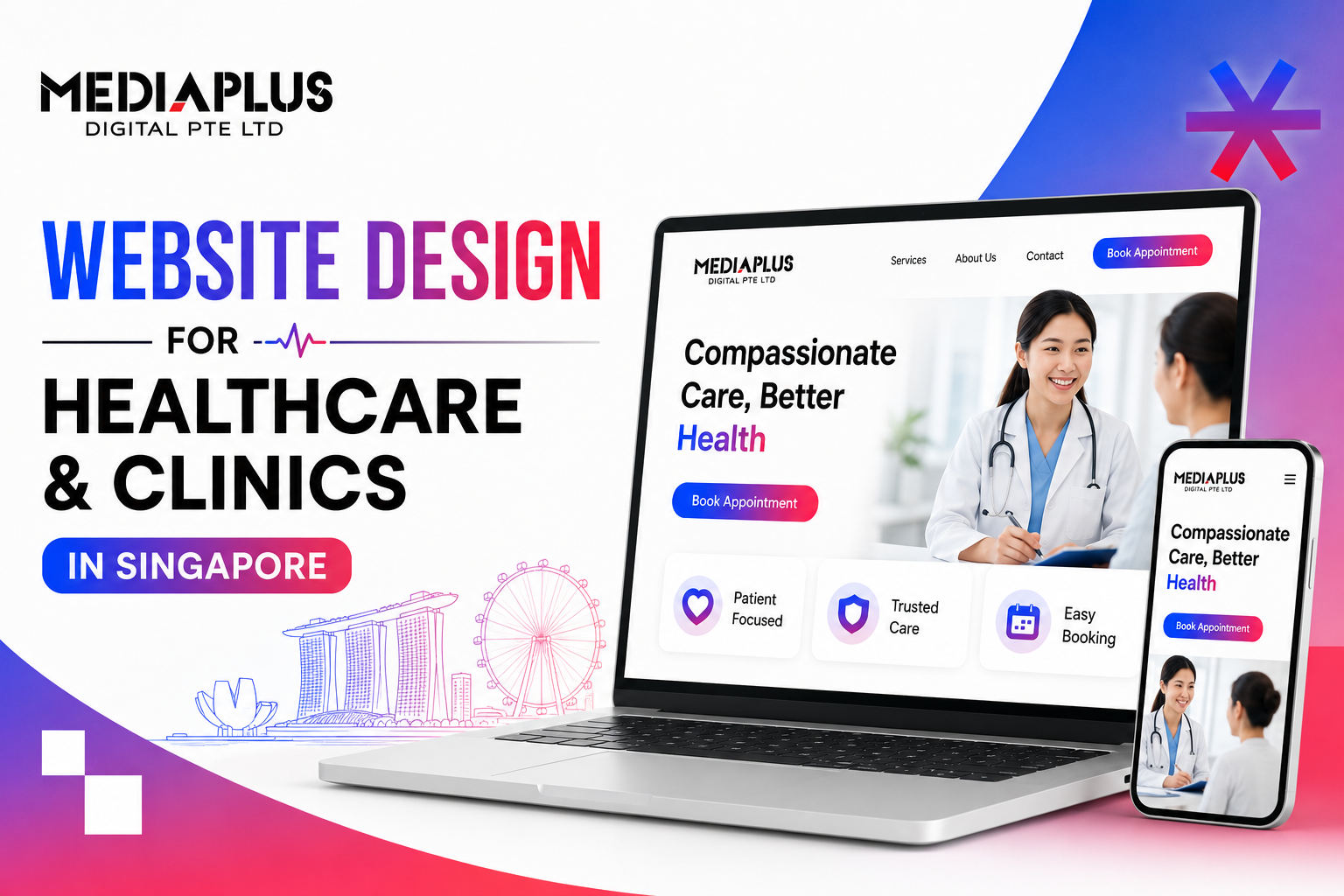
A clinic website in Singapore must comply with MOH advertising rules, the Personal Data Protection Act (PDPA), and the Healthcare Services Act 2020 (HCSA). It needs verified doctor profiles, secure (SSL) appointment booking that completes in under three taps, mobile-first design (60%+ of healthcare searches happen on mobile), service and treatment pages optimised for SEO, and Google Business Profile integration. Reference examples include Raffles Medical Group, Thomson Medical, DTAP Clinic, Mount Elizabeth Hospital, Smile Inc, and Healthway Medical.
1. Why Healthcare Websites Need a Different Playbook
Healthcare websites are governed by some of the strictest advertising rules in Singapore. The Ministry of Health (MOH) prohibits superlative claims, comparative advertising, and most testimonials. The Personal Data Protection Act (PDPA) regulates how patient information is collected, stored, and transmitted. The Healthcare Services Act 2020 (HCSA) introduced new licensing categories and tightened oversight. A poorly designed clinic site is not just bad marketing; it is a regulatory risk.
|
Metric |
Value |
Source |
|
Singapore healthcare market |
USD 25B+ in 2026 |
Statista |
|
Healthcare searches on mobile |
60%+ |
TerrisDigital, SRH Web Agency |
|
Patients dropping after >3 taps to book |
40 to 60% |
Mobile UX studies |
|
Patients reading reviews before booking |
74% |
BrightLocal Healthcare 2024 |
|
Avg new-patient acquisition cost (digital) |
SGD 60 to SGD 250 |
SG clinic benchmarks |
|
MOH-prohibited content types |
Testimonials, comparative claims |
MOH Healthcare Services Act |
2. MOH and PDPA Compliance Essentials
Before any visual or UX work, your clinic site must clear the regulatory bar. Build the compliance review into design from week one, not the week before launch.
- Avoid superlatives (“best”, “leading”, “number one”) and comparative claims unless objectively verifiable.
- Limit testimonials per MOH guidance. Use case-style descriptions of treatments instead of patient quotes.
- Display clinic licence number, MCR-registered doctors, and contact in the footer.
- Add SSL (HTTPS) sitewide. Patient details must travel encrypted.
- Use a PDPA-compliant consent banner and explicit opt-ins on every form.
- Sign a Data Processing Agreement (DPA) with every vendor that handles patient data.
- Provide a clear privacy policy and a Data Protection Officer (DPO) contact.
- Avoid embedding tracking pixels on PHI-collecting pages without explicit consent.
3. The 6 Trust Drivers (Illustrated)
3.1 Pillar 1: MOH-Compliant Content
Run every paragraph through a compliance review. Avoid prohibited claims, comparative copy, and unauthorised testimonials. Use process descriptions, treatment outcomes (where allowed), and doctor expertise as the primary selling points.
3.2 Pillar 2: PDPA + Security
SSL sitewide, encrypted forms, signed DPAs with every vendor, explicit consent banners, and documented data flows. The Personal Data Protection Commission (PDPC) actively enforces the PDPA, and clinics have been fined for sloppy form handling.
3.3 Pillar 3: Doctor Profiles
Patients vet doctors before clinics. Each profile needs a real photograph, full name with MCR / MDA / MTBE registration number, qualifications, sub-specialty, languages, conditions treated, and a 100 to 200-word humanised bio. Link to publications or speaking history. This is the core of E-E-A-T signals that improve SEO.
3.4 Pillar 4: 3-Tap Appointment Booking
Patient drop-off rises sharply after three taps. The optimal flow: tap 1 select doctor or service, tap 2 select date/time, tap 3 confirm with name + phone + email. Send SMS or WhatsApp confirmation. Avoid login walls, captchas, and 8-field forms. Integrate with clinic management software (SmartSoft, Plato, ClinicConnect).
3.5 Pillar 5: Mobile-First UX
60%+ of healthcare searches happen on mobile, often during a sudden symptom or after-hours panic. Buttons must be thumb-friendly (44x44px minimum), text readable without zoom, navigation collapsible, primary CTA visible without scroll. Aim for sub-2.5s LCP and CLS under 0.1.
3.6 Pillar 6: Local SEO + Reviews
Google Business Profile drives 30 to 60% of new patient discovery. Pair with consistent NAP across HealthHub, local directories, and Facebook. Ensure each clinic location has a dedicated GBP listing, photos, accurate hours, and proactive review responses.
Pair these pillars with full-service SEO services in Singapore and conversion rate optimisation.
4. Best Healthcare Website Designs in Singapore (6 Examples)
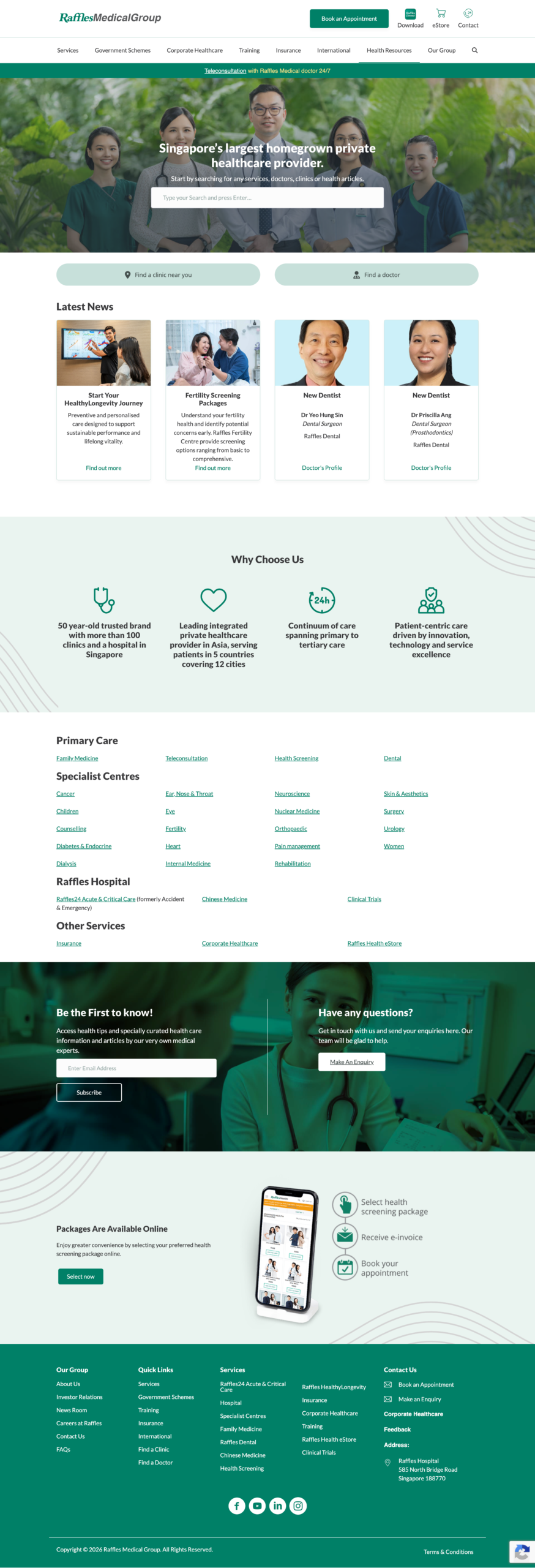
4.1 Raffles Medical Group | rafflesmedicalgroup.com
A leading integrated healthcare provider with facilities across 14 cities in Singapore, China, Japan, Vietnam, and Cambodia. The site features a custom WordPress build with fully integrated booking, campaign tracking, multi-clinic locator, and a structured services taxonomy.
Why study it: enterprise-grade clinic site that handles 100+ services and 30+ locations without becoming overwhelming.
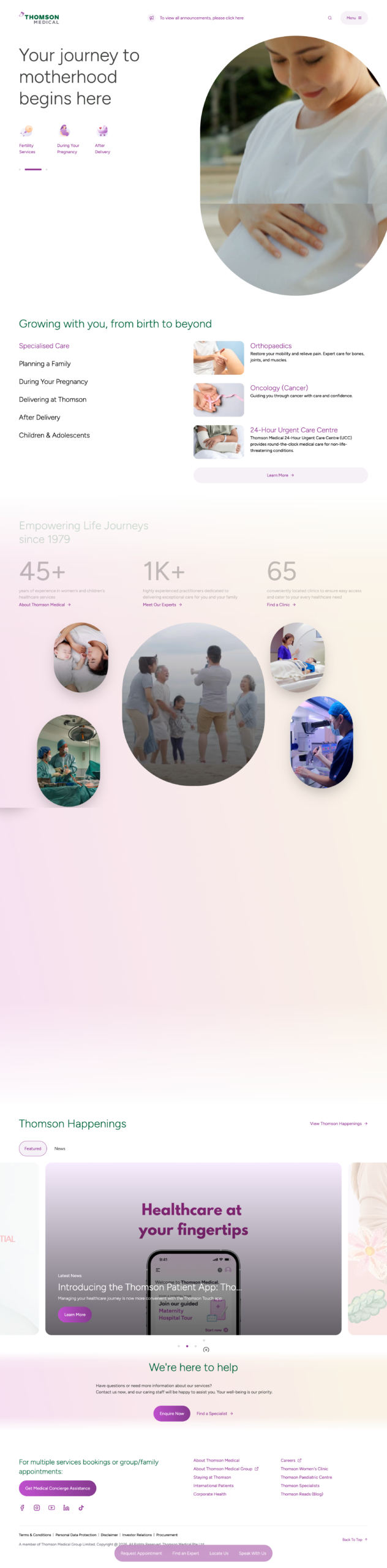
4.2 Thomson Medical | thomsonmedical.com
Specialist obstetrics, gynaecology, and paediatrics provider. The site is built around women, children, and family journeys, with content hubs for pregnancy, fertility, and child care.
Why study it: how to design around patient journeys (not service silos), with editorial content that compounds organic traffic.
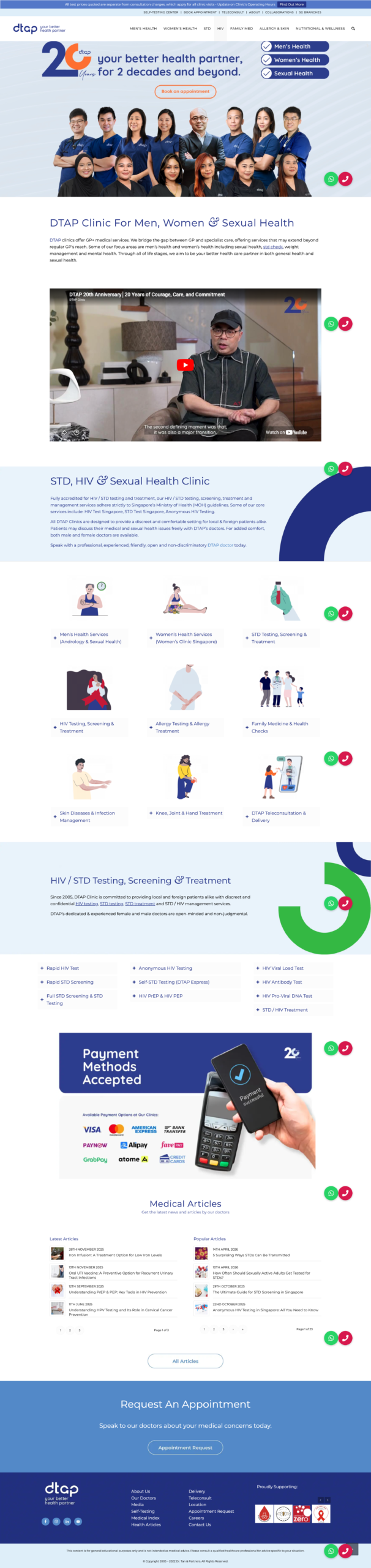
4.3 DTAP Clinic | dtapclinic.com
A discreet GP+ medical group covering men’s and women’s health, sexual health, weight management, and mental health. The site emphasises confidentiality, easy booking, and clear doctor profiles.
Why study it: how to handle sensitive specialties with respectful, MOH-compliant copy.
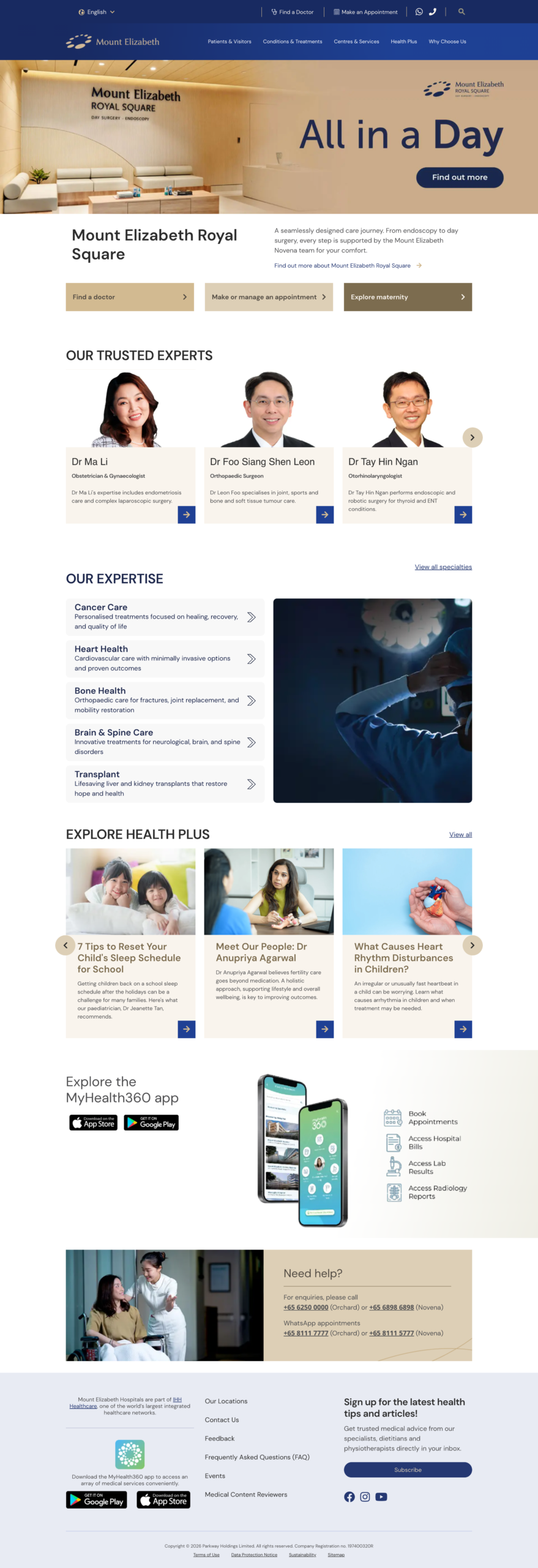
4.4 Mount Elizabeth Hospital | mountelizabeth.com.sg
Parkway Pantai’s flagship private hospital in Orchard. The site combines specialist directories, service explorers, and patient resources, with appointment booking integrated into every doctor profile.
Why study it: hospital-scale information architecture that still keeps appointment booking three taps away.
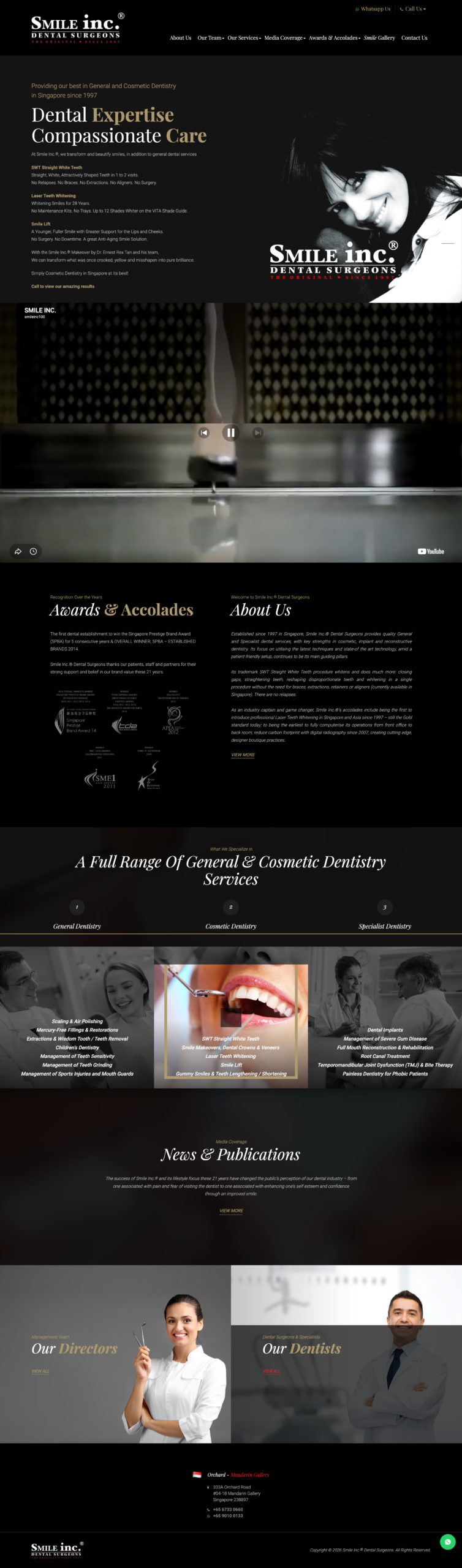
4.5 Smile Inc | smileinc.com.sg
Premium family dental practice. The site uses approachable photography, clear pricing tiers (within MOH guidance), and a friendly tone that demystifies dental procedures.
Why study it: how a single-discipline clinic can carve a premium positioning through brand voice and visual design.
4.6 Healthway Medical | healthwaymedical.com
Singapore’s largest GP network with 100+ clinics. The site handles a complex location finder, GP service taxonomy, and integrated corporate health programmes.
Why study it: how a multi-clinic network organises geo-search, services, and corporate enquiry into a single coherent journey.

5. Pricing Tiers for Singapore Clinic Websites
|
Tier |
Cost (SGD) |
Inclusions |
Best For |
|
Starter |
4,000 to 8,000 |
5 to 8 pages, basic booking, MOH review |
Single-doctor GP / dental |
|
Specialist |
8,000 to 16,000 |
Multi-doctor profiles, treatment library, EHR-ready |
Specialist clinics |
|
Group |
16,000 to 35,000 |
Multi-branch, panels, EHR integration, analytics |
Group practices |
|
Enterprise |
35,000+ |
Custom CMS, multilingual, telemedicine portal |
Hospitals, hospital groups |
6. Frequently Asked Questions
How much does a clinic website cost in Singapore?
A single-doctor GP or dental site costs SGD 4,000 to SGD 8,000. Specialist clinics typically invest SGD 8,000 to SGD 16,000. Group practices and hospitals run SGD 16,000 to SGD 35,000+.
Are patient testimonials allowed on Singapore clinic websites?
Most testimonials are restricted under MOH advertising guidelines. Always run testimonial copy past your compliance officer or legal counsel. Prefer treatment descriptions and process narratives.
Do clinics in Singapore need to follow HIPAA?
No. HIPAA is US-specific. Singapore clinics follow the Personal Data Protection Act (PDPA) and the Healthcare Services Act (HCSA). For US patients on telemedicine, HIPAA may apply.
How long does a clinic website take to build?
A starter site takes 6 to 8 weeks including MOH review. Specialist and group sites typically run 10 to 16 weeks. Plan early for legal and compliance approval.
What about telemedicine?
Telemedicine portals must comply with the National Telemedicine Guidelines and HCSA licensing. Use vetted platforms (Doctor Anywhere, MyDoc, Speedoc) or build a custom portal with a partner experienced in PDPA and DPA agreements.
Can I use Google reviews on a Singapore clinic website?
Embedding live Google reviews is generally acceptable because the review content lives on Google’s platform, not yours. Cherry-picked testimonials displayed as static quotes are riskier. Always run review-display patterns past compliance.
7. Conclusion and Next Steps
A modern clinic website builds patient trust before they ever call. Talk to MediaPlus web design for a free MOH and PDPA audit. Download the Healthcare checklist or browse our blog.