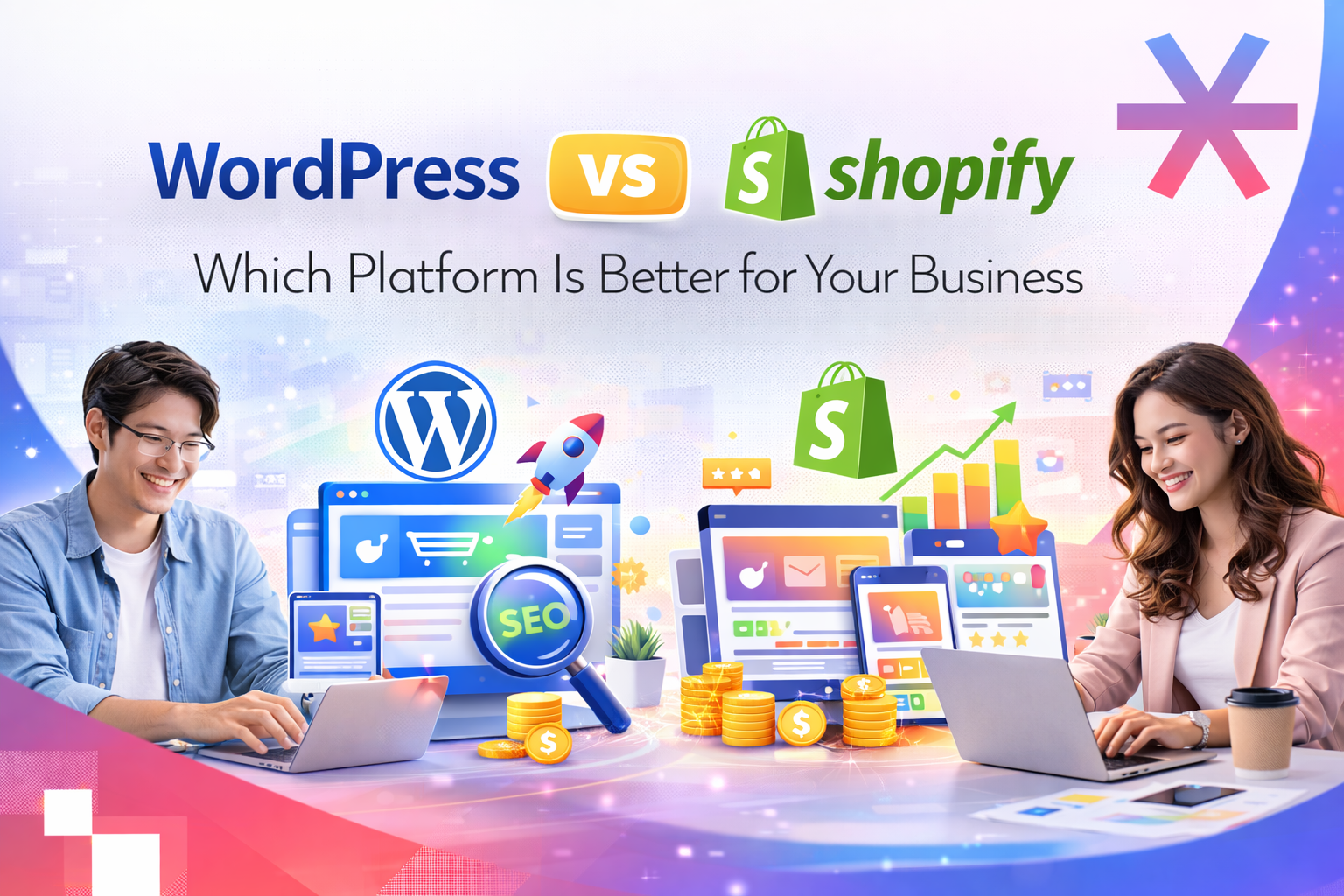
If you are planning to build an online store in Singapore, one of the first and most important decisions you will make is choosing the right ecommerce platform. In most cases, the comparison comes down to two dominant options: Shopify and WordPress with WooCommerce.
Both platforms are capable of running high-performing online stores, but they are built on very different philosophies. Shopify is an ecommerce-first, fully managed system. WordPress is a flexible content management platform that becomes an ecommerce system through plugins.
Based on real-world ecommerce projects across Singapore, from fast-scaling Shopify stores to deeply customised WooCommerce builds, this guide breaks down the differences clearly so you can choose the platform that fits your business in 2026.
WordPress vs Shopify: Quick Overview
| Platform | Best For | Strengths | Considerations |
|---|---|---|---|
| Shopify | Ecommerce-first businesses that want a clean, scalable setup | Best checkout experience, fast setup, strong sales tools, secure | Monthly fees, less design freedom |
| WordPress (WooCommerce) | Content-heavy or highly customised stores | Full control, unlimited customisation, large plugin ecosystem | Needs more maintenance, requires hosting & management |
If you need simplicity and fast growth, Shopify tends to win.
If you want full creative control or have complex requirements, WordPress might be the better fit.
Pricing: Which One Is More Affordable?
Shopify Pricing
Shopify uses a subscription-based pricing model. As of 2026:
-
Basic plan: USD 29 per month (annual billing)
-
Shopify plan: USD 79 per month
-
Advanced plan: USD 299 per month
All plans include:
-
Managed hosting
-
Free SSL certificate
-
Unlimited products
-
Core ecommerce features
-
24/7 support
Shopify also offers:
-
A short free trial
-
Promotional pricing such as USD 1 per month for the first 3 months for new stores
Transaction fees:
-
If you use Shopify Payments, there are no additional platform transaction fees.
-
If you use third-party gateways, extra fees apply, ranging from 0.5% to 2% per transaction, depending on your plan.
Shopify’s main advantage is cost transparency. Your monthly operating cost is predictable.

WordPress (WooCommerce) Pricing
WordPress itself is free, but running a WooCommerce store involves multiple components:
Typical monthly costs:
-
Hosting: SGD 4 to SGD 15 for basic plans, SGD 30 or more for high-performance hosting
-
Premium theme: Optional, often USD 50 to USD 100 one-time
-
Paid plugins: Typically USD 5 to USD 150 per plugin per year
-
Maintenance and updates: Either internal resources or an external provider
WooCommerce allows you to pay only for what you need, but as your store grows, plugin and infrastructure costs can increase significantly.
Cost comparison summary:
-
Shopify offers clearer, fixed pricing
-
WordPress can be cheaper at the start, but long-term costs vary widely based on complexity

Ecommerce Features: Who Does It Better?
Shopify
Shopify is built from the ground up for one thing, selling. The entire platform is designed to help you launch, manage, and grow an online store without juggling plugins or worrying about technical setup. Everything you need for day-to-day ecommerce operations is already baked in.
With Shopify, you get:
-
Unlimited products
-
Discount and promotion tools
-
Built-in abandoned cart recovery
-
Multi-channel selling (TikTok, Instagram, Shopee, Lazada, and more)
-
Fast, secure checkout
-
Subscription and recurring billing options
-
Inventory, order, and fulfillment tools
-
Automatic tax and shipping rate calculations
-
Fraud analysis and native payment gateway (Shopify Payments)
Because so many features are native, you can hit the ground running from day one. No hunting for plugins. No guessing what’s compatible. Just set up your store and start taking orders.
Shopify is especially strong for businesses that want to scale. As traffic grows, the platform handles speed, uptime, and security behind the scenes so you can stay focused on sales and marketing.
WordPress (WooCommerce)
WooCommerce transforms WordPress into a fully functional ecommerce store. You still get the essentials:
-
Unlimited products
-
Built-in product reviews
-
Support for physical, digital, subscription, and custom product types
-
A massive plugin ecosystem
-
Full flexibility over design and functionality
The big advantage here is control. If you want to fine-tune your checkout flow, create highly customised product pages, or integrate unique business rules into your store, WooCommerce gives you room to build almost anything.
But with that flexibility comes extra setup:
-
Shipping tools require plugins
-
Payment gateways require plugins
-
Marketing features require plugins
-
Subscription tools require plugins
-
Security and backups require effort or a managed host
It’s not difficult, but it does mean WooCommerce works best for businesses that want deep customisation or already rely on WordPress for content.
Winner for Sales Tools: Shopify It simply gives you more out of the box.
Apps and Plugins: How Do They Compare?
Shopify App Store
Shopify offers approximately 8,000 ecommerce-focused apps.
Key advantages:
-
Apps are reviewed for security and performance
-
One-click installation
-
Strong compatibility with Shopify’s core system
-
Lower risk of conflicts
This ecosystem is ideal for businesses that want tools that work reliably without ongoing technical maintenance.
WordPress Plugins
WordPress offers over 60,000 plugins, making it the largest plugin ecosystem of any CMS.
Advantages:
-
Huge variety of free and paid plugins
-
Support for niche and custom use cases
-
Ideal for advanced or unusual requirements
Challenges:
-
Plugin quality varies
-
Compatibility issues are common
-
Too many plugins can reduce site speed
-
Security depends on plugin developers
Conclusion:
-
Shopify prioritises stability and reliability
-
WordPress prioritises flexibility and control
Winner: Shopify for reliability, WordPress for flexibility
SEO and Marketing: Which Platform Helps You Grow Faster?
Shopify
Shopify gives you a solid set of marketing and SEO tools without needing extra plugins or technical setup. You get:
-
Strong built-in SEO features
-
AI tools to help write and optimise product descriptions
-
Fast page load speeds (a big ranking factor)
-
Simple management of titles, meta descriptions, and alt text
-
Shopify Email for campaigns and newsletters
It’s a great fit for businesses that want SEO support built into the system, without diving into complex configurations.
WordPress
WordPress has long been the go-to platform for content-heavy websites and advanced SEO strategies. It shines when you need:
-
Powerful blogging capabilities
-
Large content libraries or resource hubs
-
Full control over every SEO setting
-
Advanced optimisation via plugins like Yoast SEO or Rank Math
With the right setup, WordPress can be incredibly strong for search. The trade-off is that you’ll need more tools, more monitoring, and sometimes developer help to keep everything running smoothly.
Winner: Tie. Shopify is simpler, WordPress is more powerful.
Design and Customisation: How Much Freedom Do You Need?
Shopify
Shopify keeps things simple and structured, which is great if you want speed and predictability. You get:
-
24 free themes
-
800+ premium themes
-
A clean, beginner-friendly visual editor
-
The new Horizon AI theme builder that helps you generate layouts fast
You can tweak colours, fonts, sections, and layouts, but Shopify still sets some boundaries so the store remains stable and fast.
WordPress
WordPress is the opposite, it gives you near-total creative freedom:
-
13,000+ themes
-
Unlimited layout possibilities
-
Full access to HTML, CSS, and PHP
-
The ability to customise every corner of your site
If you need a unique design or want to build something beyond standard ecommerce layouts, WordPress gives you the space to do it.
Winner
WordPress if creative freedom, custom layouts, and full control matter
Shopify if you want a clean, fast setup with less hassle
Security, Hosting, and Maintenance
Shopify
Shopify takes care of the technical side so you don’t have to think about infrastructure at all. Every store comes with:
-
Fully managed hosting
-
Free SSL certificate
-
Automatic platform and security updates
-
Built-in fraud detection
-
PCI-DSS–compliant checkout
Everything runs in the background. You never deal with servers, patches, or security settings, Shopify handles it end to end.
WordPress
With WordPress, you’re in charge of your own setup. That means taking responsibility for:
-
Choosing and managing your hosting
-
Running backups
-
Installing and updating security plugins
-
Keeping WordPress, themes, and plugins updated
-
Ensuring plugins remain compatible with each other
It’s not overly complicated, but it does require ongoing maintenance. Many businesses choose a managed service provider like MediaPlus Digital to handle hosting, updates, security hardening, and technical support so they can focus on running their store.
Winner: Shopify for peace of mind
So… Which Should You Choose?
Here’s the simplest way to decide.
Choose Shopify if you want:
✔ A store that’s fast to launch
✔ All ecommerce tools in one place
✔ Strong checkout performance
✔ Fewer technical responsibilities
✔ Smooth scaling as you grow
Choose WordPress + WooCommerce if you:
✔ Want full control over design and functionality
✔ Run a content-heavy website
✔ Need niche features or custom builds
✔ Prefer full ownership of your platform
✔ Already have a WordPress site
Where MediaPlus Digital Fits In
Choosing Shopify or WordPress is only the first step. The real work starts when you begin setting up and this is where most businesses get stuck.
Things like:
-
Migrating your existing website
-
Consolidating plugins and removing unnecessary bloat
-
Choosing and integrating the right payment gateway for Singapore
-
Designing product pages that actually convert
-
Improving site speed
-
Syncing inventory across marketplaces
-
Setting up local and international shipping
-
Configuring SEO foundations
-
Reducing checkout drop-off
This is where our team comes in.
At MediaPlus Digital, we support businesses with:
- Ecommerce Website Development: We design and develop fast, conversion-driven ecommerce sites, whether you’re starting fresh or migrating from an existing platform.
- WooCommerce Development Services: We build custom WooCommerce functionality, optimise site speed, clean up plugins, improve product structures, and stabilise your backend so it scales properly.
- Shopify Website Development: We tailor themes, optimise product pages, streamline checkout, and ensure everything loads fast and works smoothly.
- SEO Services: We handle technical SEO, on-page optimisation, content structure, and ecommerce SEO specifically for product-heavy sites.
- Website Maintenance: We manage updates, hosting issues, plugin conflicts, security patches, and performance tuning for both Shopify and WordPress.
Final Verdict
If your priority is ecommerce growth without technical headaches, Shopify is the stronger choice.
If you need full control, flexibility, and a platform that grows with your content strategy, WordPress + WooCommerce is hard to beat.
And if you want help figuring out the right path for your business or need a development team that can turn that choice into a high-performing store, the team at MediaPlus Digital is here to support you.
Ready to build or upgrade your online store? Reach out to us and let’s create a store that sells beautifully and reliably.