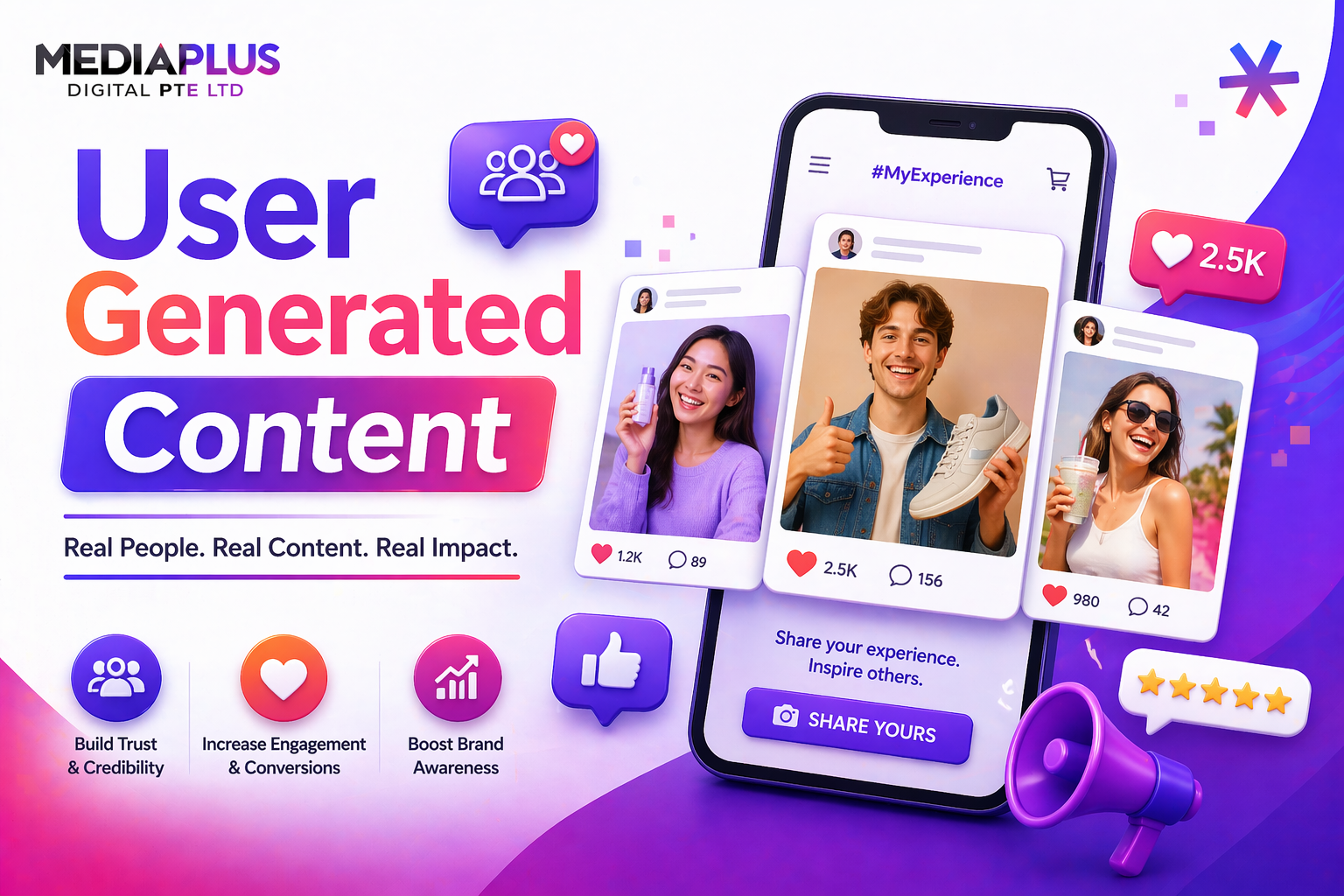
User Generated Content (UGC) has become one of the most powerful tools in social media marketing. People trust people more than brands, which makes UGC a direct path to higher credibility, stronger engagement, and better conversion rates.
If you want your brand to stand out in a crowded digital space, it is time to make UGC part of your growth strategy. In this guide, we explain what UGC is, why it matters, and how brands in Singapore can use it to drive results.
What Is User Generated Content?
User-generated content, or UGC, is any content created by real people about your brand or something closely connected to it. It could be a customer sharing their experience, a creator featuring your product, or someone casually talking about you online.
UGC does not always tag your brand directly. That is why a good social media manager actively looks for relevant content across platforms, tagged or not, and knows how to spot pieces that can be reused to support the brand story.
The impact is hard to ignore. Research from Hype shows that 79% of consumers say UGC influences their purchasing decisions more than traditional advertising. Short-form UGC videos also deliver around 70% higher engagement compared to brand-created videos.
UGC can take many forms. Think short videos, photos, reviews, testimonials, blog posts, live streams, or even podcasts. If it comes from a real person and feels authentic, it counts.
A strong example comes from Nike. The brand actively encourages its community to create and share content, then reposts it across social channels using hashtags like #AirMaxMondays. This approach keeps the brand visible while making customers feel like part of the story.

Why should you use UGC in your marketing?
The short answer is simple. Because it works.
User-generated content helps brands grow without constantly stretching time or budget. It gives you a steady stream of fresh content and takes pressure off in-house teams who are already juggling a lot.
More importantly, it reflects how people actually make buying decisions today. Consumers care about what brands stand for and whether those values align with their own. That is why purpose, transparency, and social responsibility matter more than ever, especially for brands operating at scale.
UGC plays directly into this shift. It feels real because it comes from real people. Customers want authenticity and they want to feel like they understand who they are buying from. Content created by users, customers, or creators makes a brand feel human rather than polished or scripted.
The numbers back this up. According to Sprout Social, 57% of consumers are willing to spend more with a brand they feel connected to, and 76% will choose it over a competitor they do not connect with.
UGC also performs beyond organic social posts. Hype reports that ads built around UGC deliver up to four times higher click-through rates than traditional brand-led ads. That makes UGC a strong asset not just for content calendars, but also for paid social campaigns.
At its core, UGC helps brands build trust and genuine relationships. It is modern word-of-mouth, and that has always been one of the most powerful forces in marketing.
What’s the difference between UGC and influencer marketing?
UGC and influencer marketing often get mixed up, but they work in very different ways.
UGC is content created organically or commissioned without the creator promoting themselves as a paid spokesperson. It is usually unpaid or lightly compensated, and the focus stays on the brand or product rather than the creator.
Influencer marketing, on the other hand, is sponsored content with a clear agreement in place. You define deliverables upfront such as formats, posting schedules, captions, hashtags, and usage rights. The creator is paid specifically for their influence and audience reach.
This might involve a celebrity, a well-known industry figure, or a micro-influencer with a niche but engaged following.
That said, the line between the two is no longer black and white. According to Collabstr’s 2025 Influencer Marketing Report, UGC creators are now a formal part of the creator economy. They may not have massive audiences, but they produce content designed to look and feel authentic. In 2025 alone, there was a 93% year-over-year increase in UGC creators working with brands.
In practice, smart brands use both. Influencer marketing drives reach and awareness. UGC builds trust, relatability, and long-term connection.
What are the best sources of UGC?
Before you collect or share UGC, get clear on one thing. What kind of “user” do you want to spotlight?
Are you trying to show great customer experiences, highlight your company culture, or build long-term brand loyalty? The answer shapes where you should look and who you should encourage to create content.
Here are three of the strongest UGC sources to focus on.
1. Customer-generated content
Customer content is the gold standard of UGC. According to Hype, customer-generated content is nearly 10 times more trustworthy than branded content.
That makes sense. People do not buy blindly anymore. They research, compare, read comments, and look for proof from others who have already tried the product or service.
When done well, customer UGC does more than look good on social media. It actively sends new customers your way. It feels personal, unpolished, and believable.
A great example is a TikTok video by Megan Gilbert featuring the Admont Abbey Library in Austria. The video reached almost 7 million views and sparked over 31,000 comments. She is not a marketer or influencer. She is just a regular person sharing something she found impressive, and that is exactly why it worked.
This kind of word-of-mouth UGC builds authenticity, trust, and desire in a way brand content rarely can.
2. Employee-generated content
Employee-generated content is often overlooked, but it is a powerful starting point, especially for newer brands.
According to Neal Schaffer, brand messages are shared 24 times more frequently when employees distribute them rather than the brand itself.
People trust people. A face, a voice, and a real experience will always beat a polished mission statement. If your brand does not yet have a large customer base or strong social following, encouraging employees to share content is a smart move.
Employee posts are great for showing the human side of your business. They help introduce your culture, values, and everyday reality in a way that feels natural rather than promotional.
3. Brand advocate content
Brand advocates sit somewhere between customers and influencers. They are genuine fans, not paid creators with strict briefs.
To find them, look at people who already interact with your brand. They comment, tag you, share your posts, or talk about your products without being asked. Reach out, invite them to participate, then step back and let them lead.
A strong example is the athlete program from Gymshark. Participants are selected either through competitions or because their content and values align with the brand. On top of that, Gymshark rewards loyalty with perks like early access and VIP discounts.
This approach has played a big role in building long-term community and accelerating brand growth.

Why UGC Matters for Brands in 2026
User generated content is not a trend. It has become a cornerstone of high performing digital marketing strategies, especially as consumer behavior shifts toward authenticity and peer validation. In 2026, shoppers trust real people more than polished brand messaging, which is why UGC directly influences revenue and brand growth.
Authenticity Drives Purchase Decisions
Buyers are more selective than ever. They look for transparency, real experiences, and relatable proof before choosing a product. Research shows that close to half of online shoppers consider UGC, such as customer reviews and real life photos, to be the most influential content during product research. It is trusted significantly more than brand posts or influencer endorsements because it originates from real customers with no perceived agenda.
Social Proof Reduces Buyer Hesitation
Even if customers like a product, hesitation can still disrupt the purchase. UGC helps remove that doubt. Products with just a handful of reviews can experience conversion rates more than doubling, and sometimes jumping above 200 percent. A real customer showing results or expressing satisfaction provides the reassurance people need to complete their order with confidence.
Builds Loyalty and Community
Great brands are more than products. They are communities. UGC encourages people to participate, share their point of view, and interact with others who love the same brand. When customers feel acknowledged and valued, they keep coming back. This emotional connection increases lifetime value and turns satisfied buyers into ongoing advocates.
More Content Without More Work
Maintaining a consistent content pipeline is a challenge for most marketing teams. UGC solves that problem by providing a continuous stream of authentic assets that can be reused across:
• Social media posts and Stories
• Blog features and product education content
• Email campaigns such as cart reminders or post purchase follow ups
• Landing pages where trust matters most
• Paid social ads and retargeting sequences
It keeps storytelling fresh, diverse, and grounded in real usage and results.
Cost Efficient and Scalable Marketing
Producing branded creative can be expensive and slow, especially when testing different angles. UGC gives teams more flexibility because it requires little to no production cost. It also performs well in Social Media Ads Management campaigns, often reducing cost per click and cost per acquisition because audiences respond better to relatable visuals and real testimonials.

4 brands using UGC in a stand-out way
Now that you know what UGC is and what it is not, let’s look at brands that use it exceptionally well. These examples are not just about reposting content. They show how UGC can become part of the brand’s identity and growth strategy.
Below are four brands doing UGC in smart, memorable ways, plus practical takeaways you can apply to your own campaigns.
1. GoPro: Real-life action
GoPro is an obvious pick, and for good reason. Its product naturally creates UGC just by being used. Every customer is a potential content creator.
As an action camera brand, GoPro gives users the tools to capture and instantly share their experiences. The result is massive. Around 6,000 GoPro videos are uploaded online every single day. “GoProing” has even become a common term, and the brand tagline “Be a Hero” perfectly matches the content users create.
A classic example is a short video of a five-year-old waterskiing for the first time. It is raw, emotional, and unforgettable. Exactly what GoPro stands for.

GoPro actively fuels this ecosystem by:
-
Encouraging users to post with #GoPro
-
Reposting the best customer content on its own channels
-
Partnering with tourist attractions and lending cameras to visitors
-
Building sharing directly into the product experience
-
Running initiatives like the GoPro Awards
As founder Nick Woodman explains, GoPro grew by celebrating an active lifestyle and letting real people tell the story. Not by pushing ads.
Takeaway tips from GoPro
-
Identify what your product or service does best and the feeling behind it
-
Show that feeling visually on social media
-
Invite your audience to participate, not just watch
-
Use challenges or competitions to drive engagement
-
Partner with people or brands that share your values
2. Doritos: Get competitive
Doritos took UGC to another level with its legendary #CrashTheSuperBowl campaign.
Instead of creating its own Super Bowl ad, Doritos challenged fans to do it better. The reward was huge. The winning ad would air during the Super Bowl, plus a chance to win $1 million.
This campaign gave fans creative ownership of the brand on one of the biggest advertising stages in the world. It was bold, risky, and incredibly effective.
By sharing finalist videos like “Goat 4 Sale,” Doritos inspired even more creators to join in and raise the bar.

Takeaway tips from Doritos
-
Tie your UGC campaign to a major event or moment
-
Create a clear, catchy hashtag
-
Offer a meaningful incentive to participate
-
Share example content to spark creativity
-
Be willing to give your audience real creative freedom
3. Yosemite Conservancy: Prompt memories
Sometimes, a beautiful photo is all it takes.
To mark 100 years of partnership with Yosemite National Park, Yosemite Conservancy invited people to share personal stories and photos from their visits. These submissions were then used across emails, the website, social media, and publications.
Every submission was also entered into a giveaway for a Yosemite Conservancy swag bag, giving people an extra reason to participate.
The result was emotional, memory-driven UGC that connected deeply with nature lovers around the world.

Takeaway tips from Yosemite Conservancy
-
Define what makes your brand special, whether it is community, place, or culture
-
Translate that idea into simple visual prompts
-
Lead with strong examples to set the tone
-
Encourage participation with a giveaway or reward
-
Reuse UGC across multiple channels, not just social
4. Apartment Therapy: Focus on the user, not the brand
Apartment Therapy is a lifestyle and publishing brand focused on helping people live better at home. Its UGC strategy reflects that mission by putting the spotlight on the community, not the company.
On Instagram, the brand invites followers to join the “Apartment Therapy Community,” where people can ask design questions, share their spaces, and interact with editors. Users can also submit their homes for tours or take part in challenges like #SmallCoolChallenge.

This approach promotes the brand without shouting about it. It feels helpful, inclusive, and genuinely fun.
Takeaway tips from Apartment Therapy
-
Build spaces where your audience can interact with each other
-
Encourage sharing without over-branding
-
Highlight users as the main characters
-
Use challenges and themes to keep participation fresh
Best Practices for User Generated Content
User generated content works best when customers feel respected and when the brand maintains strong creative and legal standards. These principles help ensure every piece of UGC strengthens trust rather than risking it.
-
Always request permission before reposting any customer content. This protects your brand and shows appreciation for the creator.
-
Give proper credit by tagging the original user clearly in the caption. This encourages others to participate as well.
-
Provide clear guidelines on the style, theme, and formats you are looking for. People are more likely to contribute when they know what will be featured.
-
Match UGC with defined marketing goals. Whether you want more conversions, stronger brand awareness, or higher engagement, select and promote content that supports those objectives.
Specific instructions and respectful handling of creator assets make UGC a positive collaboration between brand and community.
How to Encourage More UGC
If you want more customers to share content, make the process fun, visible, and rewarding. Even small initiatives can spark participation.
-
Create a branded hashtag so you can easily collect and organise submissions.
-
Highlight customer content frequently, not just once in a while. Featuring real people builds excitement and keeps the cycle going.
-
Provide simple incentives like loyalty points, discount codes, or the chance to be spotlighted on social media.
-
Run themed challenges around product launches, holidays, or lifestyle moments related to your brand.
-
Allow customers to upload photos and reviews directly on product pages, where UGC has the most impact on buying decisions.
The more valued customers feel, the more content they will create. UGC becomes a natural habit rather than a one time request.
How UGC Supports Different Marketing Goals
User generated content is one of the few content types that works across the entire marketing funnel. It attracts new people, convinces them to trust you, and keeps them engaged long after their first purchase. The value multiplies when brands thoughtfully integrate UGC into ads, product pages, community features, and after sales communication.
Here is how UGC contributes at each stage of the buyer journey:
Check more: Digital Marketing Funnel Explained: TOF, MOF, BOF
Brand Awareness: Reach More People Organically
When someone posts about your brand, that content reaches not only their followers but potentially a wider network through shares, comments, and platform recommendations. This helps introduce your products to new audiences without heavy spending on paid exposure. UGC also looks more like a genuine recommendation than an advertisement, so people pay more attention and remember your brand faster.
Consideration: Build Trust Through Real Experiences
Once people know who you are, they want proof that your product works. Reviews, unboxing videos, try on clips, and before and after comparisons provide credible evidence that your product delivers on its promises. In a world where brand messaging can feel exaggerated, UGC gives shoppers information they can believe. It fills gaps that marketing alone cannot cover and helps prospects feel more confident moving forward.
Conversion: Remove Doubt and Increase Purchase Confidence
Right before a buying decision, customers often hesitate. UGC can appear on product pages, in remarketing ads, or within cart abandonment emails to show that other people made the purchase and were happy with the result. Positive validation from real users reduces perceived risk and speeds up decision making. Even a small number of reviews can make a noticeable impact on conversion rates.
Retention: Strengthen Community and Repeat Purchase
Post purchase engagement is just as important as driving first time sales. When brands repost UGC or feature loyal customers, it creates a strong sense of connection. People want to keep sharing, keep talking, and keep buying because they feel like part of a community instead of a simple transaction. This boosts customer lifetime value and encourages advocacy through referrals or word of mouth.
How MediaPlus Digital Helps Brands Activate UGC
A UGC strategy works best when it is integrated with a measured marketing plan. At MediaPlus Digital, we help brands in Singapore:
-
Develop social media strategies aligned with business goals
-
Run Facebook Ads Management, Instagram Ads Management, and TikTok Ads Management to amplify the best UGC
-
Improve visibility through Search Engine Optimization (SEO)
-
Track performance with clear reporting and attribution
We focus on outcomes that matter like revenue and customer acquisition. If you want content that drives conversions and not just likes, our team is ready to support you.
Final Thoughts
User Generated Content is now a core part of modern digital marketing. It builds trust faster, persuades new customers more effectively, and unlocks more growth without a heavy budget.
The brands that win in 2026 are the ones that let their customers be the storytellers.
If you want to scale your UGC strategy while improving reach and revenue, MediaPlus Digital can help you build a social presence that converts. Reach out and let us know your goals. We will help you get there.