Performance marketing is the part of your strategy where every dollar is tied to a measurable outcome: a sale, a lead, a tracked action. For an online store, it is the difference between spending on ads and investing in growth.
It matters more in Singapore than almost anywhere. Digital now takes around 76 percent of total media spend here, close to USD 2.14 billion and still growing about 10 percent a year (We Are Social, Digital 2026). At the same time the average store loses roughly 70 percent of its carts (Baymard Institute) and converts only about 2 to 3 percent of visitors (Contentsquare). The brands that win are not the ones spending the most. They are the ones spending with discipline.
This guide breaks down the tactics that actually move revenue for ecommerce brands, in the order you should build them, with the metrics that prove they work. It is not a list of channels. It is a playbook you can execute. For benchmarks to measure yourself against, see our digital marketing benchmarks for Singapore.
Start with the foundation: tracking and first-party data
No tactic works if you cannot measure it. Before scaling spend, lock down the basics.
- Server-side conversion tracking. With browser restrictions and cookie loss, server-side tracking (Google Tag, Meta Conversions API) recovers conversions that pixel-only setups miss, often 10 to 15 percent of them.
- Enhanced conversions and product-level values. Pass actual order value and product IDs, not a flat event, so platforms optimise toward profit rather than raw volume.
- First-party data capture. Build your email and SMS lists from day one. Owned audiences are the cheapest, highest-converting traffic you have.
Prove it works: conversions in your ad platform should reconcile within a reasonable margin of your store’s actual orders. Be aware that ad platforms tend to overstate true ROAS by roughly 2x (Triple Whale), so cross-check against real revenue before you scale anything.
Tactic 1: Google Shopping and Performance Max
For most ecommerce stores, Shopping is the highest-intent paid channel because the shopper sees the product, price and store before they click. Google campaigns also tend to return the strongest ROAS of the major platforms, around 4.5x on average versus roughly 2.2x for Meta (industry aggregates).
- Build a clean, fully populated product feed. Titles, images, GTINs and product types drive performance more than bids.
- Segment by margin and best-sellers, not one campaign for everything.
- Use Performance Max to extend reach across Search, Shopping, Display and YouTube, but feed it strong creative and clear conversion values so it optimises toward revenue. Our guide to Performance Max and AI Max covers the asset-group structure that keeps it from wasting budget.
Pair this with a dedicated Google Ads strategy so Search and Shopping work together rather than bidding against each other.
Key metric: ROAS by product group and new-customer ROAS.

Tactic 2: Paid search for high-intent demand
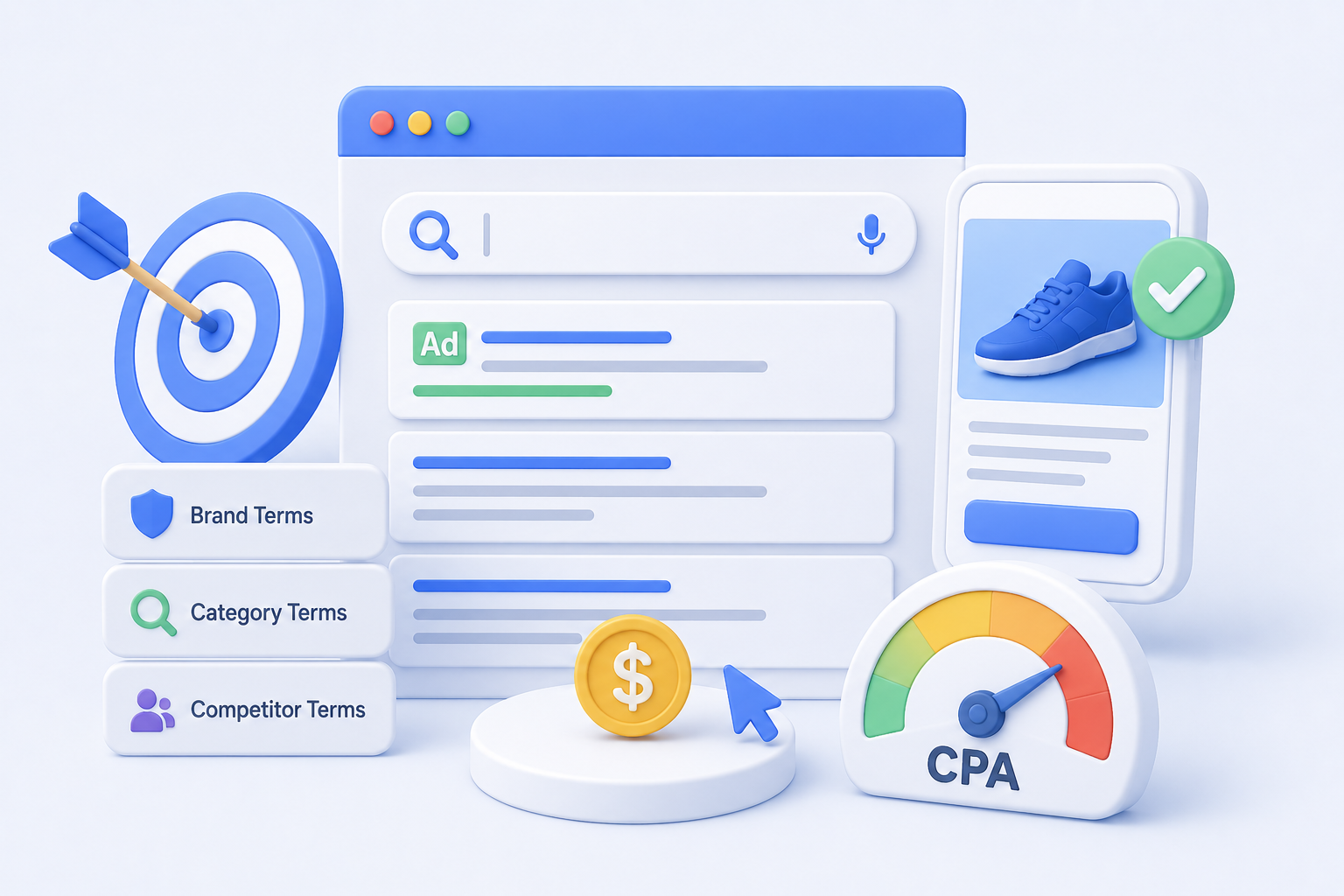
Shopping captures product searches. Text search captures the rest: branded terms, category terms and competitor terms.
- Protect your brand terms cheaply before competitors take them.
- Win non-brand category terms where buying intent is clear.
- Route every click to a fast, relevant landing page, not a generic homepage.
Singapore CPCs run well below US levels (roughly 58 percent lower on average, WordStream), so high-intent search can be efficient here when the account is structured well. Learn more in our SEM agency and PPC services overviews.
Key metric: cost per acquisition (CPA) split by brand vs non-brand.
Tactic 3: Paid social for discovery and demand creation
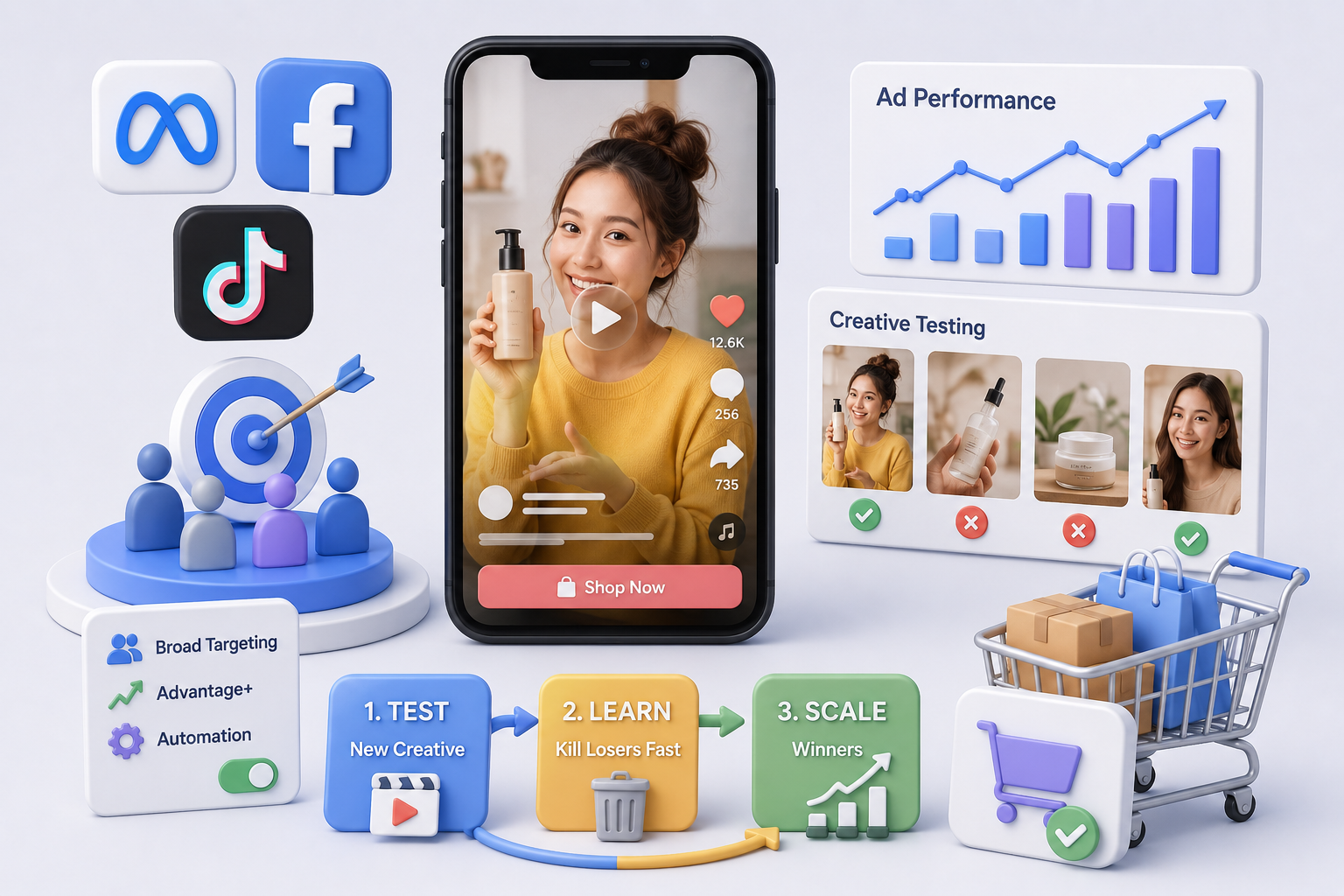
Meta, TikTok and similar platforms create demand among people who were not searching yet. Social ad spend in Singapore reached around USD 588 million last year, up 15 percent (We Are Social), because it works. For ecommerce, creative is the targeting.
- Lead with short-form video and user-generated content. Polished studio ads rarely beat authentic, problem-first creative.
- Use broad targeting plus advantage-style automation and let the platform find buyers, while you control the creative and the offer.
- Run a structured creative testing cycle: new concepts weekly, kill losers fast, scale winners.
Our social media ads, Facebook ads and TikTok ads services are built around this test-and-scale loop.
Key metric: cost per purchase, plus creative-level thumb-stop and hook rate.
Tactic 4: Retargeting and programmatic for the shoppers who do not buy first time
Around 70 percent of visitors leave without buying, and on mobile that climbs past 85 percent (Baymard). Bringing them back is the cheapest incremental revenue you can find.
- Dynamic retargeting shows shoppers the exact products they viewed, across web, apps and YouTube.
- Use frequency caps and exclusion windows so you re-engage without annoying people or wasting budget on recent buyers.
- Extend reach with programmatic advertising and the Google Display Network to stay visible across the sites your audience already uses. Programmatic is set to make up around 77 percent of digital ad revenue in Singapore by 2028 (Statista), so building the muscle now pays off. See our retargeting and remarketing strategy guide for the audience windows that work.
Key metric: view-through and assisted conversions, and incremental ROAS versus a holdout.
Tactic 5: Email and SMS retention marketing
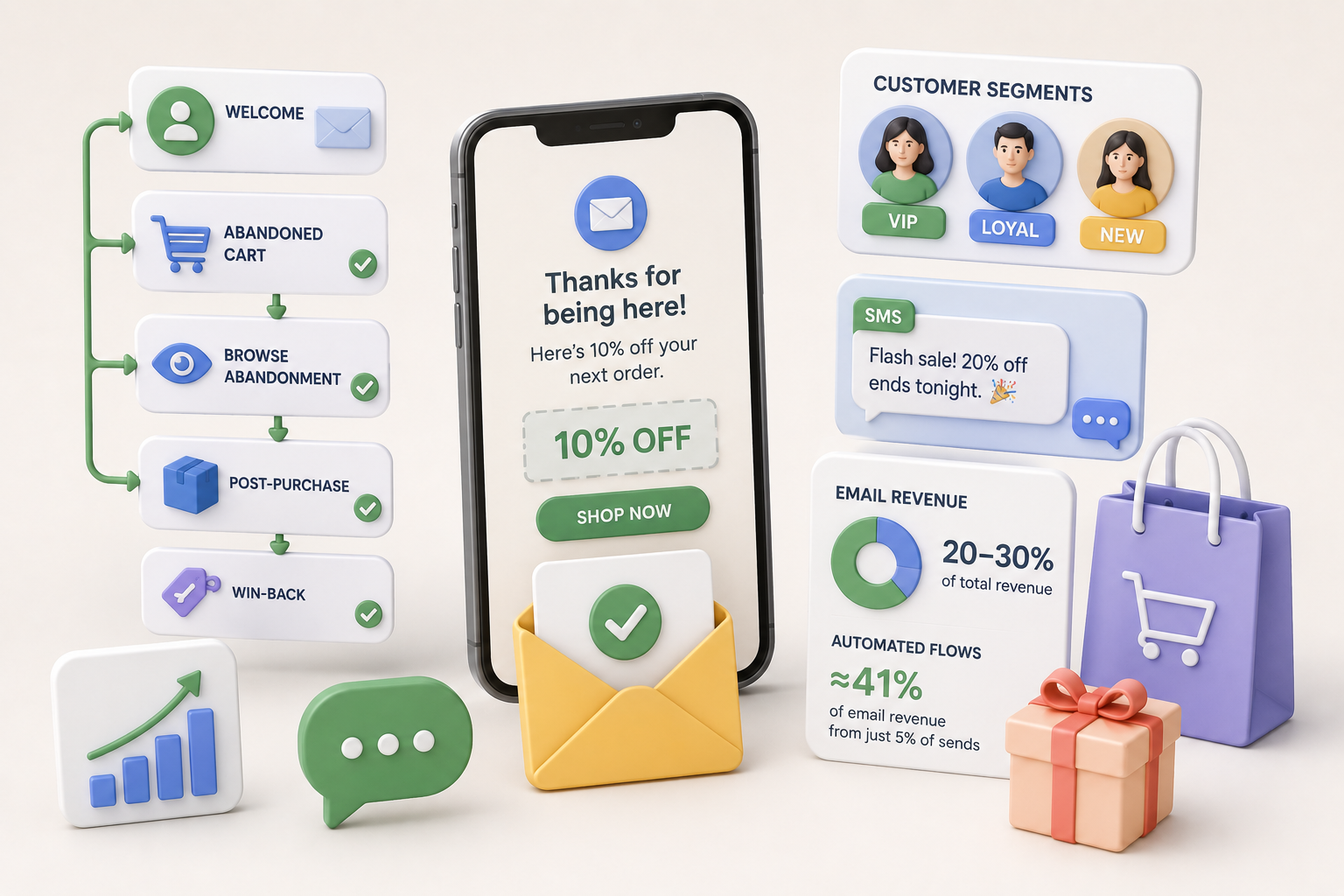
Acquisition gets the first sale. Retention makes the business profitable. Email drives 20 to 30 percent of total revenue for healthy ecommerce brands, and automated flows alone can account for around 41 percent of email revenue from just 5 percent of sends (Klaviyo).
- Automate the core flows: welcome, abandoned cart, browse abandonment, post-purchase and win-back.
- Segment by behaviour and value. Your top 20 percent of customers deserve different messaging.
- Layer SMS for time-sensitive offers, where open rates dwarf email.
Key metric: revenue from owned channels as a percentage of total, and repeat purchase rate.
Tactic 6: Conversion rate optimisation (CRO)
Doubling conversion rate has the same effect as doubling traffic, at a fraction of the cost. With the average store still converting only 2 to 3 percent, the upside is large. Performance marketing fails on a store that does not convert.
- Fix the fundamentals first: page speed, mobile experience, clear pricing and a frictionless checkout. Mobile now drives about 65 percent of transactions, so mobile checkout is not optional.
- Test product page layout, trust signals, shipping clarity and checkout steps, one change at a time. Our cart-abandonment reduction guide lists the highest-impact fixes.
- A slow or clunky store wastes every dollar of ad spend, which is why store build and marketing belong together. See our ecommerce web development approach.
Key metric: site-wide and product-page conversion rate, and checkout completion rate.
Tactic 7: Measurement, attribution and budget allocation
The final tactic is the discipline that ties the rest together: deciding where the next dollar goes.
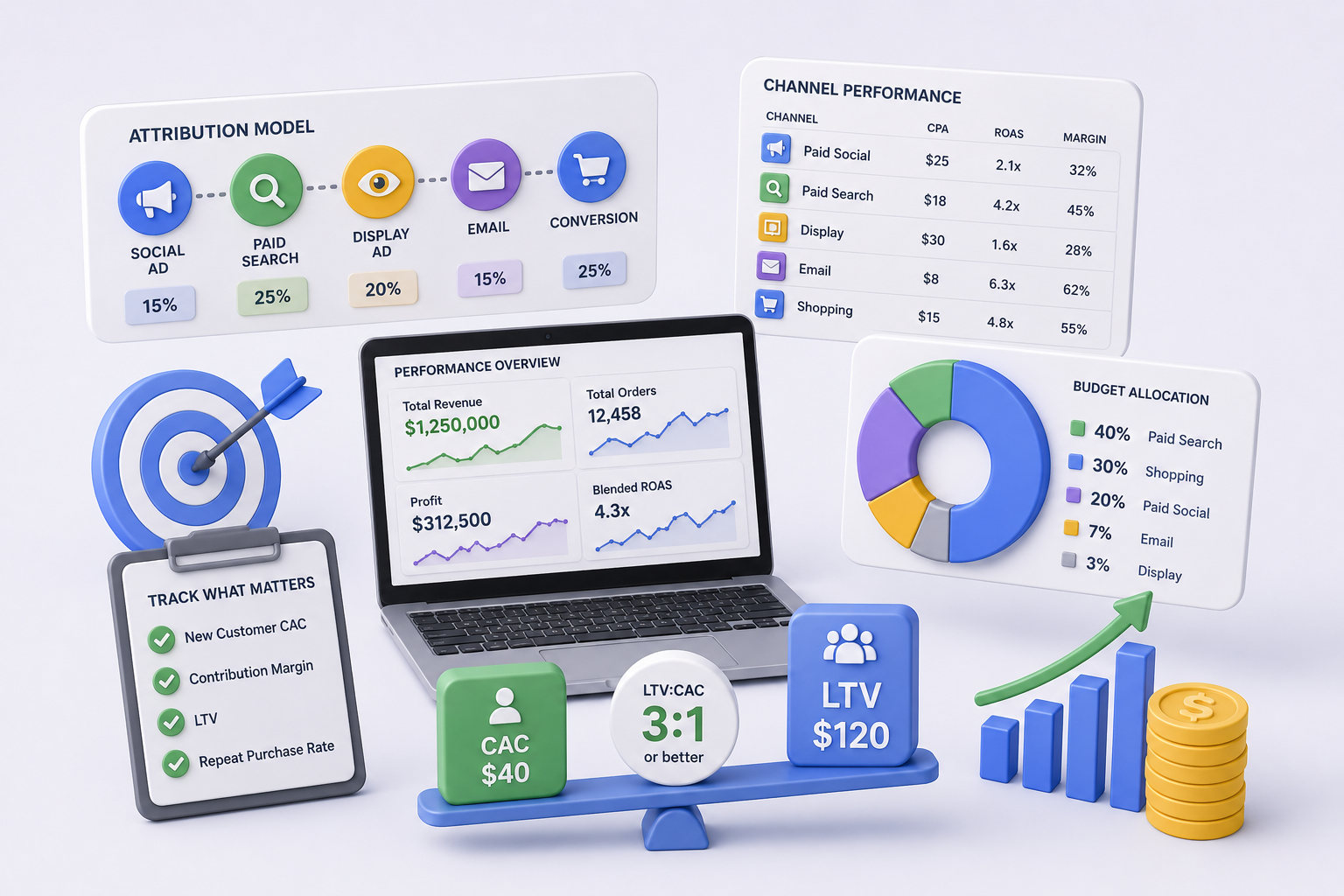
- Move beyond last-click. Use data-driven attribution to credit the channels that assist, not just close.
- Track new-customer CAC and contribution margin, not just blended ROAS, so you scale profitably.
- Reallocate budget monthly toward the channels and creatives with the best marginal return.
Key metric: blended CAC versus customer lifetime value (LTV). Healthy ecommerce aims for an LTV to CAC ratio of 3:1 or better.
The full-funnel view
|
Funnel stage |
Primary tactic |
Main metric |
|
Awareness |
Paid social, programmatic |
Reach, cost per click |
|
Consideration |
Display, retargeting, SEO |
Assisted conversions |
|
Conversion |
Shopping, paid search, CRO |
ROAS, CPA, conversion rate |
|
Retention |
Email, SMS, loyalty |
Repeat rate, owned revenue % |
The brands that grow are not the ones with the single best channel. They are the ones that connect every stage so each tactic feeds the next.
Your 90-day action checklist
- Fix tracking: server-side, enhanced conversions, product values.
- Launch Shopping or Performance Max with a clean feed.
- Protect brand search, add high-intent non-brand terms.
- Start paid social with a weekly creative testing cycle.
- Turn on dynamic retargeting with frequency caps.
- Build the five core email and SMS flows.
- Run one CRO test per fortnight on product and checkout pages.
- Review CAC, LTV and channel margin monthly, then reallocate.
Grow with a performance partner
If you want these tactics executed by one accountable team, talk to MediaPlus Digital. We connect SEO, paid media and conversion work into a single growth plan, and as a Google Partner and PSG pre-approved vendor we can help eligible Singapore SMEs offset cost by up to 50 percent. Compare your options first in our roundup of the best SEM agencies in Singapore.