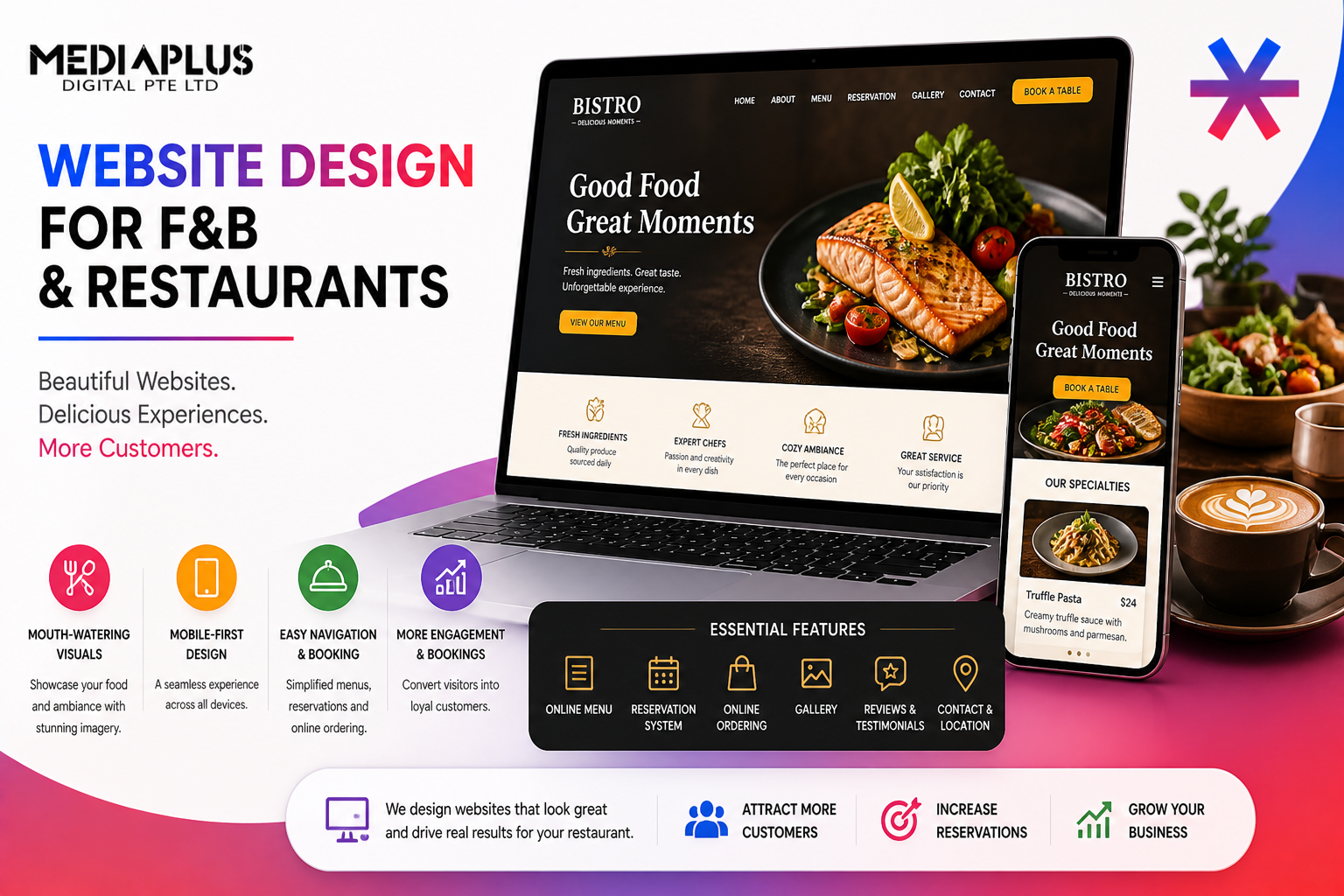
A great F&B website in Singapore is mobile-first, menu-first, and ordering-first. It loads in under 2.5 seconds, surfaces a clear hero photo with a “Reserve” or “Order” CTA, displays an HTML (not PDF) menu that Google can index, integrates direct online ordering with PayNow and GrabPay, embeds a reservation widget such as Chope or Oddle, and uses Google Business Profile for local discovery. Top examples include Burnt Ends, Odette, Open Farm Community, Tanjong Beach Club, Ya Kun Kaya Toast, and PS.Cafe.
1. Why F&B Website Design Is Different
A restaurant website is not a brochure. It is a 24/7 host, a virtual reservation book, and an online cashier. With Singapore F&B revenue projected above SGD 12.7 billion in 2026 (Statista) and roughly 80% of diners checking restaurant pages on their phones before visiting, your website is often the first impression your kitchen never gets to make. Get it right and a SGD 6,000 site pays for itself inside 60 days. Get it wrong and your kitchen fights every aggregator at 30% commission.
|
Metric |
Value |
Source |
|
Singapore F&B services market 2026 |
SGD 12.7B+ |
Statista |
|
Diners checking website on mobile |
80%+ |
TerrisDigital, Oddle |
|
AOV uplift, direct ordering vs aggregator |
+10 to 15% |
Oddle, DoorDash |
|
Third-party aggregator commission |
20 to 30% |
Foodpanda, Deliveroo, GrabFood |
|
Google Business Profile clicks per month, active F&B |
500 to 5,000+ |
Local SEO benchmarks |
|
Bounce rate above 4 second LCP |
90%+ |
Google Core Web Vitals |
|
Diners reading reviews before visiting |
89% |
BrightLocal |
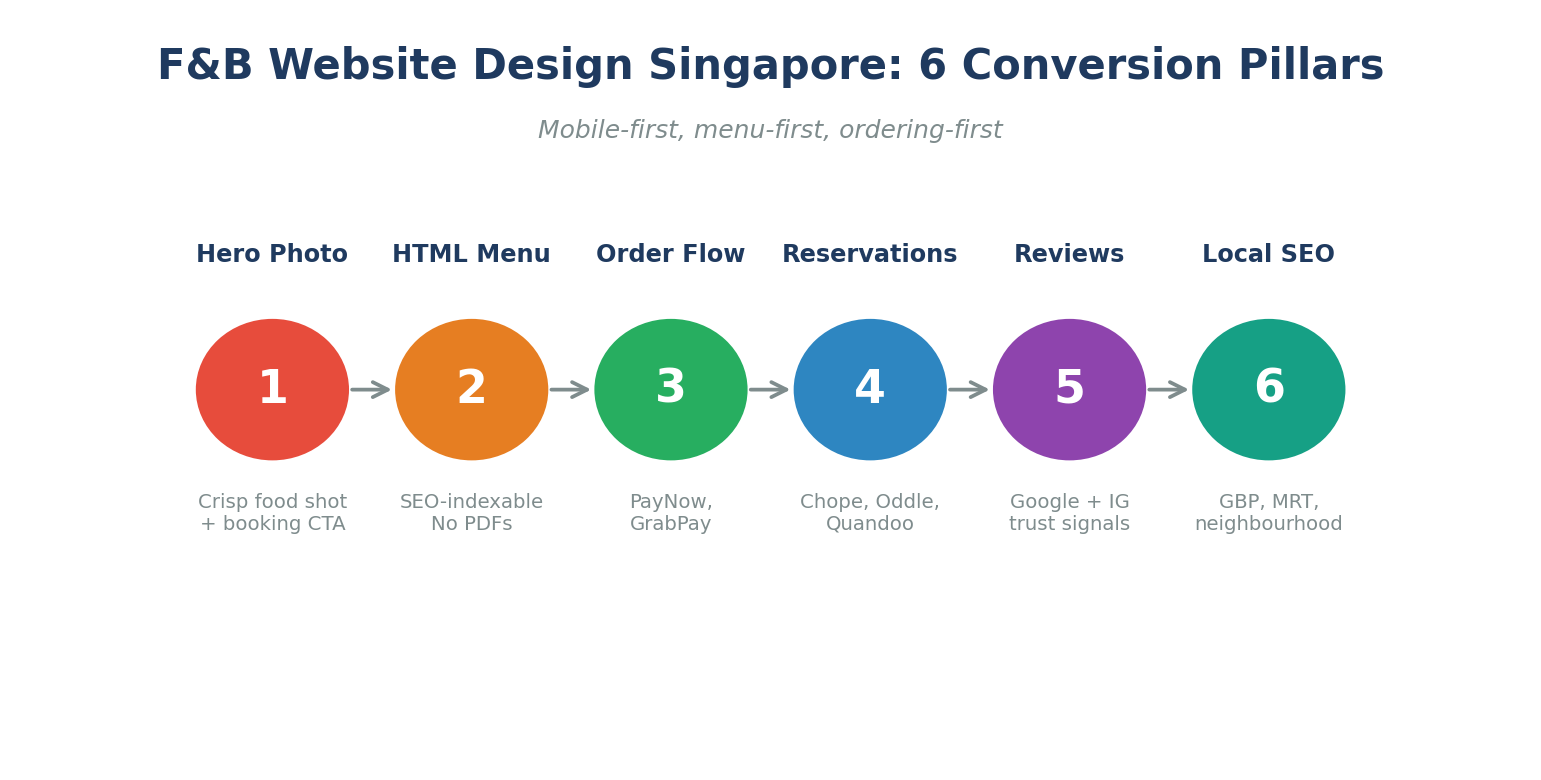
2. The 6 Conversion Pillars (Illustrated)
2.1 Pillar 1: Mobile Hero with Strong CTA
Within 50 milliseconds (Lindgaard et al., Behaviour & IT), a visitor decides whether your restaurant looks worth their lunch hour. The hero must combine: one crisp food or interior photograph (not a stock image), a one-line value proposition (“Hand-pulled noodles since 2014, Tanjong Pagar”), and two CTAs side by side: “Reserve a Table” and “Order Online”. Avoid auto-playing carousels and do not bury the menu link in the footer.
2.2 Pillar 2: HTML Menu (No PDFs)
PDFs are invisible to Google and painful on mobile. An HTML menu lets Google index every dish name (“laksa”, “chilli crab”, “wagyu don”) and pulls in long-tail diners searching for specific dishes near them. Group dishes by category, keep prices visible, and add 1 to 2 sentences of evocative copy per star item. Photos for the top 5 dishes lift conversions by 30 to 45%. Add Schema.org Menu structured data for richer SERP snippets.
2.3 Pillar 3: Direct Online Ordering with PayNow + GrabPay
Direct ordering keeps 100% of revenue, owns the customer data, and pushes Average Order Value 10 to 15% higher than aggregator orders (Oddle 2025). Singapore checkouts must offer PayNow, GrabPay, and SGQR alongside cards, with Apple Pay and Google Pay as defaults on mobile. Treat manual card entry as a fallback, not the primary flow. Common ordering stacks: Oddle, Square, Shopify with Oddle plugin, or a custom WooCommerce / Stripe integration.
2.4 Pillar 4: Reservation Integration

Embed a reservation widget directly into the page. Chope, Oddle Reserve, Quandoo, Resy, and SevenRooms all offer drop-in widgets. The booking flow should ask for date, time, party size, and contact only, with confirmation in under 30 seconds. Send an automated SMS or WhatsApp confirmation. No login walls, no captchas, no second-step “we will call you back”.
2.5 Pillar 5: Reviews and Social Proof
Embed your live Google rating, recent reviews, and an Instagram feed of recent dishes. 89% of Singapore diners read reviews before deciding (BrightLocal). Surface awards (World’s 50 Best, Bib Gourmand, Wine Spectator, Asia’s 50 Best) clearly. Use real customer photos before stock food photography wherever possible.
2.6 Pillar 6: Local SEO and Google Business Profile
Google Business Profile drives 30 to 70% of new diner discovery. Optimise the listing with full menu, cuisine type, opening hours, photos updated weekly, and proactive review responses. Ensure NAP (Name, Address, Phone) is identical on the website, GBP, and Facebook. Add Schema.org Restaurant and Menu structured data.
Pair pillars 5 and 6 with our SEO services in Singapore for compounding local visibility.
3. Best F&B Website Designs in Singapore
3.1 Burnt Ends | burntends.com.sg
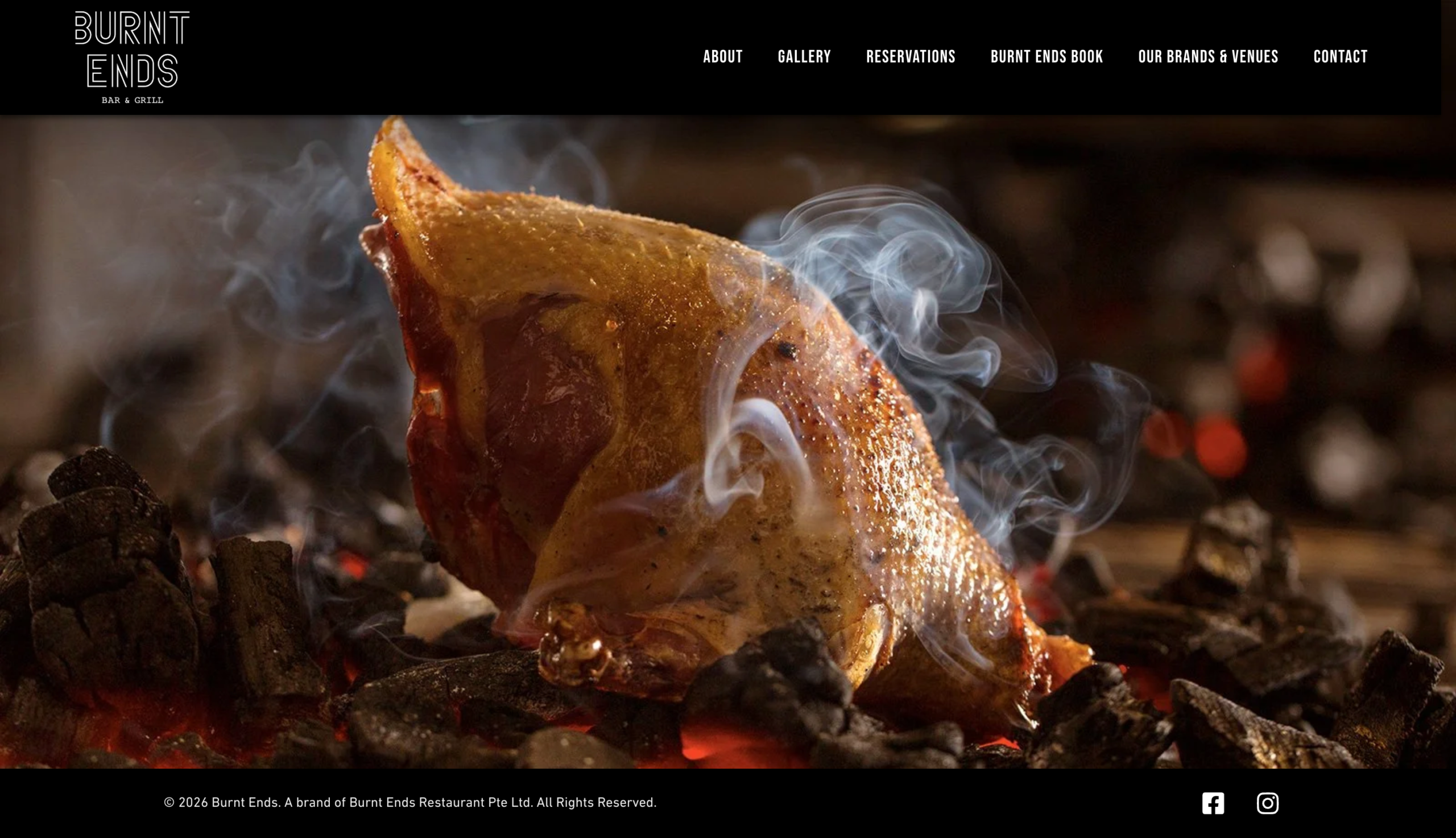
Australian-owned modern barbecue restaurant ranked #93 in The World’s 50 Best Restaurants. The website mirrors the dining room: dark navy palette, oversized food photography, restrained typography, and a single visible CTA above the fold. Reservation is one tap, the booking widget sits in the persistent header, and the menu loads as scrollable HTML rather than a PDF.
Why study it: minimalist hierarchy that still communicates premium positioning; perfect example of “less but louder” design.
3.2 Odette | odetterestaurant.com
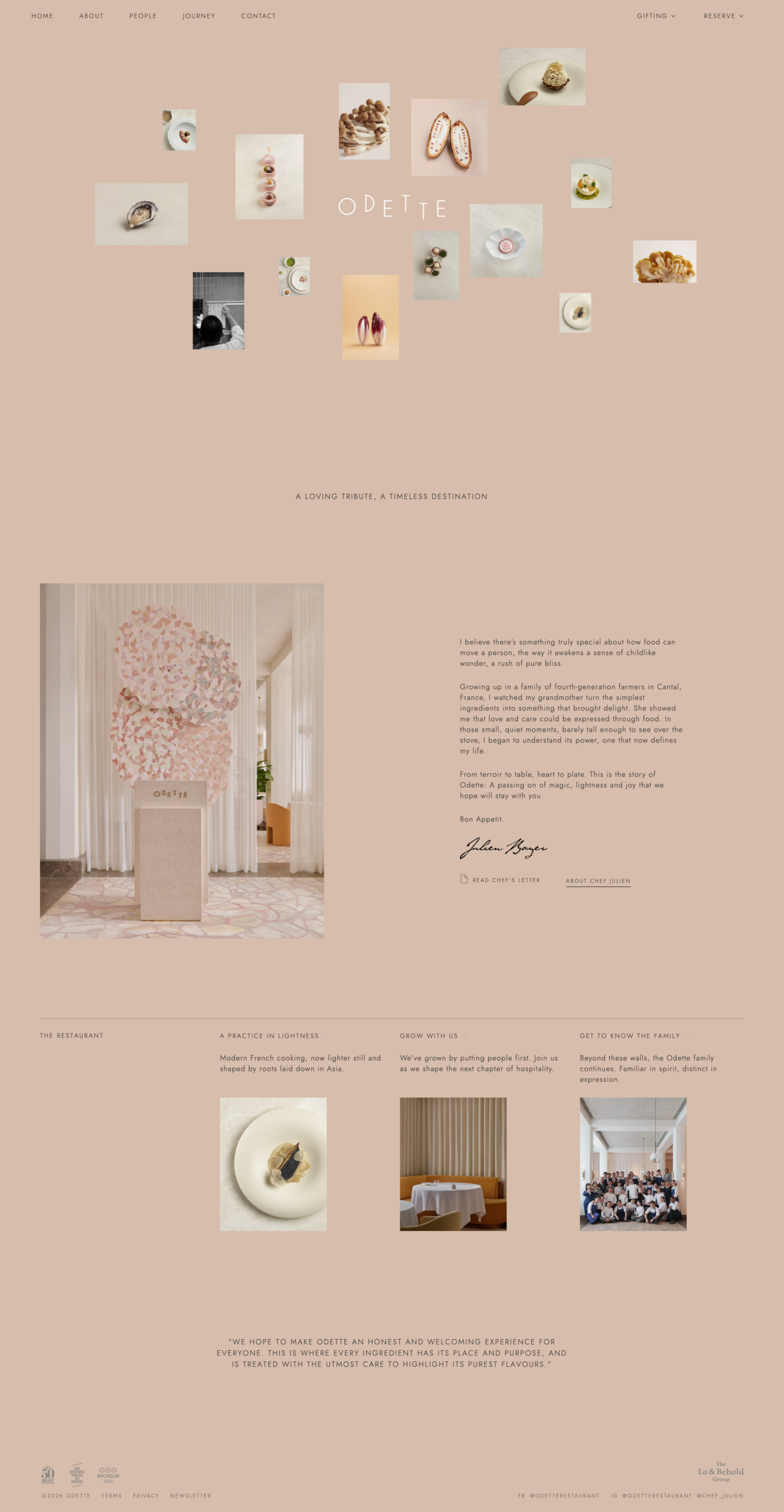
Three-Michelin-starred modern French restaurant inside the National Gallery, designed by Universal Design Studio and Sacha Leong. The website uses warm neutral tones, generous white space, and gallery-style photography. Reservations route through SevenRooms with a discreet, branded widget.
Why study it: how to translate a hospitality brand into a digital experience without compromising usability or speed.
3.3 Tanjong Beach Club | tanjongbeachclub.com
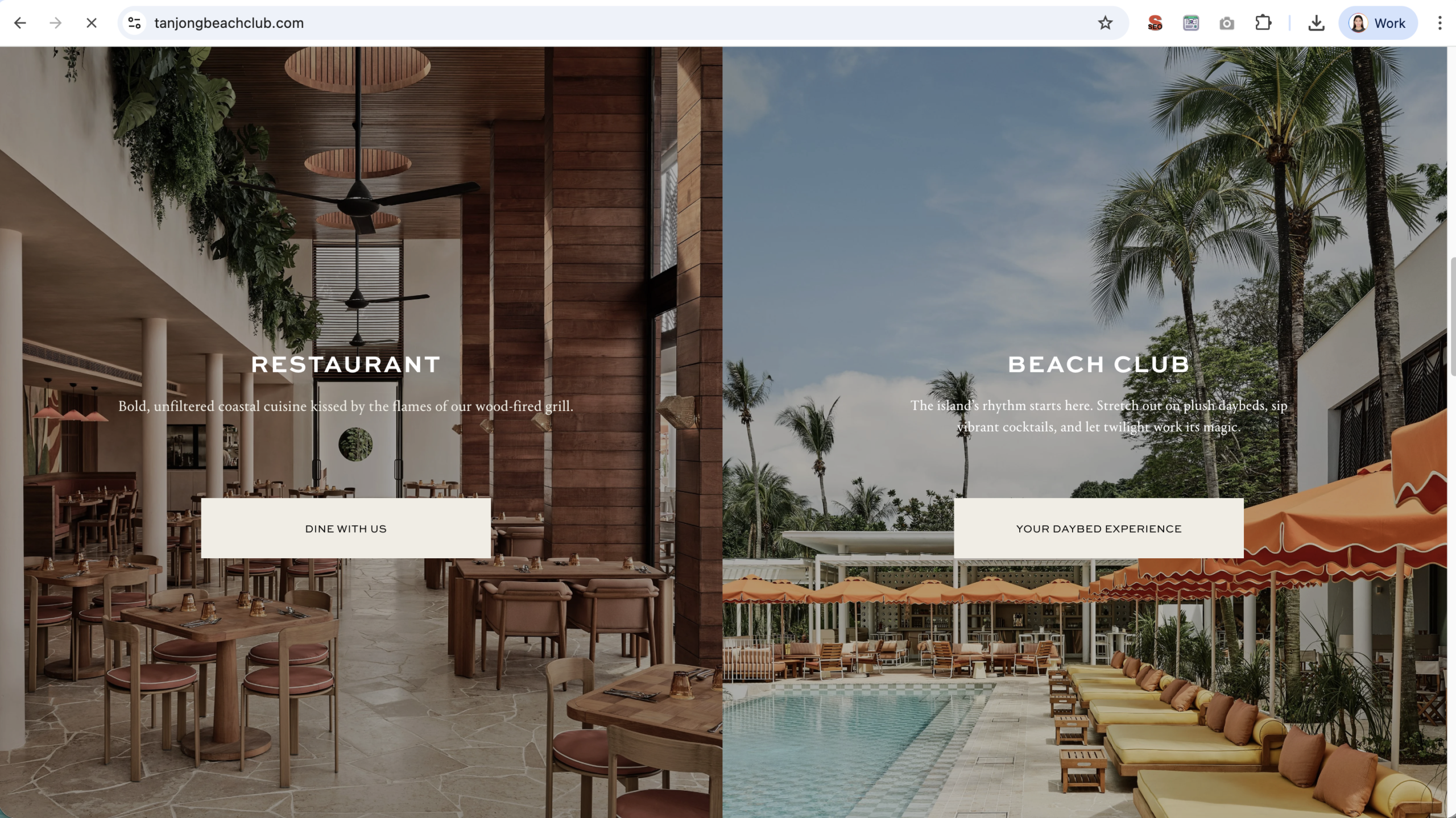
Lo & Behold Group beach-club restaurant on Sentosa. The site combines lifestyle photography, an editorial calendar of events, and clear CTAs for both reservations and bottle service. Mobile is flawlessly responsive, with sticky bottom-bar CTAs.
Why study it: how a destination venue turns event marketing and reservations into one funnel.
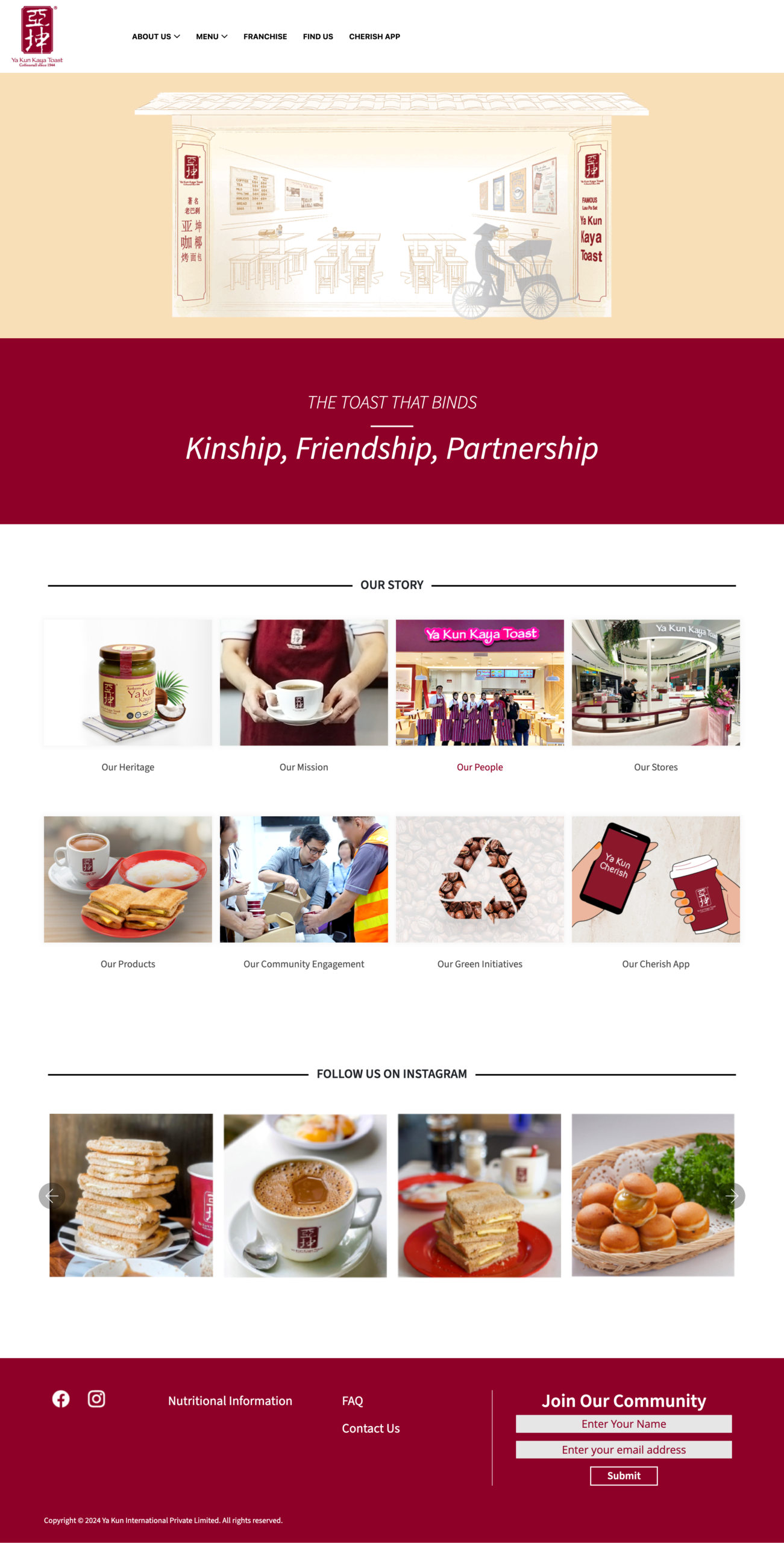
3.4 Ya Kun Kaya Toast | yakun.com
Heritage kaya toast brand founded in 1944 with 60+ outlets globally. The website handles store locator, franchise enquiry, online merchandise, and corporate gifting on a single CMS, with strong Schema.org Restaurant and LocalBusiness markup.
Why study it: a chain F&B blueprint with clear store locator, multi-region branches, and a commerce layer that does not slow the site down.
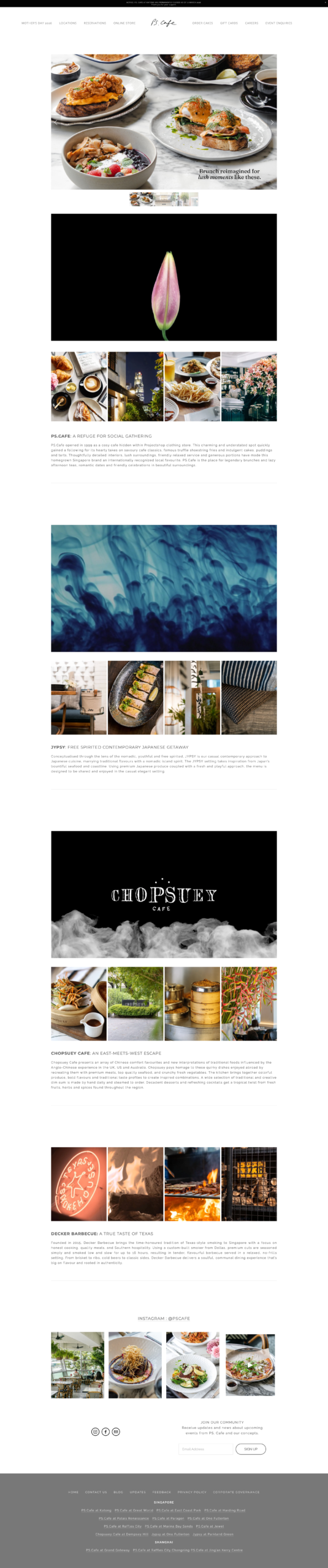
3.5 PS.Cafe | pscafe.com
Premium all-day cafe chain with 10+ outlets in Singapore. The site uses lush imagery, an editorial tone, and integrated Chope reservations. Each outlet has its own page with hours, menus, and imagery.
Why study it: how to manage 10+ branded locations without making the homepage a directory.
4. Singapore F&B Website Pricing Tiers
|
Tier |
Cost (SGD) |
Inclusions |
Best For |
|
Starter |
3,000 to 6,000 |
5 to 7 pages, basic CMS, GBP setup |
Single-outlet hawker, café |
|
Growth |
6,000 to 12,000 |
Online ordering, reservations, payments |
Mid-size restaurants |
|
Multi-Outlet |
12,000 to 25,000 |
Branch finder, loyalty, multi-CMS |
Chains with 3+ outlets |
|
Enterprise |
25,000+ |
Custom POS / KDS integration, mobile app |
Group operators, hotels |
Eligible SMEs can claim up to 50% via the IMDA PSG grant. Talk to MediaPlus web design for a tailored proposal, or build on WordPress or Shopify.
5. Frequently Asked Questions
How much does an F&B website cost in Singapore in 2026?
Starter restaurant websites cost SGD 3,000 to SGD 6,000. Growth-stage sites with online ordering and reservations run SGD 6,000 to SGD 12,000. Chains with 3+ outlets typically invest SGD 12,000 to SGD 25,000.
Should I use Foodpanda or build my own ordering?
Use both, but make direct ordering the priority. Aggregators charge 20 to 30% commission and own the customer data. A direct channel adds 10 to 15% to AOV and lets you build a loyalty programme.
Which CMS is best for restaurants in Singapore?
WordPress + WooCommerce or Oddle suits most independents. Shopify works for delivery-led brands. Webflow is great for design-led venues. Squarespace fits single-outlet boutique cafes.
How long does an F&B website take to build?
Starter sites take 4 to 6 weeks. Sites with ordering and reservations take 8 to 12 weeks. Chains run 12 to 16 weeks including content and photography.
Is the PSG grant eligible for restaurant websites?
Yes. The IMDA Productivity Solutions Grant subsidises up to 50% of qualifying e-commerce and digital marketing solutions, including online ordering and digital storefronts.
Do I need a separate mobile app?
For most independents, no. A fast mobile website plus a strong loyalty layer (email, SMS, WhatsApp) is enough. Apps make sense for chains with 5+ outlets and a clear retention strategy.
6. Conclusion and Next Steps
A great F&B website pays for itself within 60 to 120 days through direct orders, reservations, and walk-ins. Talk to MediaPlus web design for a free F&B audit. Download the F&B checklist or browse the MediaPlus blog.