Digital marketing has become one of the most effective ways for businesses in Singapore to reach customers. People discover brands while scrolling social media, searching on Google, reading emails or browsing on their phones, so having a strong online presence is no longer optional. When you understand how digital marketing works across these channels, it becomes much easier to plan campaigns that drive real results and long term growth. At MediaPlus Digital, this is the foundation we focus on when helping businesses strengthen their visibility and connect with the right audience online.
What is Digital Marketing ?
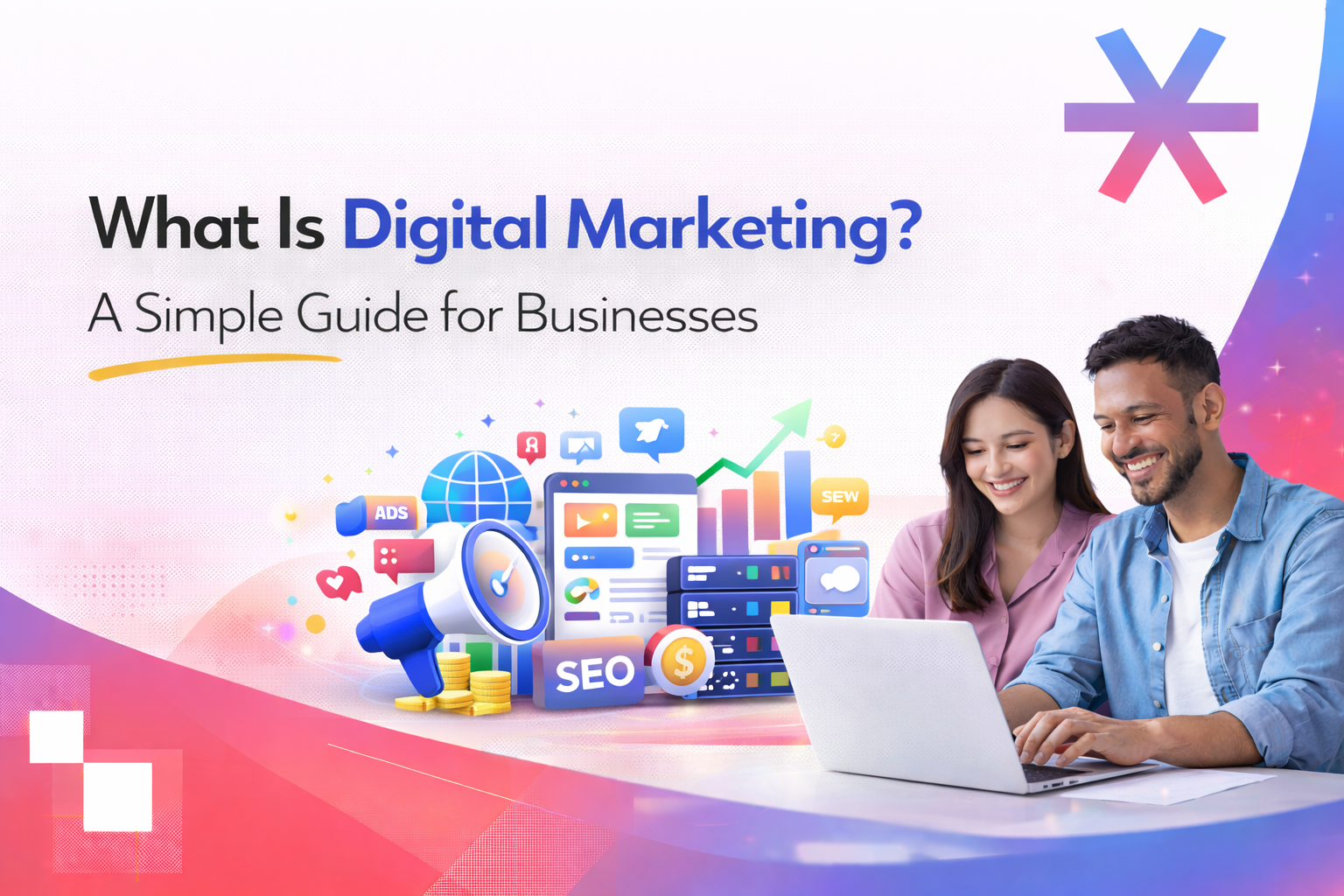
Digital marketing is the practice of promoting products or services through digital channels to build brand awareness, attract traffic, and achieve marketing objectives. It connects brands with potential customers online, where people spend much of their time researching, comparing, and making purchasing decisions.
Digital marketing spans a wide range of channels, including:
-
Search engines
-
Websites and landing pages
-
Social media platforms
-
Email marketing
-
Mobile apps
-
Text messaging
-
Online and display advertising
While the channels are digital, the underlying principles are familiar. Like traditional marketing, digital marketing relies on understanding consumer behavior and using data to identify target audiences and deliver relevant, timely messages.
How a company applies digital marketing depends heavily on its business model. Business-to-business (B2B) organizations typically sell to other companies, which often involves longer sales cycles, multiple decision-makers, and more strategic, relationship-driven messaging. Business-to-consumer (B2C) companies, on the other hand, sell directly to individual customers and usually focus on shorter purchase cycles, broader reach, and faster conversion paths.
In both cases, digital marketing provides the tools to reach the right audience, at the right time, with the right message.
Read more: Performance Marketing vs Digital Marketing: Understanding the Differences
The Difference Between B2B and B2C Digital Marketing
B2B and B2C digital marketing operate on very different decision dynamics.
In B2B marketing, purchasing decisions usually involve multiple stakeholders. Because of this, the buying process tends to be longer and more deliberate. Digital marketing in B2B focuses heavily on education, credibility, and relationship-building over time rather than immediate conversion.
B2C marketing, on the other hand, typically targets individual buyers. Decisions are made faster, often in the moment, which means digital campaigns lean more on urgency, promotions, and clear calls to action.
There’s also a difference in motivation. B2B purchases are largely driven by logic: return on investment, efficiency, and risk reduction. B2C purchases are more emotionally driven, influenced by desire, convenience, or personal identity.
Despite these differences, digital marketing is effective for both. Whether you’re selling to businesses or consumers, digital channels help you reach the right audience, deliver the right message, and move prospects through the buying journey more efficiently.
Understanding How Digital Marketing Works
At its core, marketing is about promoting products or services and growing market share. Doing it well takes a mix of creativity, data, and commercial thinking. Some businesses handle this in-house, while others rely on agencies that manage marketing for multiple clients.
For decades, marketing revolved around print, television, and radio. Those channels still exist, but the rise of the internet fundamentally changed how companies reach customers. Digital marketing emerged as a faster, more measurable, and more flexible way to connect with audiences.
As technology evolved, so did marketing tactics. Email was one of the earliest digital channels to gain traction. Then search engines allowed businesses to compete for attention through keywords and rankings. Later, social platforms like Facebook introduced detailed audience targeting based on user behavior, interests, and demographics.
The widespread adoption of smartphones pushed things even further. Consumers can now discover, compare, and purchase products from anywhere. According to DHL’s 2024 Purchasing Behavior Report, 52% of shoppers worldwide buy online at least once a week. This shift has made digital marketing a daily touchpoint rather than an occasional interaction.
One major difference between digital and traditional marketing is interactivity. Digital channels allow users to click, comment, respond, and convert instantly, turning marketing into a two-way conversation rather than a one-way broadcast.
The Benefits of Digital Marketing
Digital marketing has become essential for businesses today because it allows brands to reach people wherever they are online. Beyond its wide reach, it also offers several practical advantages that strengthen your overall marketing strategy. Here are some of the key benefits.
A Broader Geographic Reach
When your campaigns run online, anyone can see them regardless of location unless you choose to target specific regions. This makes it easy for businesses to expand into new markets, attract overseas customers and grow visibility across multiple channels without the limitations of physical marketing.
Cost Efficiency
Digital marketing often costs less than traditional advertising and delivers better control over who sees your message. Traditional media such as print ads or TV spots come with high overheads and no guarantee that your ideal audience will notice them.
Online marketing gives you far more flexibility.
You can publish a single blog article that continues attracting visitors for months. You can run email campaigns that reach specific customer lists at scheduled times. You can update messaging or creative instantly without paying for a full reprint or re-shoot.
When you look at the combined impact, digital marketing gives you more results and more control for every dollar spent.
Measurable, Quantifiable Results
One of the strongest benefits of digital marketing is the ability to track performance accurately. Instead of guessing where customers came from, digital platforms show you exactly how many people opened your emails, clicked on your ads or completed a purchase.
Analytics tools allow you to measure conversions, user behaviour, cost per acquisition and total revenue in real time. This makes it easier to refine your strategy, identify what is working and scale the activities that drive the highest returns.
Better Personalisation
Digital marketing provides access to detailed customer data that traditional marketing simply cannot match. You can see what users viewed, which products they considered and what type of content they engaged with.
For example, a financial services firm can send different offers to parents researching insurance and entrepreneurs researching retirement plans. That level of precision would be extremely difficult and time consuming to achieve through offline methods.
With digital tools, personalised targeting becomes automatic and far more effective.
Stronger Customer Engagement
Digital channels allow you to interact with customers instantly. Instead of passive exposure, people can respond, comment, share or message your brand directly.
When someone engages with your social media posts, it boosts visibility and creates momentum around your content. Engagement also strengthens relationships because customers become active participants in your brand story. Over time, this helps build loyalty and trust.
Faster and More Convenient Conversions
Digital marketing makes it easy for users to take action the moment they engage with your content. They can tap a button, visit a landing page, sign up for updates or make a purchase in seconds.
Compare this to traditional ads, where users usually need to make a phone call or remember to look you up later. With online marketing, the purchase journey becomes smoother, quicker and more convenient, which leads to higher conversion rates.
Exploring Key Digital Marketing Channels
Digital marketing has grown rapidly since the early days of the internet, and businesses now have access to a wide mix of channels to reach their audiences. Below are some of the most commonly used digital marketing channels today and how they contribute to a strong online strategy.
Website Marketing
A well-built website is the foundation of every digital marketing strategy. It acts as your online storefront, communicates your brand value and guides visitors toward important actions such as making a purchase, booking a service or submitting an enquiry. For a website to perform at its best, it needs fast loading speed, mobile responsiveness and a clear structure that helps users find what they need without friction.
A strong website also improves the results of every other digital channel. Good UX design increases conversion rates, SEO-friendly structure helps your pages rank on Google and clean analytics allows your marketing team to optimise campaigns more effectively.
At MediaPlus Digital, this aligns closely with our core services. Our Conversion Rate Optimisation (CRO) work ensures your site turns more visitors into customers. Our SEO team helps improve visibility on search engines, and our performance marketing specialists amplify traffic through channels like Google Ads, Facebook Ads and TikTok Ads. Combined, these services strengthen your website as the main driver of online growth.
Pay Per Click Advertising (PPC)
PPC allows businesses to reach their ideal audience through paid placements on platforms such as Google, Bing, LinkedIn, Facebook, Instagram and Pinterest. These ads appear when users search for relevant keywords or show interest in related topics.
Marketers can target audiences by demographics, interests, behaviours or location, making PPC a fast and efficient way to generate leads. Google Ads and Meta Ads are the most widely used PPC platforms, especially for brands that want measurable and immediate results.
Content Marketing
Content marketing focuses on creating valuable written, visual or video content that attracts and engages potential customers. This content usually lives on a company’s website and is amplified through SEO, social media, email newsletters and even paid campaigns.
Content marketing builds authority and trust by answering questions, solving problems and offering insight. Instead of pushing direct sales messages, content aims to guide users naturally through their research and buying journey.
Email Marketing
Email marketing remains one of the highest converting digital channels. Brands often collect email subscribers through their websites or social platforms, then nurture these contacts with newsletters, promotions, updates or personalised offers. When done correctly, email helps turn interested leads into loyal customers while keeping existing customers engaged.
Social Media Marketing
Social media platforms help businesses connect with users, build communities and influence purchase decisions. Beyond brand awareness, social media can drive traffic, generate leads and support direct selling for both B2C and B2B brands.
Promoted posts, targeted ads and influencer partnerships are commonly used to reach people who may not discover a brand through search alone. Research also shows that many shoppers rely on social platforms for product inspiration and buying decisions, making social media a key part of the modern customer journey.
Affiliate Marketing
Affiliate marketing rewards individuals or partners who help promote and sell a company’s products. Each time an affiliate drives a sale or lead, they earn a commission. This channel has grown significantly with digital creators and influencers, who often introduce brands to highly engaged audiences. It is cost-effective because businesses only pay for results.
Video Marketing
Video plays a major role in consumer research and entertainment. People often look to platforms such as YouTube, Instagram and TikTok to watch reviews, tutorials or product demonstrations before making a purchase.
Brands can use video to explain complex concepts, showcase products or share customer stories. Video marketing works best when it supports wider SEO, content and social media strategies, since video formats tend to capture attention more effectively than static content.
Text Message Marketing (SMS)
SMS marketing allows companies to send quick updates about promotions, product launches or events directly to a consumer’s phone. It is often used for time-sensitive announcements because people tend to read messages almost instantly. Nonprofits, retailers, service providers and event organisers regularly use SMS to drive fast engagement or responses.
Key Performance Indicators (KPIs) in Digital Marketing
KPIs help digital marketers understand how well their campaigns are performing. They work the same way traditional marketing metrics do, but with far more real-time insight. By tracking the right KPIs, businesses can measure progress, optimise campaigns and benchmark their results against competitors.
Some of the most useful KPIs in digital marketing include:
- Click-through Rate (CTR): CTR shows how many people clicked on an ad compared to the number of people who saw it. It is one of the simplest ways to gauge whether your messaging and creative are capturing attention.
- Conversion Rate: Conversion rate measures how many users completed a desired action, such as making a purchase, submitting a form or signing up for a newsletter. It goes beyond clicks and reveals whether your campaign is actually driving results.
- Social Media Engagement and Traffic: This includes likes, comments, shares, follows and overall interactions with your social profiles. High engagement often reflects strong brand awareness and content relevance.
- Website Traffic: Tracking the number of visitors on your site helps you understand how effective your marketing channels are at driving interest. Businesses often analyse traffic by source, device type and user behaviour to spot opportunities for improvement.
Digital Marketing Challenges
Although digital marketing offers powerful tools, it also comes with unique challenges.
- Rapidly Changing Channels: New platforms and technologies emerge quickly. Marketers must stay informed and adapt their strategies to keep up.
- Data Overload: Digital campaigns generate large amounts of data. Turning that information into clear insights requires the right tools and expertise.
- Consumer Attention Is Harder to Capture: People are exposed to countless digital ads every day. Standing out requires strong creative work, relevant messaging and smart targeting.
These challenges are exactly why many Singapore businesses work with experienced digital marketing teams. If you want help improving your KPIs, strengthening your data capabilities or building campaigns that cut through the noise, MediaPlus Digital offers specialised services in SEO, SEM, programmatic marketing, CRO and social media advertising to help you grow effectively.
Digital Marketing Trends Shaping the Future
Digital marketing is changing faster than ever. New technologies, shifting consumer expectations, and evolving platforms are forcing brands to rethink how they connect with people. These are the trends that will matter most going forward.
Artificial intelligence and automation
AI is no longer a nice-to-have. It’s becoming the backbone of modern marketing. From ad optimisation and audience targeting to content drafting and performance analysis, AI helps teams move faster and make smarter decisions. The real advantage comes when automation handles repetitive work, freeing marketers to focus on strategy, creativity, and messaging.
Voice search and smart devices
As voice assistants like Alexa, Siri, and Google Assistant become part of daily life, search behaviour is changing. People speak differently than they type, which means content needs to adapt. Optimising for natural language queries, conversational keywords, and quick, clear answers will be increasingly important.
Interactive content
Static content struggles to compete for attention. Interactive formats like polls, quizzes, calculators, and interactive videos invite users to participate rather than just consume. This type of content tends to drive higher engagement, longer time on page, and better social sharing, especially on mobile and social platforms.
Personalisation at scale
Consumers now expect brands to understand their needs and preferences. Advances in data analytics and AI make it possible to personalise messaging, offers, and experiences for individual users without losing efficiency. The brands that win will be those that personalise thoughtfully, without crossing the line into feeling invasive.
Sustainability and ethical marketing
More people are choosing brands based on values, not just price or convenience. Transparency, sustainability, and ethical business practices are increasingly influencing purchasing decisions. Digital marketing will play a key role in communicating these values clearly and authentically, rather than treating them as surface-level messaging.
12 Types of Digital Marketing
Digital marketing covers a wide range of channels, from content and search to paid ads and automation. Most strategies use a mix of owned, paid, and earned media to reach people at different stages of the buying journey.
Below are the 12 most common and effective types of digital marketing today.
1. Content marketing
Content marketing focuses on educating and delivering value rather than directly selling. The goal is to build trust, authority, and long-term relationships.
Common formats include:
-
Blog posts
-
eBooks and guides
-
Newsletters
-
Infographics
-
Podcasts
-
Video content, including short-form clips
Content marketing is cost-effective and scalable. It attracts qualified leads and supports nearly every other digital channel.
2. Email marketing
Email marketing is a direct way to communicate with prospects and customers. It’s commonly used for newsletters, product updates, onboarding sequences, and post-purchase follow-ups.
Best practices include:
-
Personalising emails with names and relevant content
-
Focusing on one clear call to action per email
-
Making unsubscribing simple and visible
-
Combining transactional and promotional emails thoughtfully
When done right, email remains one of the highest ROI channels.
3. Search engine optimisation (SEO)
SEO improves your website’s visibility in search engine results pages by optimising content, structure, and technical performance.
Key areas include:
-
On-page SEO: keywords, content quality, internal links
-
Off-page SEO: backlinks and external mentions
-
Technical SEO: page speed, mobile usability, metadata
SEO is a long-term investment that compounds over time.
4. Search engine marketing (SEM)
SEM refers to paid ads that appear in search engine results. Advertisers bid on keywords and pay when users click on their ads.
Google Ads and Microsoft Ads are the most widely used platforms. SEM works well because many buying journeys start with search, making it ideal for capturing high-intent traffic.
5. Affiliate marketing
Affiliate marketing involves partners promoting your products or services in exchange for a commission on sales or leads.
Affiliates often create reviews, tutorials, or comparison content. Because their audiences already trust them, affiliate recommendations can be highly effective.
6. Pay-per-click advertising (PPC)
PPC is a broader category that includes paid ads across search engines, social media, video platforms, and marketplaces.
Popular PPC platforms include:
-
Google Ads
-
Meta Ads
-
YouTube Ads
-
Amazon Ads
Success depends on strong targeting, relevant ads, and well-optimised landing pages. Without a clear strategy, costs can escalate quickly.
7. Social media marketing
Social media marketing promotes brands organically through platforms like Facebook, Instagram, TikTok, YouTube, and X.
It works best when brands:
-
Understand where their audience spends time
-
Post consistently
-
Engage directly with comments and messages
-
Create content designed to be shared
Social platforms now play a major role in discovery and purchasing decisions.
8. Influencer marketing
Influencer marketing involves paying creators to promote products or services to their audience. Unlike affiliate marketing, compensation is usually a flat fee rather than commission-based.
Strong influencer campaigns depend on:
-
Partnering with relevant, credible creators
-
Clear agreements on messaging and deliverables
-
Authentic integration into the creator’s content
9. Native advertising
Native ads are designed to blend into the platform where they appear. They look similar to organic content, which can improve engagement.
Transparency is still essential. Native ads must clearly indicate that they are sponsored or promoted content.
10. Marketing automation
Marketing automation uses software, AI, and machine learning to handle repetitive marketing tasks.
Common uses include:
-
Email workflows
-
Lead nurturing
-
Campaign tracking
-
ROI measurement
Automation frees up time for strategy while improving consistency and personalisation.
11. Mobile marketing
Mobile marketing targets users on smartphones, tablets, and wearable devices. SMS marketing is one of the most common forms.
Because mobile devices are almost always within reach, mobile marketing enables timely, highly personal communication similar to email but often with higher open rates.
12. Video marketing
Video marketing promotes brands through short-form and long-form video content.
YouTube is a major video platform, but it functions more like a search engine than a social network. TikTok and Instagram excel at short-form, discovery-driven video.
With just a smartphone, businesses can now create effective video content for websites, social media, email, and paid campaigns.
How to Do Digital Marketing (Step by Step)
No matter your industry or business model, digital marketing works best when it’s approached with structure. You don’t need to do everything at once, but you do need a clear framework. This seven-step process gives you exactly that.
1. Define clear, measurable goals
Start with outcomes, not tactics.
Your goals should be specific, realistic, and directly tied to business objectives. Think of them as the guardrails for every decision you’ll make later. Without clear goals, it’s impossible to judge whether a campaign is actually working.
Every goal should be paired with metrics such as:
-
Impressions and reach
-
Clicks and click-through rate (CTR)
-
Engagement rate
-
Conversions
-
Cost per lead (CPL)
-
Effective cost per thousand impressions (eCPM)
When goals are measurable, optimisation becomes objective instead of emotional.
2. Identify and understand your target audience
You can’t market effectively to everyone.
Define exactly who your audience is, what problems they’re trying to solve, and how they behave online. Audience insights should go beyond age and location and include intent, motivations, and content preferences.
Also remember that audiences behave differently across platforms. The people engaging with your emails are not necessarily the same way they behave on social media or search.
3. Set a budget for each channel
Budgeting is about control, not restriction.
Assign budgets based on your goals, expected return, and the role each channel plays. Paid channels usually drive speed, while organic channels build long-term value.
If your budget fluctuates, allocate percentages rather than fixed amounts. This gives you flexibility while keeping spend aligned with priorities.
4. Choose the right digital marketing channels
Don’t spread yourself thin.
Select channels based on where your audience actually spends time and how close those channels are to conversion. A healthy mix of paid and organic channels usually works best.
For example:
-
Paid ads for immediate visibility and testing
-
SEO and content for sustainable growth
-
Email for nurturing and retention
Channel selection should be strategic, not trend-driven.
5. Optimise everything for mobile
Mobile is no longer optional.
Most users now interact with brands primarily on mobile devices. That means your website, landing pages, emails, ads, and content all need to load fast, read well, and convert smoothly on smaller screens.
Equally important is consistency. The experience should feel seamless when users move between mobile and desktop.
6. Measure, analyse, and refine continuously
Digital marketing is never “set and forget.”
Track performance regularly and use data to guide decisions. Look for patterns, not just spikes or drops. What’s working today may not work next quarter, so optimisation needs to be ongoing.
Review:
-
Website analytics
-
Campaign performance
-
Engagement trends
-
Conversion paths
The best marketers treat refinement as a constant process, not a cleanup task.
7. Build cohesive, multi-channel campaigns
Channels perform better together than alone.
Avoid running isolated campaigns that don’t connect. A strong digital strategy reinforces the same message across multiple touchpoints, adapted to each platform’s strengths.
For example:
-
A blog post supports SEO
-
That content fuels social posts
-
Paid ads amplify reach
-
Email nurtures interest
When campaigns are connected, data becomes easier to interpret and results compound faster.
Is digital marketing the same as online marketing?
Short answer: no. Online marketing is part of digital marketing, but it’s not the whole picture.
Digital marketing
Digital marketing is the umbrella term. It includes any form of marketing that uses digital technology, whether or not the internet is involved. That can mean online channels like websites and social media, but also offline digital channels such as digital billboards, television, radio, and SMS.
In simple terms, if a campaign uses a digital device like a phone, tablet, computer, or smart screen, it falls under digital marketing.
Online (or internet) marketing
Online marketing is a subset of digital marketing. It only includes channels that require an internet connection.
This covers things like:
-
Email marketing
-
Social media marketing
-
Search engine optimisation (SEO)
-
Pay-per-click (PPC) advertising
The terms online marketing and internet marketing are generally used interchangeably, and both sit within the broader digital marketing category.
The key difference comes down to scope: all online marketing is digital marketing, but not all digital marketing happens online.
Digital Marketing vs Traditional Marketing
The biggest difference is the ability to measure results accurately. Digital marketing allows businesses to track actions such as clicks, views, conversions and cost per lead. Traditional channels like print or outdoor media do not offer this level of detail. Digital marketing also supports two-way communication, faster campaign adjustments and more precise targeting.
Traditional marketing still has value, but digital marketing gives brands more control and insight, which often leads to better results.
Conclusion
Digital marketing is all about reaching the right people at the right time through the digital tools they use every day. It helps brands grow faster, stay visible and build stronger customer connections. For businesses in Singapore that want to improve their online presence, a well-developed digital marketing plan can make a real difference.
If you want to strengthen your digital performance, MediaPlus offers a full suite of services, including digital marketing, SEO and SEM, all designed to help businesses grow steadily. You can learn more here MediaPlus’s Digital Marketing Service
Check more: Top 10 Digital Marketing Agencies in Singapore