
The AIDA marketing model is one of the most enduring and widely used frameworks in marketing. Despite being over a century old, it still plays a central role in how marketers plan campaigns, structure messaging, and guide customers from first exposure to conversion.
This guide explains what the AIDA model is, how it works in today’s digital environment, real-world examples, and where its limitations lie, based on established marketing research and modern practice.
What Is the AIDA Marketing Model?
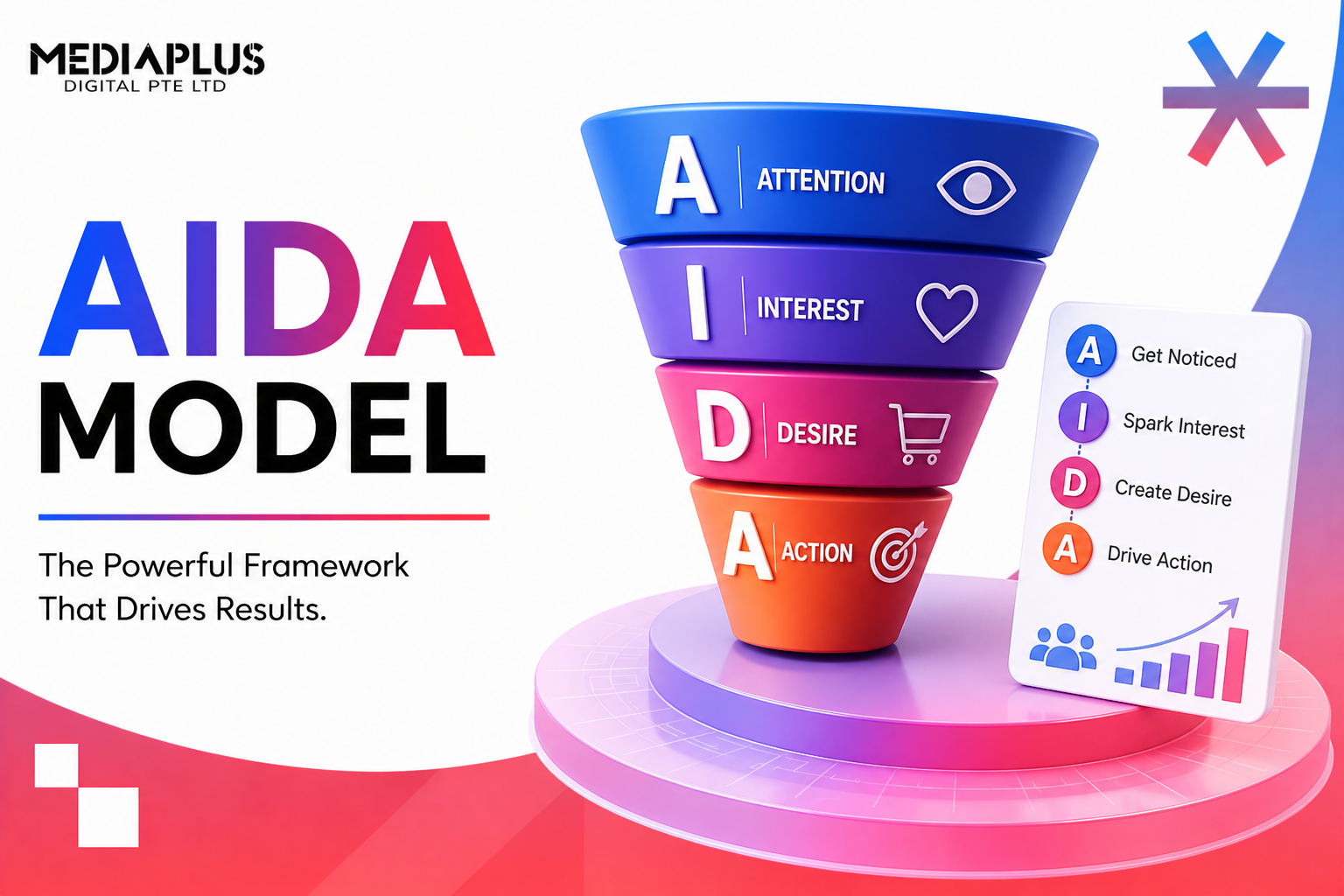
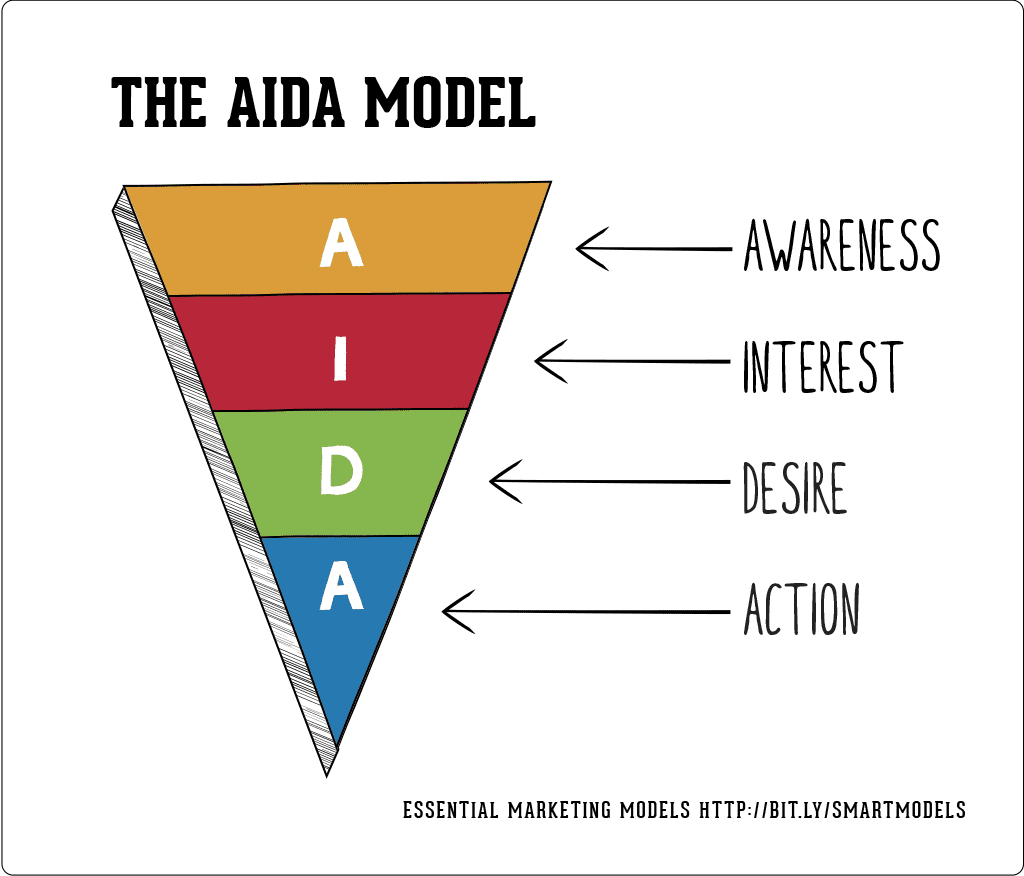
The AIDA marketing model describes the cognitive stages a consumer goes through before making a purchase. It is often visualised as a funnel, moving from initial awareness to final action.
AIDA stands for:
-
Awareness/Attention
-
Interest
-
Desire
-
Action
Rather than being a strict linear journey, modern marketers recognise that consumers may move back and forth between these stages, especially with the influence of reviews, social media, and third-party content.
At its core, AIDA is a communications planning model. It helps marketers decide what to say, when to say it, and where to say it across different touchpoints.
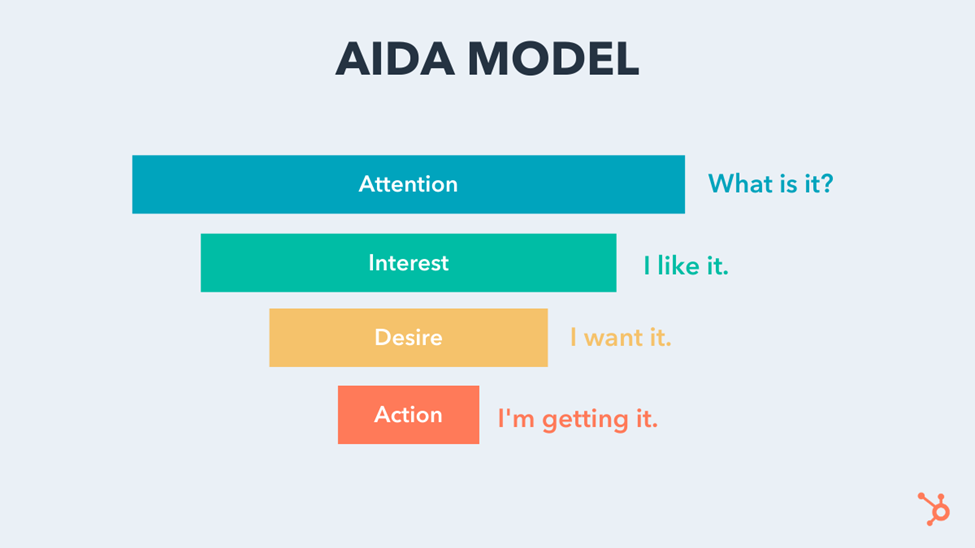
What Does AIDA Stand For?
Awareness
This is the stage where a potential customer first becomes aware of your brand, product, or service.
The goal is visibility, not persuasion. At this point, the audience may not have a problem defined yet, let alone a solution in mind.
Common awareness tactics include:
-
Display and social ads
-
PR and influencer exposure
-
Search visibility for informational queries
-
Brand-led video content
The key question at this stage is simple: Do people know you exist?
Interest
Once awareness is established, the next challenge is to hold attention and build interest.
Here, consumers begin to research and compare. They want information that helps them understand benefits, use cases, and credibility.
Interest is driven by:
-
Educational content
-
Website pages that explain value clearly
-
Social proof such as reviews and testimonials
-
Videos, demos, and FAQs
At this stage, relevance matters more than reach. If your message does not align with user needs, interest fades quickly.
Desire
Desire is where logic meets emotion. The consumer already understands the product or service, but now needs a reason to want it.
This is where differentiation and brand personality play a major role.
Desire is built through:
-
Emotional storytelling
-
Clear positioning and value propositions
-
Personalised messaging
-
Human interaction such as chat, consultations, or rapid responses
The objective is to move the mindset from “this looks useful” to “this is right for me.”
Action
Action is the conversion point. This does not always mean a purchase. It could also be:
-
Booking a consultation
-
Downloading a guide
-
Signing up for a trial
-
Calling or starting a live chat
Strong calls to action are essential here. They must be clear, visible, and friction-free.
Urgency often plays a role, through:
-
Limited-time offers
-
Scarcity messaging
-
Clear next steps
Without a strong action layer, even high awareness and desire fail to convert.
The Extended AIDA Model: Retention
Many modern marketers extend AIDA to AIDAR, adding Retention as a fifth stage.
Retention focuses on:
-
Repeat purchases
-
Upselling and cross-selling
-
Advocacy and referrals
-
Lifetime value (LTV) growth
In digital marketing, retention is supported through:
-
Email and CRM strategies
-
Loyalty programmes
-
Community building
-
Ongoing content and engagement
This extension reflects the reality that sustainable growth does not end at the first conversion.
How to Use the AIDA Marketing Model in Practice
AIDA is most effective when used as a planning framework, not a rigid funnel.
Marketers apply it by mapping:
-
Channels to stages
-
Content formats to user intent
-
Messaging depth to decision readiness
Key planning questions at each stage include:
-
Awareness: Where do potential customers discover us?
-
Interest: What information do they need to keep exploring?
-
Desire: Why should they choose us over alternatives?
-
Action: What is the simplest next step?
-
Retention: How do we maintain long-term engagement?
This approach ensures communication is aligned with how buyers actually think and behave.
Real-World Example of the AIDA Model
A well-documented case study comes from an award-winning UK hairdressing group launching a new salon.
-
Awareness: A PR campaign ran months before launch, highlighting awards, stylist credentials, and brand reputation.
-
Interest: Targeted direct mail offered free consultations, backed by research showing strong response to this incentive.
-
Desire: Exclusive local launch events created anticipation and social buzz.
-
Action: Clear CTAs were placed across Facebook, the website, and offline advertising to drive bookings.
While retention was not highlighted in the original campaign, loyalty programmes and mailing lists later supported repeat visits.
Criticisms and Limitations of the AIDA Model
The main criticism of the AIDA marketing model is that it is too linear.
Modern customer journeys are rarely sequential. Consumers:
-
Compare across devices
-
Rely on peer reviews
-
Re-enter stages multiple times
Research from major strategy firms has argued for moving beyond linear funnels toward influence maps and ecosystem-based models.
That said, AIDA remains valuable as a simplification tool. It provides a shared language for planning messaging, especially when combined with more flexible frameworks like lifecycle or omnichannel models.
Why the AIDA Marketing Model Still Matters
Despite its age, the AIDA marketing model persists because it reflects fundamental human decision-making patterns.
Every effective campaign still needs to:
-
Be noticed
-
Be understood
-
Be desired
-
Drive action
Digital tools have changed how these stages are executed, not why they exist.
When used thoughtfully, AIDA helps marketers avoid a common mistake: pushing for action before awareness, interest, or desire have been properly built.
Final Thoughts
The AIDA marketing model is not outdated. It is foundational.
Its real strength lies in helping marketers structure communication around buyer psychology, not channels or tactics. While AIDA should never be used in isolation, it remains a powerful framework for aligning content, media, and messaging across the full customer journey.
In practice, AIDA works best when combined with modern analytics, personalisation, lifecycle thinking, and performance measurement. Awareness without intent data is wasted reach. Desire without strong UX or conversion paths leads to drop-off. Action without retention planning limits long-term growth.
This is where experienced strategy and execution matter.
At MediaPlus Digital Singapore, AIDA is often used as a strategic layer within broader digital marketing strategy, performance marketing, and conversion-focused funnel design services. Rather than treating AIDA as a textbook model, MediaPlus applies it to real-world campaigns by mapping Awareness, Interest, Desire, and Action to measurable channels such as paid media, SEO, content, CRO, and CRM workflows.
The result is not just better engagement, but campaigns designed to convert attention into qualified leads, sales, and long-term customer value.
If your marketing efforts feel fragmented or overly tactical, revisiting your strategy through an AIDA-driven framework, executed with the right data and channels, can bring clarity and stronger commercial outcomes.