
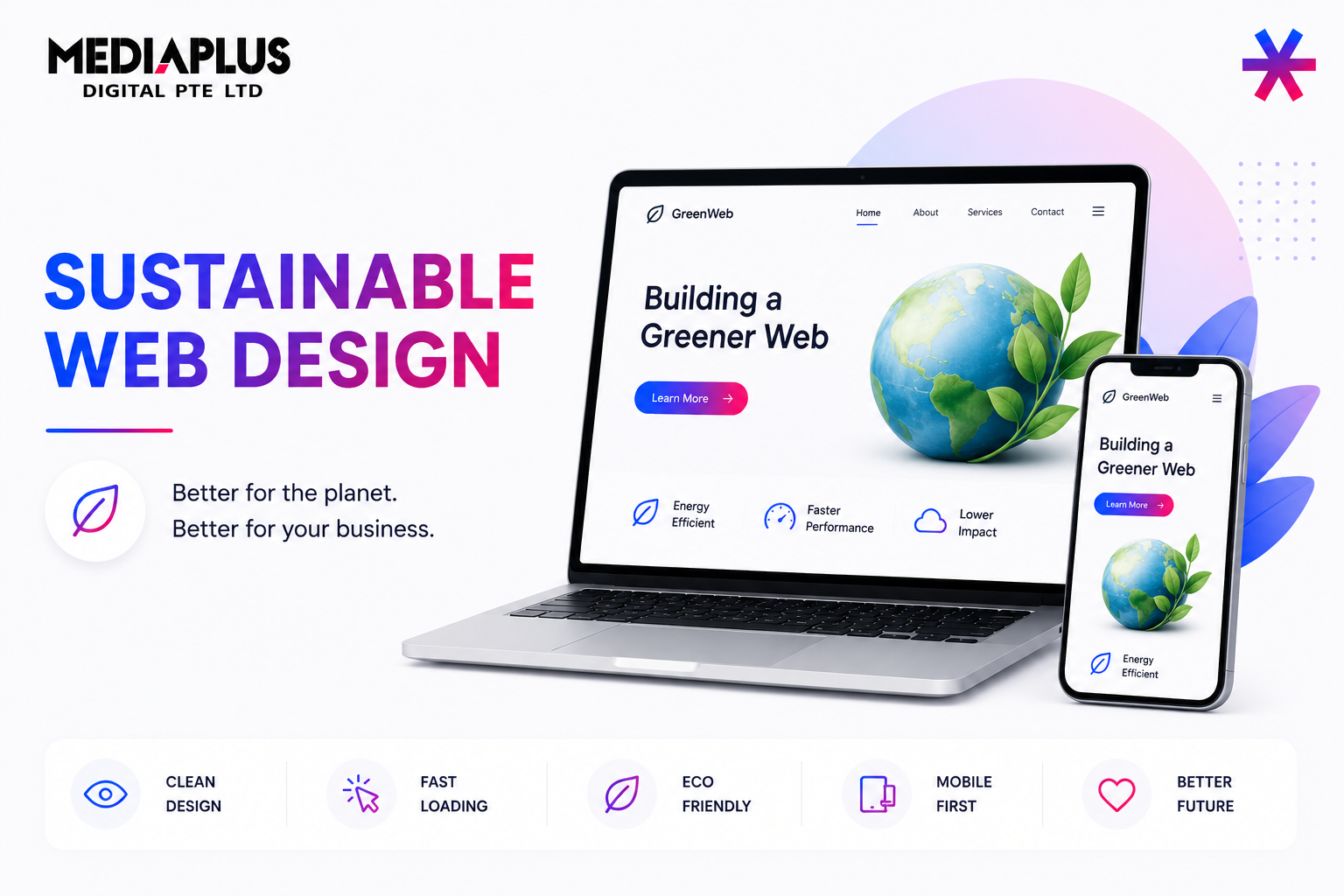
Every page load consumes energy. The data travels through servers, networks, and devices, and all of it draws power. The internet now produces a meaningful share of global carbon emissions, and a bloated website is part of the problem. The good news is that the fixes that make a site greener are the same ones that make it faster and cheaper to run.
Sustainable web design is no longer a niche concern. Around 62% of consumers say they would choose one brand over another if the products were identical but one site was clearly greener, and 78% want companies to be transparent about their digital impact.
This guide explains what sustainable web design is and the practical steps to cut your site’s carbon footprint, most of which overlap directly with website speed optimisation.
What Is Sustainable Web Design?
Sustainable web design is the practice of reducing a website’s environmental impact through technical efficiency, user centred design, and ethical hosting. The goal is to build digital products that need minimal energy to create, host, and use. A lighter site moves less data, draws less power, and loads faster on every device.
Why Sustainable Web Design Is Worth It
This is one of the rare cases where doing the responsible thing also wins on every business metric. A low carbon site is not a trade off against performance. It is the same thing seen from a different angle.
|
Benefit |
How it shows up |
|
Faster load times |
Less data and lighter code mean quicker pages |
|
Lower running cost |
Smaller payloads cut bandwidth and hosting bills |
|
Better SEO |
Speed and Core Web Vitals are ranking signals |
|
Wider accessibility |
Lighter sites work on slower networks and older phones |
|
Brand trust |
Visible sustainability appeals to conscious customers |
The SEO and performance overlap is direct. The same work that lowers carbon helps you pass Core Web Vitals.
Quick Wins: Where to Start
If you only have a day, start here. These changes deliver the biggest carbon and speed savings for the least effort.
- Compress and right-size images, the single biggest opportunity on most sites.
- Reduce and defer scripts, especially heavy third-party tools.
- Enable caching so returning visitors download less.
- Optimise fonts: subset them, limit weights, and prefer system fonts where possible.
- Remove unused plugins, trackers, and third-party widgets.
The Core Practices of Low-Carbon Web Design
1. Optimise Images
Images are usually the heaviest assets on a page and the biggest lever you have. Serve responsive sizes so a phone never downloads a desktop sized image, use modern formats such as WebP or AVIF where appropriate, and never upload an asset larger than the display needs.
2. Reduce Scripts and Third-Party Tools
Every analytics tag, chat widget, and embedded script adds weight and energy cost. Audit what is actually used, remove what is not, and load the rest only when needed. Third-party tools are often the worst offenders because you carry their bloat without controlling it.
3. Write Lean, Clean Code
Efficient code moves less data and renders faster. The main techniques:
- Flatten the DOM so the browser has less to process.
- Purge unused CSS and JavaScript.
- Lazy-load images and assets below the fold.
- Minify and compress files before serving them.
4. Use Caching and a CDN
Caching lets returning visitors reuse files instead of downloading them again. A content delivery network shortens how far data has to travel by serving it from a location near the user, which lowers both latency and the energy used in transit.
5. Choose Green Hosting
Hosting is where a lot of a site’s carbon is decided. Verify that your host runs on renewable energy or offsets its footprint, and prefer edge rendering to shorten data travel. Our guide on how to choose the right web hosting covers what to look for.
6. Design for Intent and Simplicity
The greenest page is the one a user does not have to load. Design clear journeys that get people to their goal in fewer steps, cut unnecessary page loads, and resist visual clutter. This is sustainability and good UX pointing in the same direction, and it builds on solid web design principles.
7. Optimise Typography
Custom fonts add weight. Subset them to the characters you use, limit the number of weights, and lean on system fonts where the brand allows. See our website font selection guide for how to choose without bloating the page.
8. Measure Your Carbon Footprint
You cannot improve what you do not measure. Free tools like Website Carbon Calculator and Ecograder estimate the grams of CO2 per page view and flag the heaviest pages. Run a baseline, make changes, then measure again to prove the impact.
Sustainability, Speed, and SEO Are the Same Project
It is worth saying plainly: lower carbon, faster load, and better SEO are not three separate goals. They are one project viewed from three angles. Compressing an image cuts carbon, speeds up the page, and helps your Core Web Vitals at the same time. That is why sustainable web design is an easy business decision, not just an ethical one.
What This Means for Singapore Businesses
Singapore audiences are mobile first and increasingly values led, and the city’s sustainability agenda is shaping buyer expectations. A fast, low carbon site signals that a brand is modern and responsible, while also performing better on the metrics that drive traffic and conversions. If your current site is heavy and slow, a website redesign is the cleanest way to rebuild it lean from the start.
MediaPlus builds fast, efficient, and accessible sites through our web design and development services. Get in touch for a performance and sustainability review of your website.
Related Reads